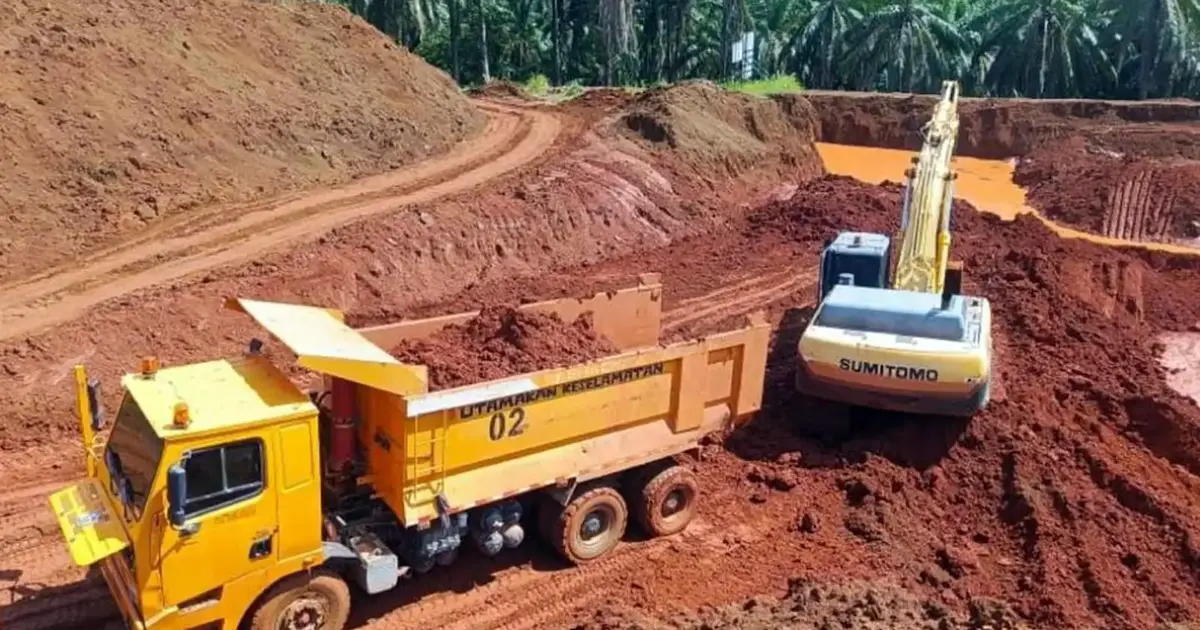
In a significant enforcement action targeting organised illegal mining, the General Operations Force has arrested nine people suspected of running an unlicensed bauxite extraction operation on Felda land, with the operation uncovering assets and equipment valued at RM3.75 million. The detainees, predominantly foreign nationals, are now being investigated for their involvement in the illicit mining scheme, which authorities say represents a serious breach of environmental and commercial regulations.
The raid represents an intensified effort by law enforcement agencies to combat the persistent problem of illegal bauxite extraction across Malaysia, particularly in areas where agricultural concessions have been exploited for unauthorised mining activities. Felda plantations, which span vast tracts of land across the country, have become vulnerable targets for criminal syndicates seeking to profit from bauxite resources without proper licensing or oversight. The scale of assets seized during this operation underscores the significant financial stakes involved in these underground mining networks.
Illegal bauxite mining has emerged as a growing concern in Malaysia and across Southeast Asia, driven by global demand for aluminium and weak enforcement in remote areas. The commodity's extraction requires minimal equipment compared to other minerals, making it attractive to criminal operators willing to skirt regulations and environmental safeguards. By operating on state-owned agricultural land, these networks avoid the institutional oversight that typically accompanies licensed mining concessions, allowing them to operate with minimal scrutiny until law enforcement intervenes.
The involvement of foreign nationals in this particular operation is noteworthy, suggesting that the illegal mining enterprise may have international dimensions or connections to transnational criminal networks. Such operations often rely on overseas contacts for equipment procurement, logistics coordination, and the sale of extracted materials into international markets where the origins of the bauxite remain obscured. The arrest of multiple foreign individuals indicates that authorities are beginning to trace the full extent of supply chains connected to illicit extraction sites.
Environmental degradation represents a major concern arising from these operations. Unregulated bauxite mining causes severe soil contamination, disrupts water systems, and destroys vegetation cover without any requirement for restoration efforts. The long-term environmental costs, borne by local communities and the state, far exceed the short-term profits captured by those executing the illegal schemes. Agricultural productivity on affected land can be severely compromised, undermining the livelihoods of legitimate smallholder farmers within Felda settlements.
The confiscation of RM3.75 million in assets signals the profitable nature of these criminal enterprises. The seized materials likely include mining equipment, vehicles, processing machinery, and potentially refined or partially processed bauxite awaiting shipment. Such seizures are crucial not only for disrupting immediate operations but also for degrading the financial capacity of criminal organisations to sustain or restart activities elsewhere. However, authorities must remain vigilant, as criminal networks frequently reconstitute operations in new locations following enforcement actions.
For Malaysia's mining regulatory framework, this case highlights ongoing challenges in monitoring land use compliance and preventing the hijacking of state-owned agricultural areas for commercial extraction purposes. The Felda scheme, designed to benefit smallholder farmers, faces multiple pressures including trespass by criminal actors seeking to exploit resources while evading taxes and licensing requirements. Strengthening coordination between Felda management, environmental agencies, and law enforcement remains essential for securing these vast land holdings.
Regionally, Malaysia's experience mirrors similar challenges facing Indonesia, Vietnam, and other Southeast Asian nations endowed with bauxite resources. The illegal extraction problem reflects broader governance gaps, corruption vulnerabilities, and the lure of quick profits in commodity-dependent economies. International cooperation on tracking bauxite flows and disrupting smuggling networks could provide additional leverage in combating these operations, particularly given that extracted materials often transit through multiple jurisdictions before reaching final buyers.
The investigation into the nine detainees will likely reveal operational details about how the mining network functioned, including procurement methods, distribution channels, and financial arrangements. Intelligence gathered from interrogations could enable authorities to identify additional sites where illegal extraction may be occurring and to apprehend further individuals involved in managing the broader criminal enterprise. Such information is vital for developing more sophisticated enforcement strategies.
Moving forward, this operation underscores the importance of sustained, coordinated enforcement effort to disrupt illegal mining ecosystems. Sporadic raids, while necessary, may prove insufficient if not combined with improved border monitoring, enhanced community reporting mechanisms, and stronger penalties that make illegal operations economically unviable. For Malaysian policymakers and law enforcement, the challenge involves scaling successful interventions while simultaneously addressing the underlying demand factors and governance weaknesses that enable these criminal networks to flourish.

