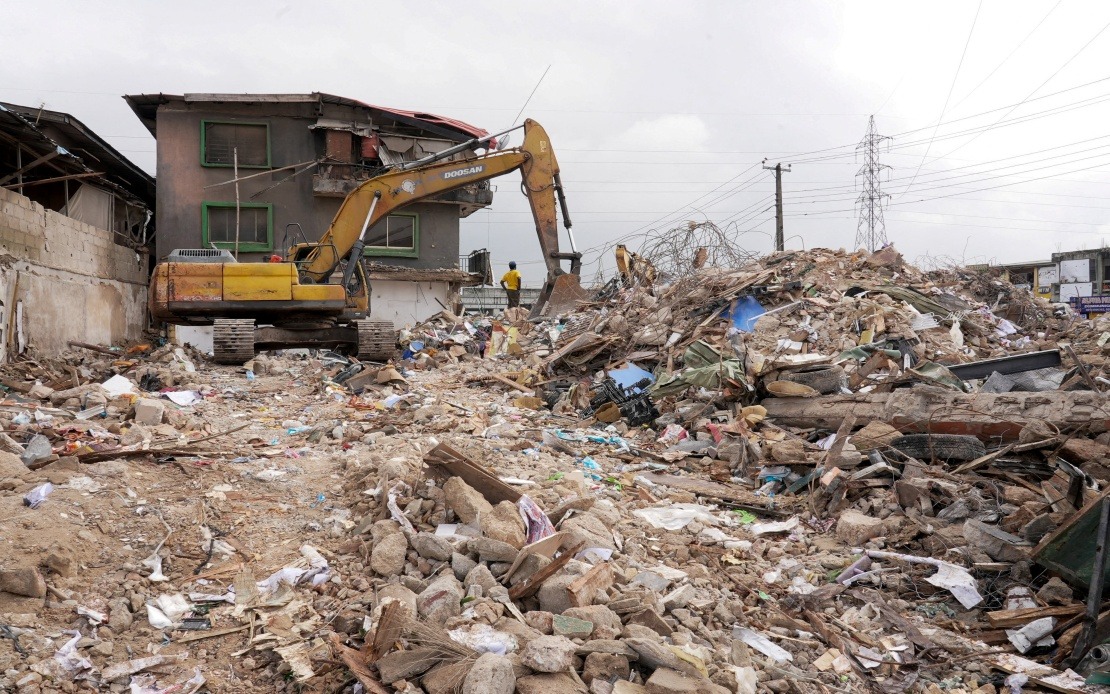
A three-storey shopping complex in the Alakija district of Lagos crumbled on Thursday morning, triggering a large-scale emergency response that stretched into Friday. When rescue operations concluded, authorities confirmed that nine people had perished while 27 others were extracted alive from the wreckage. The toll underscores the persistent vulnerability of inadequately designed or poorly maintained commercial structures across Nigeria's bustling commercial heartland.
The building stood along the Lagos-Badagry Expressway, a vital transportation corridor serving the southwestern state's sprawling metropolitan area. The collapse occurred during business hours, meaning the complex housed numerous shop owners and their customers at the moment of failure. Surrounding residents who happened to be in the vicinity also found themselves trapped beneath tons of concrete and steel, amplifying the human cost of the disaster.
Emergency responders mobilised swiftly following the Thursday morning incident, with multiple government agencies coordinating efforts to reach survivors. According to Olufemi Oke-Osanyintolu, permanent secretary of the Lagos State Emergency Management Agency, rescue teams worked continuously throughout Thursday and into Friday morning to locate and extract people from the debris field. The operation represented a significant deployment of personnel and equipment, reflecting the scale of the structural failure.
The 27 individuals who survived extraction sustained injuries ranging from minor to severe. All were transported to medical facilities for treatment and stabilisation. The exact condition of these survivors and the extent of their injuries remained unclear as authorities focused their initial communications on the rescue operation itself rather than detailed medical assessments.
Investigators have not yet determined what triggered the structural failure. The preliminary assessment suggested that the building housed predominantly shop owners engaged in commerce, alongside customers conducting their daily shopping activities. Some individuals from adjacent residential areas were also caught in the collapse, indicating that the structure served multiple community functions beyond its primary commercial purpose.
Alakija's status as a rapidly growing satellite town along a major expressway corridor makes it representative of Lagos's ongoing urban expansion. Development in such areas often occurs amid competing pressures for rapid construction and proper regulatory oversight. The shopping complex's collapse raises questions about construction standards and building code enforcement in these emerging districts, where oversight mechanisms may be under strain.
The China Civil Engineering Construction Corporation, currently executing a railway development project in the region, contributed personnel and equipment to the rescue effort. This involvement underscores how major infrastructure initiatives operating in an area can mobilise additional resources during emergencies, though it also highlights the complex landscape of foreign involvement in Nigeria's construction sector.
Building failures remain distressingly common across Nigeria, with structural collapses claiming lives with alarming regularity. Experts consistently point to several interconnected factors that create conditions for such disasters. Aging structures that have not undergone proper maintenance or structural assessment represent a significant portion of Nigeria's building stock, particularly in older commercial districts. Additionally, inadequate enforcement of building regulations allows construction practices that deviate from established safety standards. The use of substandard materials—whether through deliberate cost-cutting or supply chain failures—further compromises structural integrity.
For Malaysia and other Southeast Asian nations, the Lagos incident offers instructive lessons about the importance of maintaining vigilant building safety oversight during periods of rapid urbanisation. As cities expand into new satellite developments, regulatory agencies face pressures to accelerate approvals while maintaining standards. The Lagos collapse demonstrates the consequences when such pressures result in compromised oversight.
The implications extend beyond Nigeria's borders. As Malaysian companies increasingly engage in construction projects across Africa and Asia, awareness of safety standards and liability issues becomes commercially relevant. Additionally, as developing nations worldwide grapple with urban expansion, comparative study of what causes building failures in one region can inform prevention strategies elsewhere.
Lagos authorities indicated that their investigation into the collapse's root cause would proceed once rescue operations concluded. Understanding precisely why the Alakija structure failed—whether through design flaws, material degradation, overloading, or environmental factors—will inform recommendations for preventing similar incidents. However, meaningful prevention requires not just identification of technical causes but also sustained commitment to enforcement mechanisms that ensure compliance with established building codes.

