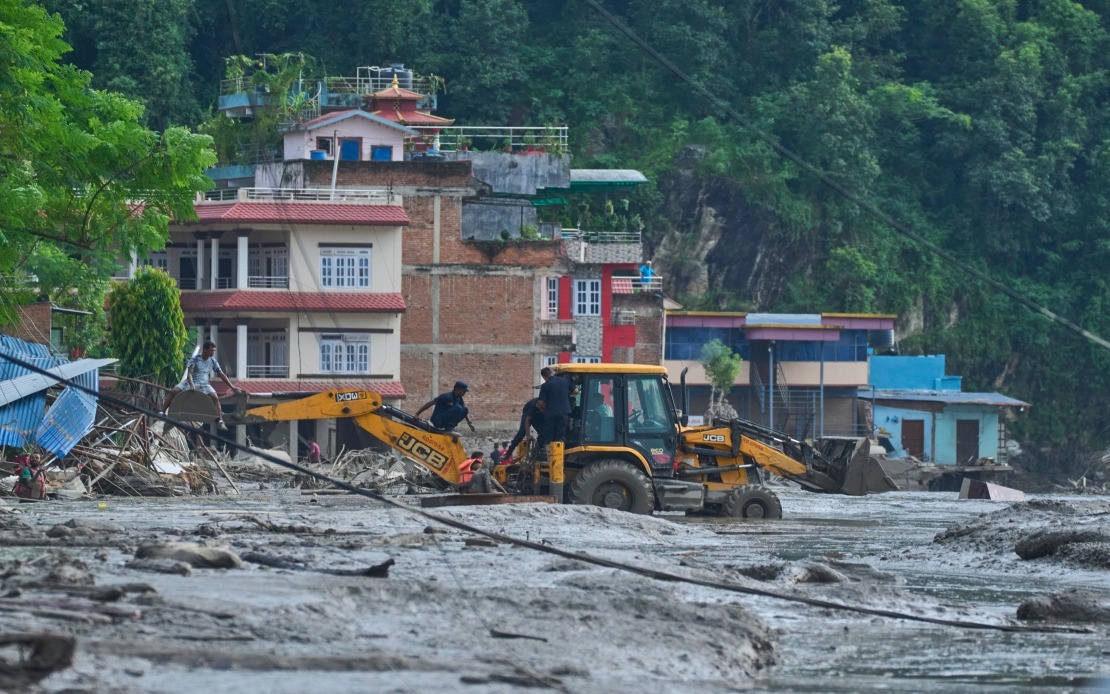
Nine South Korean nationals have disappeared in the aftermath of devastating floods that swept through Nepal this week, prompting the Seoul government to mobilize a dedicated emergency response team to the affected region. The nine workers—six employed by industrial plant manufacturer Doosan Enerbility Co. and three by state-owned Korea South-East Power Co.—were engaged in constructing a hydroelectric facility in Rasuwa district when the catastrophic flooding struck on Wednesday. The government's joint rapid response team, comprising personnel from the foreign ministry alongside police and fire authorities, was scheduled to depart for Nepal on Thursday with the aim of arriving in Kathmandu later that day to coordinate with local rescue operations.
The scale of the humanitarian crisis extending far beyond the South Korean contingent underscores the severity of the disaster. Official reports indicate that more than 160 people have been confirmed dead across the affected area near the Nepal-Tibet border, whilst hundreds of additional individuals remain unaccounted for. Among the missing are numerous foreign nationals working on various development projects, reflecting how significantly international labour participation has become embedded in Nepal's infrastructure expansion programmes. The construction site where the South Korean workers were stationed had employed approximately 200 foreign personnel, the majority of whom successfully evacuated the area as water levels rose catastrophically.
Beyond the nine missing persons, ten other South Korean Doosan employees who became trapped in the region have now been confirmed alive, though they still require extraction from the flood-affected zone. The confirmation of their safety provides some reassurance to Seoul's diplomatic and corporate establishments, yet underscores the ongoing vulnerability of those still stranded in remote mountainous terrain where access routes remain compromised by floodwaters and landslides. The distinction between the confirmed missing and those awaiting rescue illustrates the precarious situation many workers face in the hours and days following such natural disasters.
President Lee Jae Myung has placed particular emphasis on the urgency of the situation, issuing direct orders that all available governmental resources be mobilised for search and rescue operations. This high-level political attention reflects both the humanitarian imperative and the diplomatic sensitivity surrounding casualties among South Korean citizens abroad. Foreign Minister Cho Hyun, whilst chairing an emergency response session on Wednesday, articulated the government's multi-faceted approach: coordinating with Nepalese authorities, providing psychological and material support to families of the missing, safeguarding remaining South Koreans in the vicinity, and implementing measures to prevent additional casualties.
The ministerial directives specifically instruct Seoul's diplomatic apparatus to establish close working relationships with Nepal's government and district-level authorities to ensure seamless information sharing and resource coordination. Minister Cho committed to direct communication with Nepal's foreign ministry to request enhanced cooperation, recognising that the effectiveness of rescue operations ultimately depends on bilateral goodwill and logistical coordination. This diplomatic engagement proves crucial given that Nepal, whilst accustomed to natural disasters, faces significant infrastructure constraints that can hamper rapid response mechanisms, particularly in remote mountainous districts like Rasuwa.
The private sector entities involved have also activated their own emergency protocols. Both Doosan Enerbility and Korea South-East Power have established internal crisis response structures and are preparing to dispatch field teams directly to the disaster site. This corporate mobilisation complements governmental efforts and reflects the significant financial and reputational stakes these major industrial concerns face. The hydropower project itself represents substantial South Korean investment in Nepal's energy sector, making the welfare of personnel—and continuity of operations—matters of considerable importance to Seoul's broader regional economic interests.
The Nepal flooding represents the kind of transnational disaster that increasingly characterises regional infrastructure development in Asia. As Southeast and South Asian nations accelerate hydroelectric, manufacturing, and transportation projects, foreign workforces have become standard features at remote construction sites. The vulnerability of these workers to natural catastrophes, combined with logistical challenges in reaching remote locations during emergencies, presents an ongoing policy challenge for labour-exporting nations like South Korea. The necessity of deploying centralised government response teams highlights how individual corporate responsibility must be supplemented by state-level diplomatic and rescue capabilities.
For Malaysia and other ASEAN members engaged in similar development partnerships with South Korea and other trading partners, the Nepal incident offers instructive lessons regarding worker safety protocols and emergency preparedness. Malaysia's own experience with industrial accidents and natural disasters on construction sites underscores the importance of maintaining adequate emergency response frameworks that transcend corporate boundaries. The coordination mechanisms Seoul is now establishing—linking foreign ministry, security agencies, and commercial entities—represent best practices that regional governments might consider emulating or strengthening.
The broader geopolitical context matters as well. South Korea's engagement in Nepal's infrastructure development reflects the country's strategic positioning as a technology and capital provider across Asia. The commitment to comprehensive rescue operations and family support signals to both Nepal and to other regional partners that Seoul takes seriously its obligations toward its citizens and its reputation as a responsible investor. This disaster response will inevitably influence future South Korean decisions regarding project locations and risk management protocols in mountain regions prone to flooding and landslides.
The coming days will prove critical as rescue teams navigate challenging terrain and unpredictable weather conditions to locate the missing workers. Nepal's government, despite constraints, has mobilised its own resources, and the arrival of Seoul's experienced emergency response personnel should enhance search coordination and technical capabilities. The humanitarian dimension transcends national interest—behind each missing person stands family members anxiously awaiting news, a situation that resonates across all cultures and borders. As rescue efforts intensify, the international community's capacity to respond swiftly and effectively to such crises will again be tested and measured.

