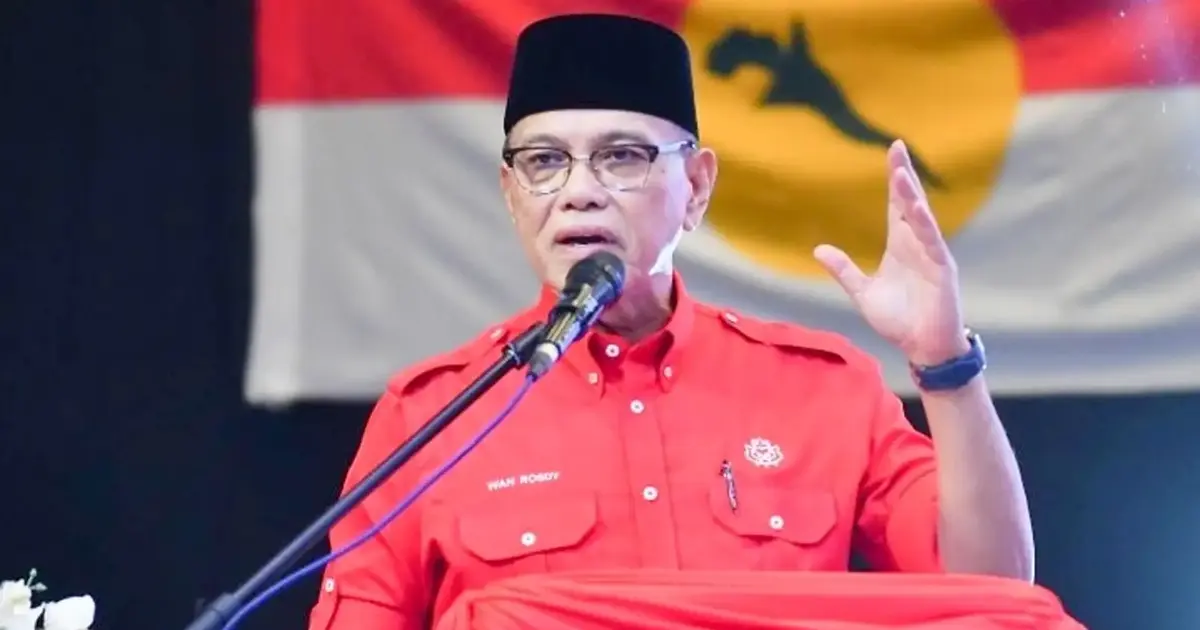
Umno vice-president Wan Rosdy Wan Ismail has dismissed speculation about imminent political pacts between Barisan Nasional and Perikatan Nasional ahead of the next general election, emphasising that coalition negotiations remain off the table for now. The prominent party figure stressed that the immediate focus for both organisations centres on consolidating their grip on state-level administration, particularly the recently established administration in Negeri Sembilan.
The remarks come amid persistent chatter within Malaysian political circles about potential alliances ahead of general election 16, which could reshape the national political landscape. Such speculation has intensified given the fragmented state of Malaysian politics following consecutive general elections that failed to produce commanding majorities. The possibility of bringing together the Barisan Nasional coalition—traditionally dominated by Umno—with the Perikatan Nasional bloc led by Pas represents a significant shift from the post-2018 political reconfiguration.
Wan Rosdy's statement underscores a strategic approach prioritising state-level consolidation before entertaining national coalition discussions. The Negeri Sembilan government, freshly constituted following recent political developments, requires careful management to demonstrate administrative competence and build voter confidence. This reflects broader lessons from recent Malaysian political cycles, where state governments have served as platforms for testing political alliances and building public support for larger coalitions.
The separation of timelines between state governance priorities and federal-level political negotiations suggests that both Barisan Nasional and Perikatan Nasional prefer to avoid appearing opportunistic or focused solely on electoral arithmetic at the expense of governing effectively. Such an approach may resonate with increasingly discerning voters who have grown weary of constant coalition-building rhetoric while basic governance issues remain unresolved.
For Malaysian observers and analysts tracking the trajectory of national politics, the absence of formal coalition discussions carries its own significance. It indicates that while both blocs may harbour interest in future cooperation, neither side currently views such an alliance as immediately necessary or politically advantageous. Umno's control of Barisan Nasional remains intact, and Perikatan Nasional has demonstrated electoral viability in certain states, reducing immediate incentive for major structural realignment.
The reference to Negeri Sembilan holds particular weight in this context. The state represents a relatively balanced political arena where multiple coalitions possess competitive capacity, making its governance a meaningful test case for potential partners. Demonstrating effective administration there could serve as either a foundation for future cooperation or as evidence of each coalition's independent capability, depending on political circumstances as the next general election approaches.
Regional implications also merit consideration. Southeast Asia has observed Malaysia's political turbulence with interest, and any major coalition realignment would affect investor sentiment and regional stability perceptions. A premature or hastily constructed national alliance could undermine confidence in Malaysia's political maturity, whereas a measured approach to coalition-building might project greater institutional stability.
Wan Rosdy's positioning also reflects internal party dynamics within Umno. The vice-president's cautious stance suggests that senior Umno leadership remains focused on internal party matters and demonstrating governance capacity rather than rushing into speculative alliance negotiations. This approach grants the party space to address organisational concerns while maintaining flexibility regarding future political arrangements.
The current political climate in Malaysia presents both opportunities and constraints for major coalitions. While neither Barisan Nasional nor Perikatan Nasional dominates parliament outright, they maintain sufficient influence to shape outcomes on critical legislation and potentially determine which bloc forms government following the next election. This mutually influential position means both sides can afford to be deliberate rather than desperate about coalition negotiations.
Wan Rosdy's remarks carry practical implications for opposition parties and smaller political groupings attempting to position themselves ahead of the general election. The absence of active Barisan Nasional-Perikatan Nasional talks provides breathing room for other coalitions to consolidate their own political positioning and offer alternative visions to Malaysian voters.
Looking forward, the political landscape will likely evolve significantly as the timeline toward general election 16 shortens. Statements like Wan Rosdy's should be interpreted not as definitive rejections of future cooperation but rather as signals of current tactical priorities. In Malaysian politics, where coalition arrangements have become fluid and negotiable, today's ruled-out talks could become tomorrow's political necessity, depending on electoral outcomes and shifting power balances within and between parties.

