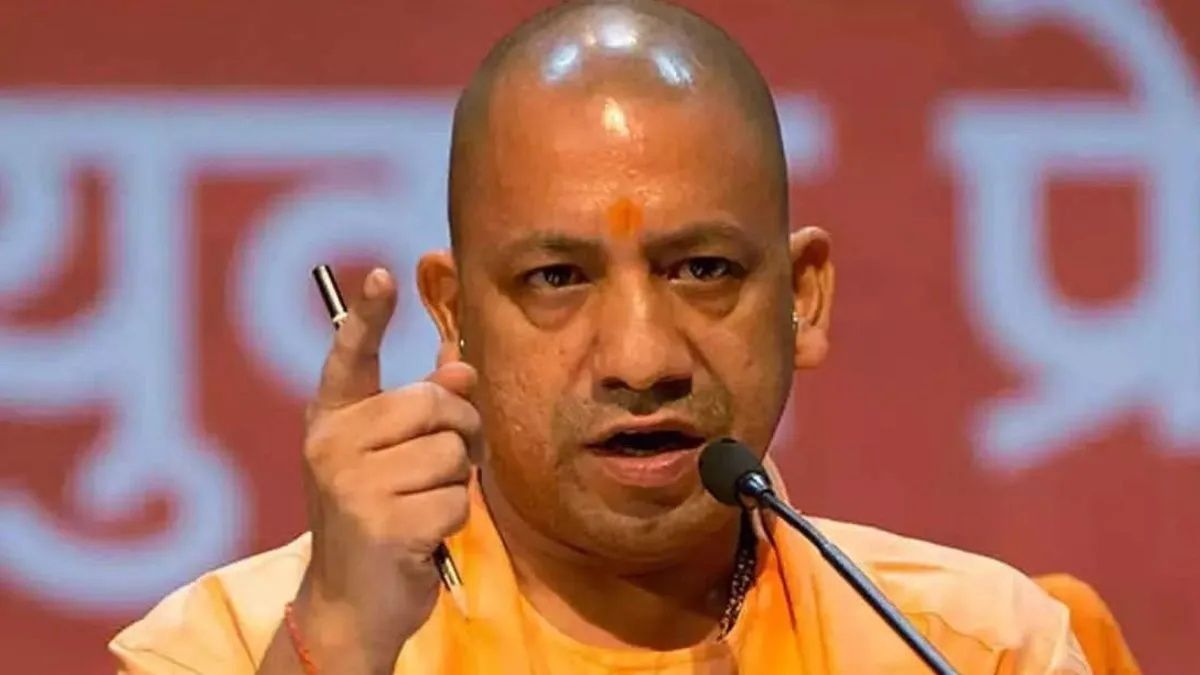
Uttar Pradesh Chief Minister Yogi Adityanath has issued a stern warning that deliberate attempts to undermine people's religious convictions will face serious consequences, following the registration of a first information report in connection with missing donations at the Shri Ram Janmabhoomi Teerth Kshetra in Ayodhya. The Chief Minister's forceful statement came after a Special Investigation Team's report prompted immediate government action on the matter, signalling the administration's commitment to preserving the sanctity of one of India's most significant religious sites.
Addressing a public gathering in Deoria on Friday, where he inaugurated various development projects and laid foundation stones, Yogi emphasised that the state government would rigorously differentiate between fact and fiction in its investigations. He asserted that individuals or groups attempting to exploit or undermine the faith of devotees would not escape accountability, and that no individual or entity would receive preferential treatment or immunity from legal scrutiny. The Chief Minister's remarks reflected growing concerns within the Bharatiya Janata Party administration about how opposition parties might weaponise the donation case for political gain.
The Chief Minister recalled his recent visit to Ayodhya on June 19, during which he had articulated the temple's profound significance as a symbol of collective faith and India's ancient spiritual heritage. He urged devotees and citizens to safeguard the dignity and sanctity associated with Lord Ram and to resist spreading unsubstantiated claims or allegations that could tarnish the reputation of this sacred location. By framing the issue within a broader religious and cultural context, Yogi positioned the government's investigation as part of a larger mission to protect Hindu religious sentiments from what he characterised as deliberate attacks.
The Chief Minister's response included a pointed critique of the Indian National Congress and the Samajwadi Party, whom he accused of historical hostility toward Hindu religious beliefs and movements. He contended that the Congress party had consistently denied the historical existence of Lord Ram itself, thereby rejecting the foundational legitimacy of the Ayodhya temple project. According to Yogi, this party deployed extensive legal resources to obstruct the Ram Janmabhoomi temple construction throughout decades of litigation, demonstrating what he described as fundamental opposition to the religious aspirations of India's Hindu majority.
Further intensifying his political attack, Yogi highlighted alleged instances of communal violence and religious suppression under previous administrations led by opposition parties. He referenced incidents during Ram Navami celebrations, restrictions on Krishna Janmashtami festivities, limitations imposed on the Kanwar Yatra pilgrimage, and communal tensions during Durga Puja observances, arguing that these demonstrated a pattern of undermining Hindu religious practices. The Chief Minister invoked the Lar riot as a historical example of alleged mismanagement and communal violence, using these references to establish a contrast between past governance and his administration's purported protection of religious freedom.
Yogi characterised the Congress as responsible for extensive national plunder and corruption, suggesting that the party's current criticism of the Ram Temple administration stemmed from its own history of dishonesty rather than genuine concern for institutional integrity. He claimed that the Samajwadi Party, similarly, had engaged in large-scale theft and misappropriation of public resources, and that the current BJP-led "double engine" government (referring to simultaneous rule at state and national levels) had successfully curtailed such illegal activities. According to this narrative, opposition parties now resort to making baseless allegations about Ayodhya and religious matters simply because their traditional sources of illicit enrichment have been eliminated.
The Chief Minister issued a direct appeal to opposition parties and critics to cease what he termed as deliberate tampering with the religious sentiments of Ram devotees and to refrain from making unsubstantiated accusations. He urged those with genuine evidence of wrongdoing to present their findings to the Special Investigation Team and to cooperate fully with the ongoing probe, while those without credible evidence should abstain from making counter-allegations that only serve to inflame public sentiment. This framing positioned the government as open to legitimate scrutiny while simultaneously delegitimising opposition criticism as politically motivated.
Yogi further cautioned against testing the patience of Ram devotees, implying that continued political attacks on the temple administration or attempts to exploit the donation case for factional advantage could provoke a backlash from the devout population. This warning carried implicit undertones about the mobilisation potential of religious sentiment in electoral politics, a strategy that has historically served the BJP well in Uttar Pradesh and across northern India. The Chief Minister's rhetoric effectively transformed the investigation from a straightforward matter of institutional accountability into a broader struggle between those who respect Hindu faith and those who allegedly seek to undermine it.
In practical terms, Yogi confirmed that the government is proceeding with action based on the Special Investigation Team's recommendations, indicating that the investigation would follow established legal procedures and professional guidelines. He appealed for political restraint, suggesting that when senior officers are conducting a serious investigation, public figures should refrain from making inflammatory political statements that could compromise the probe's integrity or prejudice its outcomes. This call for restraint, however, came immediately after the Chief Minister himself had made extensive political statements linking the case to broader historical grievances against opposition parties.
The Ram Temple donation case thus represents a flashpoint where administrative accountability, religious sentiment, and political competition intersect in contemporary Indian politics. For Malaysian and Southeast Asian observers, the case illustrates how majoritarian political movements in large democracies can leverage religious symbolism and alleged institutional failures to reinforce electoral coalitions and marginalize opposition voices. The investigation's outcomes will likely influence not only state-level politics in Uttar Pradesh but also broader perceptions of institutional integrity within India's religious establishments, with implications for Hindu communities across the diaspora including those in Malaysia.

