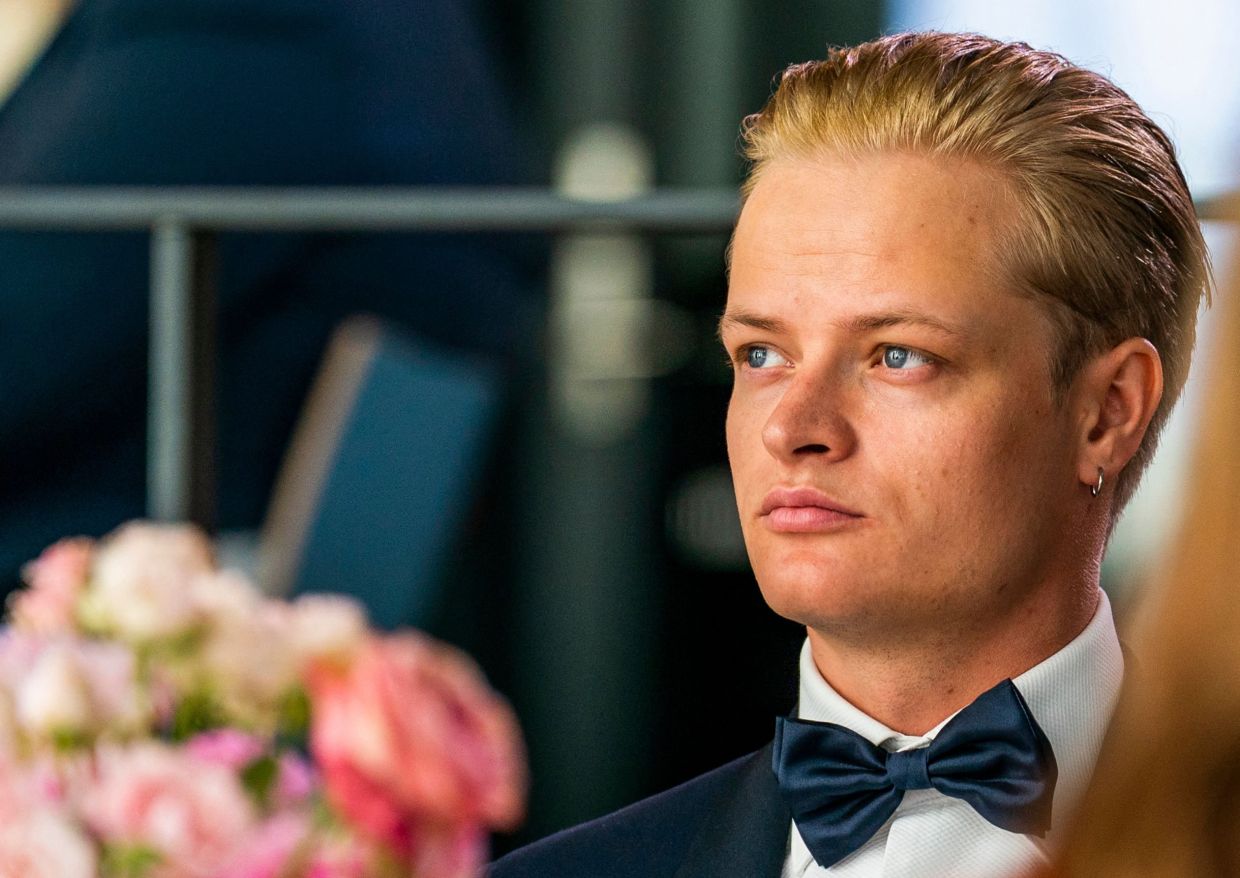
Marius Borg Høiby, the 29-year-old eldest son of Norway's Crown Princess Mette-Marit, faces four years behind bars following a court conviction on two rape charges, with Oslo District Court also finding him guilty of assault and abuse in close relationships. The sentencing, delivered Monday, fell considerably short of the prosecution's recommendation of seven years and seven months but exceeded the defense's request for a maximum of 18 months. Høiby was acquitted of two additional rape allegations but convicted on the counts relating to sexual assault on women who were asleep or otherwise incapacitated between 2018 and 2024.
The verdict represents a watershed moment for Norway's royal family, drawing international scrutiny that extends far beyond typical criminal proceedings. Høiby, who holds no official royal title and performs no constitutional duties, nonetheless grew up in the household of Crown Prince Haakon, Norway's heir to the throne, following his mother's marriage to the future king. This familial proximity to the monarchy transformed what would ordinarily be a serious criminal matter into a high-profile case with broader implications for public perception of the palace.
The charges against Høiby encompassed 40 criminal allegations ranging from the most serious—the rape accusations—to lesser infractions including drug-related offenses and violations of restraining orders. His defence strategy involved a selective approach: while denying the rape allegations entirely, Høiby admitted to several of the lesser charges. This tactical positioning reflected the gravity of the rape convictions, which carry substantially longer custodial sentences than the other offenses with which he was charged. The court's decision to convict on two counts while acquitting on two others suggests that judicial assessments of witness credibility and evidence quality varied across the cases presented.
The trial itself consumed six weeks of court proceedings, during which multiple accusers testified and extensive digital evidence was examined. Messages, photographs and video recordings retrieved from Høiby's mobile phone formed part of the evidentiary foundation for the verdicts. The volume and nature of evidence required considerable court time, reflecting the complexity of sexual assault cases and the particular evidential challenges involved when victims were asleep or otherwise unable to consent at the time of the alleged offences.
Perhaps most notably, Høiby did not attend the courtroom for the verdict reading on Monday. Instead, he watched the judge deliver the sentence via video link from the prison where he has been held pending judgment. This arrangement, necessitated by what authorities described as health reasons, further underscored the unusual circumstances surrounding this case—the son of a crown princess observing his own sentencing through a screen rather than in person. The decision to allow video-link attendance raised questions about the adequacy of his health condition and whether it might form grounds for future appeals or requests for modified detention arrangements.
The case has unfolded against the backdrop of deteriorating health conditions affecting the crown princess herself. Mette-Marit, who is battling pulmonary fibrosis and is awaiting a lung transplant, has featured prominently in legal arguments over whether her son should be released from custody on a temporary basis prior to the verdict. Norwegian appeals courts rejected such requests, ruling that detention must continue while the judgment process concluded. The crown princess's health crisis has intertwined with her son's legal tribulations, creating a compound family crisis at the apex of Norway's state hierarchy.
The sentence is not definitive and remains subject to appeal. Høiby has the right to challenge both the conviction and the length of the custodial term through higher courts. Given that prosecutors sought substantially longer imprisonment, a future appeal might argue that the court's sentence is disproportionately severe, while the defense could pursue grounds based on procedural irregularities or evidentiary challenges. The appellate phase therefore remains a critical juncture that could reshape the final legal outcome.
Adding another layer of complexity to the royal family's predicament, recent revelations have emerged regarding Crown Princess Mette-Marit's historical contacts with Jeffrey Epstein, the American financier and convicted sex offender. The crown princess publicly acknowledged maintaining contact with Epstein and expressed regret over the judgment she exercised in sustaining the relationship. While she faces no criminal accusations and stands accused of no wrongdoing, the association has invited renewed scrutiny of the palace's culture and standards. The confluence of her son's rape convictions and these renewed questions about her own past associations creates a challenging period for Norway's monarchy.
For Malaysian and Southeast Asian observers, the case illuminates questions about royal accountability and family connections to serious crimes. In regional contexts where monarchies maintain varying degrees of constitutional prominence and symbolic authority, the Norwegian approach of allowing the court system to function independently—even when the accused is closely related to the crown—offers a contrasting model to some contemporary examples. The verdict demonstrates that proximity to the throne does not insulate individuals from criminal prosecution or sentencing, a principle that has significant implications for how democratic constitutional monarchies address criminal conduct involving family members of reigning or future monarchs.
The broader implications extend to discussions of sexual assault accountability in Scandinavian societies, where there has been sustained focus on victim protection and prosecutorial vigor in such cases. The conviction of Høiby, despite his privilege and family connections, reflects institutional commitments to prosecuting sexual violence regardless of the accused's social standing. Conversely, the sentence falling short of prosecution requests suggests that courts maintain independent judgment about appropriate punishment, calibrating sentences based on particular circumstances rather than yielding to demands for severity based on public prominence.
For the Norwegian royal household, the years ahead will require navigation of both legal appeals processes and the political challenge of maintaining institutional credibility amid family tragedy. Crown Princess Mette-Marit's health situation adds urgency and poignancy to these proceedings, as her son's incarceration coincides with her waiting for a life-saving medical intervention. The palace must manage public relations around these parallel crises while allowing the judicial system to complete its work without interference or external pressure.