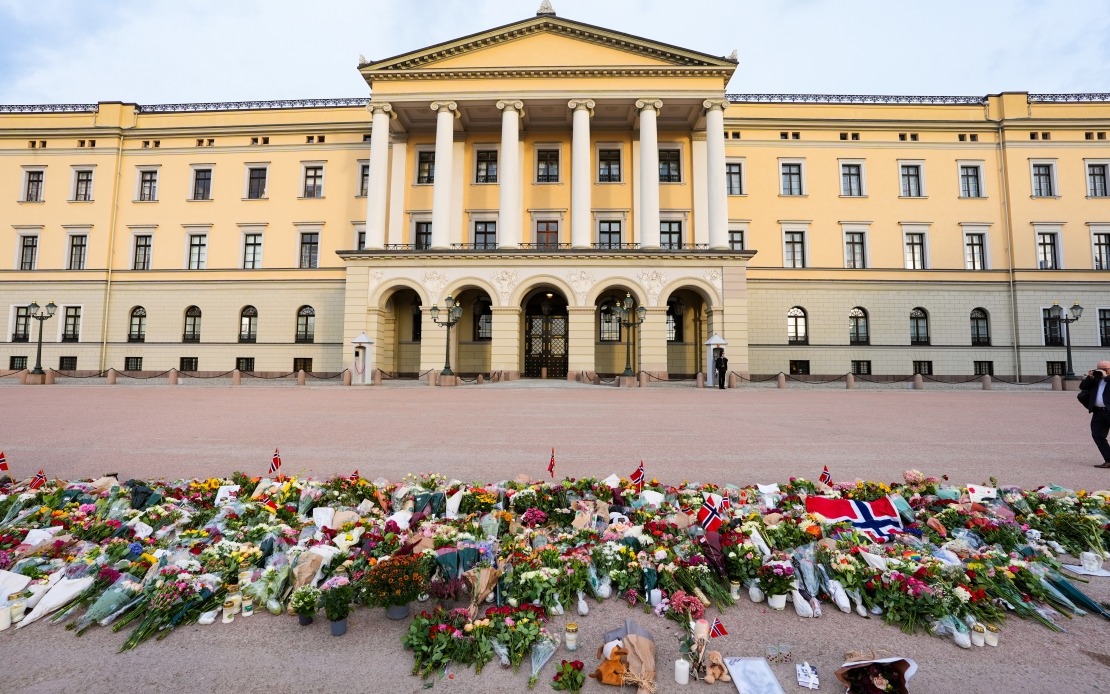
King Harald V of Norway died peacefully at the National Hospital in Oslo on Friday morning at 6:35 am local time, marking the end of an era for Scandinavian monarchy. The 89-year-old sovereign passed away after a brief but serious illness, prompting the Royal Palace to lower its flags to half-staff in recognition of the nation's loss. His death represents a significant moment not only for Norway but for European constitutional monarchies, which have seen their ranks diminish in recent decades. Crown Prince Haakon has immediately assumed the throne under Norway's constitutional succession rules, becoming the country's new monarch without ceremony or delay.
The king's health had deteriorated rapidly over recent weeks. He was admitted to the National Hospital on August 17 following a routine medical examination, but his condition worsened substantially when he developed a serious bacterial infection in his bloodstream. Prior to this acute development, medical personnel had been treating him with cortisone therapy for hemolytic anemia, a blood disorder affecting red blood cells that had caused fluid retention throughout his body. The combination of the underlying chronic condition and the subsequent infection proved too much for the aging monarch to overcome, despite the best efforts of Norwegian medical professionals.
Harald's nearly four-decade reign fundamentally shaped modern Norway and its relationship with the Scandinavian region. He ascended to the throne on January 17, 1991, following the death of his father King Olav V, and served as a stabilising constitutional figure through significant economic and social transformations. Norway's oil wealth expanded dramatically during his reign, fundamentally altering the nation's geopolitical standing and making it one of the world's wealthiest countries per capita. As Europe's oldest reigning monarch at the time of his death, Harald occupied a unique position in continental affairs, having witnessed the Cold War's end, the European Union's evolution, and profound technological change.
The succession is proceeding according to Norway's long-established constitutional framework, which emphasises continuity and orderly transition of power. The Norwegian government will convene an extraordinary Council of State at the Royal Palace, where the new monarch will meet formally with senior officials. Following this gathering, the king's regnal name will be officially announced, though Crown Prince Haakon is expected to retain his given name as is customary in the Norwegian royal house. Unlike some European monarchies, Norway does not conduct elaborate coronation ceremonies; instead, the Constitution requires the new sovereign to take a formal oath before the Storting, the Norwegian parliament, to uphold the nation's laws and constitutional order.
Crown Prince Haakon, now Norway's reigning king, inherits both the responsibilities and the symbolic importance of the monarchy at a time when the nation faces complex international challenges. Norway's prominent role in energy geopolitics, its membership in the European Economic Area, and its strategic location in Arctic affairs all fall within the purview of the new monarch's constitutional responsibilities. The transition occurs during a period of geopolitical uncertainty in Europe, with Russia's invasion of Ukraine reshaping Nordic security calculations and accelerating NATO expansion in the region. Norway's new king will need to navigate these challenges while maintaining the constitutional monarchy's traditional role as a unifying national symbol.
The death of King Harald marks a generational shift not only for Norway but for Scandinavian and Northern European monarchy more broadly. His reign coincided with the final decades of Queen Elizabeth II's reign in Britain and the transformation of monarchy from a ceremonial institution into something more actively engaged with contemporary social and environmental concerns. Harald himself became known for his relatively informal approach to royal duties, his interest in sailing and sports, and his willingness to engage with Norwegian society in ways that earlier monarchs might not have. This approachable style helped maintain public support for the monarchy during decades when republican sentiment was rising in parts of Europe.
For Malaysia and Southeast Asia, the Norwegian succession carries broader implications about how constitutional monarchies adapt and persist in the modern world. Norway's model of constitutional monarchy—with strictly limited executive powers vested in elected governments rather than the sovereign—offers a different paradigm from the more active roles played by Southeast Asian monarchies. Malaysia's own constitutional monarchy system, shared with other Commonwealth nations, operates within similar democratic constraints but with distinct cultural and historical contexts. Observing how Norway's new monarch manages the balance between ceremonial duties and constitutional limitations provides useful comparative perspective for understanding how hereditary monarchies remain relevant in democratic societies.
The Norwegian succession also underscores the institutional stability that constitutional frameworks provide during moments of national transition. Rather than generating uncertainty or political instability, the change of monarch in Norway proceeds smoothly under established legal procedures, demonstrating how well-designed constitutions can manage the inherently disruptive event of succession. This contrasts sharply with situations where successions have generated political crises or instability. For Southeast Asian nations with similar constitutional monarchical systems, Norway's experience reinforces how important strong constitutional traditions and public acceptance of democratic procedures are for ensuring that transitions of power strengthen rather than undermine national institutions.
The new reign in Norway begins with the monarchy facing both enduring and novel challenges. Climate change poses particular concerns for a nation whose Arctic territories and fishing industries are increasingly affected by environmental transformation. Economic pressures stemming from the energy transition—Norway's enormous oil wealth faces questions about long-term relevance—will shape national policy debates for years to come. The new king will serve as a symbol of national continuity through these transformations, much as his father did during previous periods of profound change. How effectively Crown Prince Haakon, now King of Norway, navigates these challenges while maintaining public support for the institution of monarchy will shape perceptions of constitutional monarchy's future viability across Europe and beyond.

