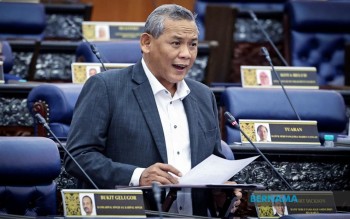
The ongoing scrutiny of Tabung Haji's financial performance has prompted calls for greater sophistication in evaluating the institution's investment portfolio, with Port Dickson Member of Parliament Datuk Seri Aminuddin Harun cautioning against attributing all losses to misconduct. Speaking during parliamentary proceedings focused on the Royal Commission of Inquiry report tabled in late July, the former Negeri Sembilan menteri besar emphasised the importance of distinguishing between legitimate market volatility and decisions clouded by poor governance, personal conflicts, or negligence.
The distinction Aminuddin draws reflects a broader challenge facing Malaysian institutional investors: the difficulty of separating external economic pressures from internal management failures. Investment markets globally experience downturns, and assets decline in value for reasons entirely beyond the control of those managing them. Yet within institutional frameworks, particularly those serving millions of contributors such as Tabung Haji, the line between acceptable market risk and culpable management error becomes critically important. Understanding this difference determines not only how institutional leaders should be held accountable but also whether reforms should focus on operational transparency or investment strategy itself.
The Royal Commission of Inquiry, which investigated Tabung Haji's operations between 2014 and 2020, recommended forensic audits of 14 specific investments that had declined significantly. This targeted approach suggests the RCI itself recognised that not every loss warrants the same level of scrutiny or carries identical implications for management. By recommending detailed forensic examination only of particular holdings, the inquiry implicitly acknowledged that some investments may have underperformed due to predictable market conditions while others might warrant deeper investigation into decision-making processes.
Amiuddin's most forceful advocacy centred on restructuring how Tabung Haji appoints its board members and senior leadership. He argued that positions within the institution have historically been treated as political rewards rather than professional roles requiring specific expertise. This critique resonates across Malaysia's institutional landscape, where appointment practices at government-linked companies and statutory bodies have long been scrutinised for balancing political considerations with genuine competence. The accumulation of well-connected but under-qualified board members creates systemic vulnerability to poor investment decisions, inflexible governance structures, and conflicts of interest that materialise over years.
The former menteri besar proposed a comprehensive overhaul of appointment criteria, calling for candidates to undergo rigorous screening based on demonstrated integrity and substantive experience across multiple domains. He specifically identified investment acumen, Islamic finance knowledge, risk management expertise, accounting and auditing proficiency, legal understanding, corporate governance competency, and hajj operations management as essential qualifications. Such a framework would represent a significant departure from Malaysia's traditional approach to institutional appointments, which often emphasise seniority, loyalty, and political alignment over technical specialisation.
Amiuddin also endorsed the RCI's recommendation prohibiting active politicians from serving as chairman or board members of Tabung Haji and its subsidiary entities. This proposal strikes at the heart of governance concerns that have plagued Malaysian institutions, where politicians holding concurrent positions create multiple conflicts of interest and complicate accountability chains. When elected officials simultaneously oversee institutions managing public funds, the distinction between political imperatives and fiduciary duties becomes blurred. Implementing this separation would bring Tabung Haji into alignment with international best practices for institutional governance, though such reforms often face resistance from incumbent power structures.
Meanwhile, Tampin Member of Parliament Datuk Mohd Isam Mohd Isa raised complementary concerns about the RCI's temporal scope. The inquiry examined the 2014-2020 period, but significant developments in Tabung Haji's operations have occurred subsequently. Mohd Isam called for establishing a second RCI to investigate the 2021-2025 timeframe, arguing that the original commission's limited duration prevented comprehensive assessment of institutional weaknesses. This proposal acknowledges that governance failures often accumulate across multiple years, and reforms implemented following one inquiry period may prove ineffective or incomplete without continued oversight.
As a Public Accounts Committee member, Mohd Isam additionally proposed referring Tabung Haji governance matters to the PAC for detailed examination covering 2022-2026. The PAC possesses parliamentary authority and access to detailed financial records, potentially enabling investigations deeper than those conducted by external commissions. This suggestion reflects a growing recognition that parliamentary bodies, when functioning effectively, can provide sustained institutional oversight that time-limited inquiries cannot accomplish. The combination of RCI recommendations and ongoing PAC scrutiny could create a more robust accountability framework.
The publicly released RCI report, comprising 211 pages, documented various institutional weaknesses spanning the 2014-2020 period and proposed 25 remedial recommendations. By late July, Tabung Haji had implemented approximately 75 percent of these recommendations, suggesting institutional willingness to address identified deficiencies. However, implementation percentages mask the crucial question of whether recommendations have been enacted meaningfully or merely formally. A reform that exists on paper but lacks resources, enforcement mechanisms, or genuine cultural change produces minimal practical benefit.
For Malaysian observers, the Tabung Haji situation illustrates broader questions about institutional governance quality across the nation's sovereign wealth funds, pension authorities, and development institutions. The conversation between distinguishing market losses from governance failures, implementing competence-based appointments, and separating political from fiduciary roles applies across multiple institutions. Malaysia's economic competitiveness increasingly depends on ensuring that institutions managing public capital operate with sophisticated risk management, transparent decision-making, and genuine expertise at all governance levels. The reforms proposed for Tabung Haji may eventually establish a template for broader institutional improvement across government-linked entities.
The timeline remains important. The government established the RCI in 2021, appointed its members in January 2022, and received the report in August 2022, with public release occurring in July of the following year. This multi-year process demonstrates the time-intensive nature of institutional inquiry and reform. Yet Tabung Haji continues operating under scrutiny, with contributors uncertain whether governance improvements will materialise sufficiently to prevent future crises. Sustained political will, parliamentary oversight, and professional management commitment will determine whether the current inquiry cycle produces genuine institutional transformation or merely generates recommendations that fade as political attention shifts elsewhere.

