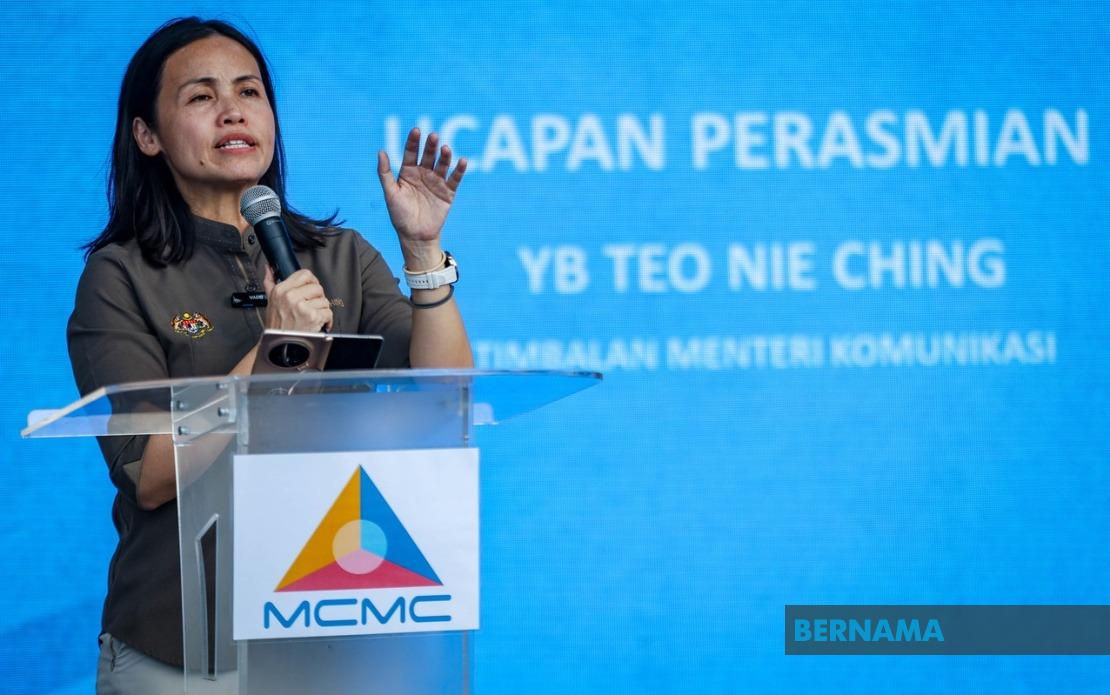
Malaysia's fight against digital fraud intensified this year as the National Scam Response Centre documented nearly 6,000 complaints through its hotline service in the opening four months of 2025. Deputy Communications Minister Teo Nie Ching revealed the concerning volume while launching the next phase of a community-focused awareness initiative in Johor, underscoring the scale of the challenge confronting Malaysian consumers navigating an increasingly digital economy.
The statistics paint a fragmented picture of how scammers are exploiting vulnerabilities across different sectors of online commerce and communications. E-commerce fraud emerged as the dominant category, accounting for 2,566 of the reported incidents, followed closely by telecommunications-related scams affecting 1,369 victims. The remaining cases involved schemes centred on fictitious loans and investment opportunities, reflecting the breadth of tactics deployed by criminal networks targeting Malaysians across multiple platforms and services. This diversification of fraud methods suggests that scammers are continuously adapting their approaches to evade detection and maximize victim yield.
The 997 hotline, established as the public's direct channel to report online fraud to authorities, has evidently gained traction among Malaysian consumers seeking assistance. Teo's remarks acknowledged this growing awareness, noting that the rising number of reports itself signals penetration of the support infrastructure into public consciousness. However, her interpretation carries a sobering implication: the volume of complaints likely represents merely a fraction of actual scam incidents occurring nationwide, with many victims either unaware of reporting mechanisms or reluctant to come forward due to embarrassment or perceived futility of official channels.
Digital literacy remains a persistent vulnerability in Malaysia's defence against online crime. Teo emphasized that awareness and foundational knowledge about safe internet practices are not luxuries but necessities in contemporary society, particularly as fraudsters become more sophisticated in their deception techniques. The observation reflects a broader regional and global trend in which cybersecurity has shifted from being primarily a technological concern to one requiring sustained cultural and educational transformation across entire populations.
Recognizing the need for a more inclusive approach to scam prevention, authorities have restructured their outreach strategy significantly. The Safe Internet Campaign, which launched in 2025 with initial focus on educational institutions including primary and secondary schools, tertiary institutions, and teacher training colleges, has been reimagined to embrace the broader community ecosystem. This strategic pivot acknowledges that knowledge gaps extend well beyond student populations, affecting parents, older citizens, and working-age adults who may lack formal digital training or cybersecurity awareness despite regular online engagement.
Kulai's Safe Internet Campaign Community Carnival served as the inaugural venue for this expanded approach within Johor, establishing a blueprint for subsequent community engagement efforts across the state. The event combined awareness messaging with interactive community participation, creating opportunities for residents to learn practical safety measures while fostering peer-to-peer knowledge sharing. This grassroots model contrasts with traditional top-down public education campaigns, potentially generating more authentic behavioural change through localized trust and social reinforcement.
The campaign roadmap indicates ambitious territorial expansion throughout Johor over the coming months, with nine additional districts scheduled to host similar events before year's end. Beyond Kulai, the programme will reach Kluang, Muar, Kota Tinggi, Pontian, Segamat, Batu Pahat, Mersing, Tangkak, and Johor Bahru, culminating on December 19. This phased approach ensures that the campaign maintains engagement momentum while allowing organizers to refine messaging and activities based on community feedback and local circumstances, potentially increasing effectiveness across diverse demographic and socioeconomic contexts.
Teo's role as both Deputy Communications Minister and Member of Parliament for Kulai positions her at the intersection of policy implementation and constituency service, lending political weight to the initiative. Her direct engagement in campaign launches signals cabinet-level commitment to addressing digital fraud as a priority governance issue, moving beyond reactive law enforcement toward preventive community mobilization. This administrative emphasis reflects recognition that online scams impose significant economic and social costs on Malaysian households and businesses, undermining consumer confidence in digital commerce and financial inclusion efforts.
The categorization of fraud types illuminates the evolving threat landscape in Malaysia's digital economy. E-commerce's predominance as a fraud vector correlates directly with explosive growth in online shopping adoption, accelerated by pandemic-era behavioural shifts and proliferation of platforms including marketplace ecosystems, social commerce channels, and peer-to-peer selling applications. Telecommunications fraud's substantial representation suggests continued vulnerability within communication infrastructure and consumer trust in phone-based interactions, an area where technological solutions alone prove insufficient without accompanying user vigilance and provider-side security measures.
For Malaysian readers and policymakers, the 5,944 reported incidents signal both a crisis dimension and an opportunity for preventive intervention. The sheer volume validates investment in public awareness infrastructure, while the diversity of fraud methodologies indicates that no single technical or regulatory solution will suffice. Regional cooperation among Southeast Asian nations facing similar scam proliferation, harmonization of reporting standards, and cross-border law enforcement coordination may amplify Malaysia's capacity to pursue perpetrators and recover victim assets.
The initiative's expansion beyond educational institutions to encompass families and senior populations addresses a critical demographic vulnerability, as older adults often face higher financial losses per scam incident despite lower reporting rates. By embedding safe internet practices into community events and grassroots engagement rather than restricting messaging to formal educational channels, authorities improve accessibility for populations less likely to attend school-based sessions or seek out standalone cybersecurity training courses.
Looking forward, the effectiveness of the Safe Internet Campaign will ultimately depend on sustained funding, consistent messaging across participating agencies, and meaningful integration with law enforcement and financial sector responses to reported fraud. The initial four-month data provides a baseline against which future progress can be measured, establishing accountability metrics for policymakers and creating opportunities to demonstrate whether community-based awareness initiatives can measurably reduce both scam victimization rates and financial losses among Malaysian populations.

