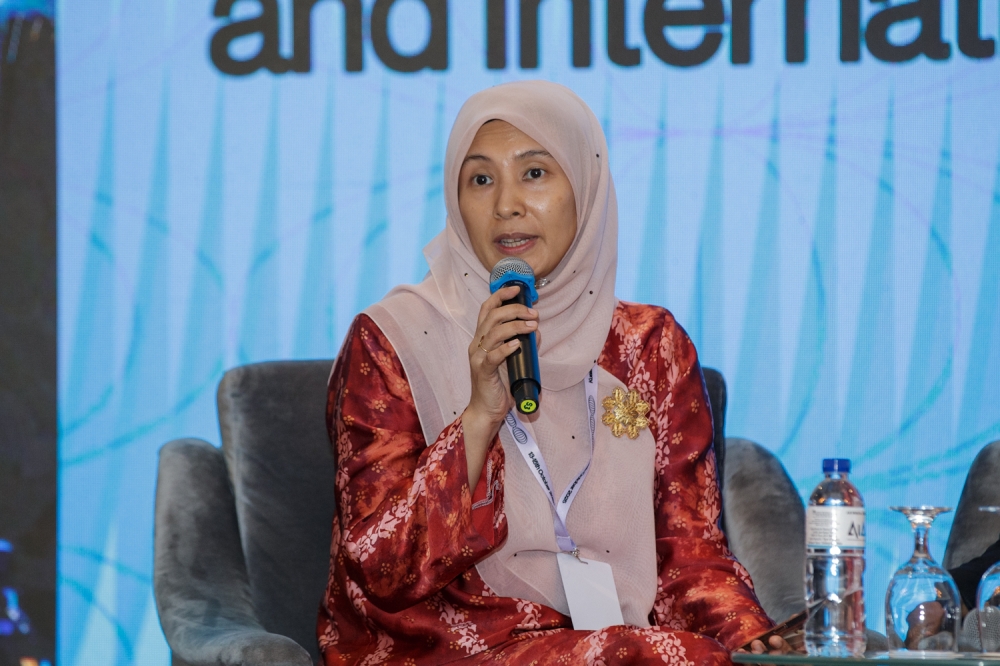
Nurul Izzah Anwar, daughter of PKR chairman Anwar Ibrahim, has announced her decision to relinquish the deputy presidency of Parti Keadilan Rakyat, citing her commitment to pursuing further education as the primary motivation behind the move. The departure of the senior party figure represents a notable leadership transition within one of Malaysia's most significant opposition organisations and opens questions about succession planning at a moment when PKR continues to navigate its role in national politics.
The timing of Nurul Izzah's resignation carries particular significance given the ongoing evolution of PKR's strategic positioning. Since the 2022 general election and subsequent political reshuffles, the party has undergone considerable internal adjustments. Her decision to step back from frontline executive responsibilities suggests a deliberate choice to invest in personal development rather than maintain the high-pressure demands of a senior party office. This approach reflects broader trends among younger Malaysian political figures who view educational credentials as essential for long-term credibility and effectiveness in public life.
Nurul Izzah's academic pursuits represent an investment in intellectual capital that many analysts believe will enhance her future contributions to both the party and public discourse. By choosing to enhance her qualifications at this juncture, she positions herself within a growing cohort of Southeast Asian politicians who leverage advanced study as a foundation for more substantive policy engagement. Her decision underscores how contemporary Malaysian political leadership increasingly values formal academic credentials alongside practical parliamentary experience.
Within PKR specifically, the vacancy created by her departure necessitates reorganisation of the party's command structure. The party faces the challenge of identifying candidates who can effectively manage both the party's internal machinery and its public-facing advocacy. This leadership shuffle occurs as PKR remains instrumental in maintaining opposition strength in Parliament and serves as a key coalition partner in the current political configuration. The party's ability to transition smoothly through this change will signal its organisational maturity.
Anwar Ibrahim's stewardship of PKR takes on additional dimensions given that his daughter held one of the party's most senior positions. Her stepping aside removes any potential perceptions regarding nepotism or dynastic entrenchment within the party hierarchy. This move may actually strengthen the party's institutional credibility by demonstrating that merit-based considerations extend even to family members of the leadership, rather than perpetuating automatic elevation based on familial connection.
For Malaysian opposition politics more broadly, Nurul Izzah's transition reflects the ongoing professionalisation of parliamentary representation. Opposition parties increasingly recognise that competing effectively against entrenched ruling coalitions demands not just political acumen but also deep expertise in policy formulation, economic analysis, and legislative draftsmanship. Her commitment to further study aligns with this broader strategic imperative across opposition ranks.
The deputy presidency itself has historically served as a training ground for future party leaders in Malaysian political organisations. Nurul Izzah's departure creates an opportunity for other rising PKR figures to assume greater responsibility and visibility. This succession moment could catalyse the emergence of new voices within the party, potentially rejuvenating its public image and expanding the range of perspectives represented in its leadership.
Regionally, Malaysia's opposition parties continue to demonstrate flexibility in adapting their leadership configurations to changing circumstances. Nurul Izzah's decision contrasts with more rigid approaches sometimes adopted by ruling parties, where senior positions are typically retained regardless of other commitments. This flexibility may reflect opposition parties' recognition that they must demonstrate exceptional organisational standards to justify public support as alternatives to incumbent administrations.
The educational pathway Nurul Izzah pursues will itself merit close attention within Malaysian political circles. Advanced qualifications obtained from prestigious international institutions carry particular weight in shaping policy perspectives and international engagement strategies. Her studies may position her to lead PKR's engagement with specific policy domains, whether economic reform, constitutional law, or social policy—areas where technical expertise increasingly determines political effectiveness.
PKR's response to this vacancy will reveal much about the party's internal stability and the depth of its bench strength. Whether the party elevates someone from its current ranks or conducts a broader leadership review remains to be seen. What appears clear is that Nurul Izzah's departure represents neither crisis nor rupture, but rather a calculated transition that accommodates individual development while maintaining broader organisational continuity.
Looking ahead, Nurul Izzah's period of study could fundamentally reshape her subsequent political trajectory. Malaysian politics has increasingly demonstrated that politicians with strong educational credentials gain enhanced credibility in technical policy debates and international forums. Her investment in further learning may ultimately position her for expanded influence within PKR once she completes her studies, whether in executive capacity or as a leading policy voice.
This transition ultimately exemplifies how contemporary Malaysian political parties navigate the complex balance between maintaining leadership continuity and accommodating the personal development aspirations of their members. For PKR specifically, Nurul Izzah's decision offers an opportunity to demonstrate that the party can function effectively across multiple levels of leadership while supporting the individual growth of its members.

