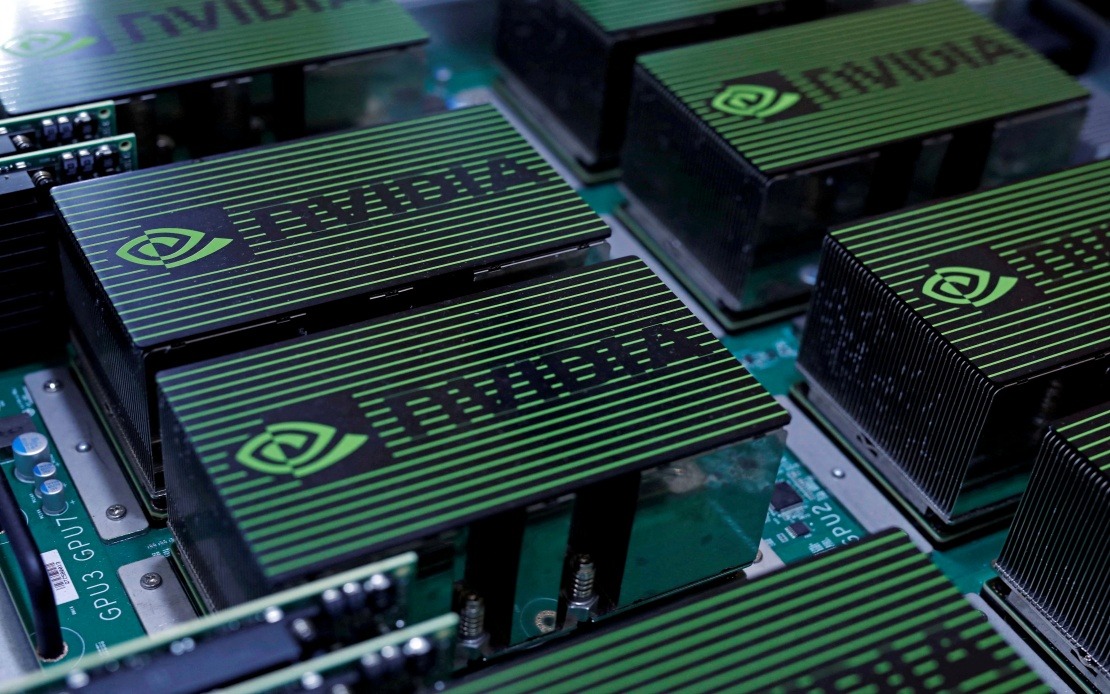
Nvidia, the American semiconductor powerhouse, has dramatically restricted access to its advanced artificial intelligence processors across Asia, cutting the number of eligible buyers by more than half under pressure from intensified US export controls. The move represents a significant tightening of the technology giant's customer vetting procedures that directly impacts regional markets, including Malaysia, Singapore, and Japan, where the demand for high-performance AI chips remains considerable.
The company's revised approach involves substantially more rigorous evaluation protocols for determining who qualifies to purchase its most capable chip designs. This shift became apparent in recent months as Nvidia implemented comprehensive screening mechanisms across major Southeast Asian and East Asian markets. The decision carries particular weight for Malaysia and Singapore, both positioned as emerging technology hubs competing for investment in artificial intelligence research, development, and deployment across industries from finance and healthcare to manufacturing.
According to reports released on Tuesday, Nvidia's customer list underwent dramatic pruning, with the majority of previously approved buyers failing to secure positions on the updated roster. However, the company has indicated that rejected applicants retain the opportunity to address regulatory concerns raised during their screening and resubmit applications for reconsideration. This process essentially creates a temporary bottleneck for companies seeking to acquire the high-end processors essential for training and running sophisticated AI systems.
The restrictions have particularly affected neocloud providers—specialized cloud computing platforms engineered specifically for artificial intelligence workloads, model training, and inference operations. These intermediary services have proven increasingly attractive to organizations lacking the capital or expertise to develop independent AI infrastructure, making them central to Asia's artificial intelligence deployment strategy. Many such firms now face uncertainty about their ability to maintain service offerings as chip supply becomes constrained.
The underlying rationale for Nvidia's aggressive customer screening relates directly to broader US government efforts to prevent advanced semiconductor technology from reaching Chinese entities through circuitous routes. Despite existing export restrictions nominally blocking direct AI chip sales to China, Washington policymakers have grown concerned about sophisticated transshipment schemes and third-party procurement arrangements that circumvent regulatory frameworks. By reducing the total number of approved buyers throughout Asia, the US government aims to shrink the available pathways through which restricted technology might eventually reach prohibited destinations.
For Malaysia specifically, the development presents complex implications. The country hosts significant semiconductor manufacturing facilities and has positioned itself as a regional technology center, yet remains vulnerable to US export control adjustments that limit customer access to cutting-edge components. Malaysian cloud service providers and technology firms previously approved to purchase Nvidia chips now face potential disruption to business operations and development roadmaps. The uncertainty surrounding approval reapplications could delay artificial intelligence initiatives that companies have been planning based on expected chip availability.
Singapore's position as a regional financial and technology hub similarly faces disruption, though the city-state's deep integration into US technology policy frameworks may provide somewhat greater stability compared to other Southeast Asian jurisdictions. Japanese technology companies, meanwhile, confront their own challenges as part of this broader constraint, particularly given the critical importance of artificial intelligence advancement to Japan's efforts to maintain technological competitiveness amid demographic pressures and economic stagnation.
The broader pattern reflects an escalating technological decoupling between Western economies and China, with Southeast Asia caught in a difficult middle position. Companies throughout the region must navigate increasingly complex regulatory environments while maintaining competitive advantage in artificial intelligence capabilities. The Nvidia restrictions effectively establish a new reality: access to the most advanced AI chips through normal commercial channels is no longer guaranteed even for established technology firms in allied countries.
This development underscores how geopolitical tensions now directly shape commercial technology transactions and business operations across Asia. The semiconductor industry, already concentrated in a handful of key regions and companies, becomes further weaponized as an instrument of foreign policy. For Malaysian policymakers and technology entrepreneurs, the situation highlights both the opportunities and vulnerabilities inherent in depending on American semiconductor suppliers for critical infrastructure supporting artificial intelligence development.
The implications extend beyond immediate chip procurement challenges. Companies reduced to subsidiary status on approved lists, or excluded entirely, may accelerate efforts to develop alternative suppliers, including Chinese competitors offering less restricted products. This potentially undermines the intended goal of limiting Chinese AI advancement while accelerating regional technology diversification away from American suppliers. For Malaysia and other Southeast Asian nations, the strategic calculation becomes increasingly complex as policymakers balance relationships with Washington against technological independence and regional competitiveness in the artificial intelligence era.

