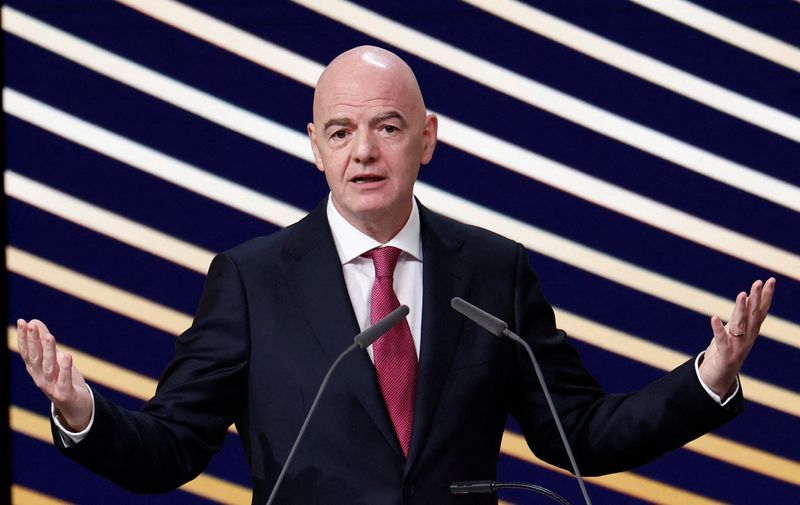
The Oceania Football Confederation has endorsed FIFA's decision to withdraw and review its controversial private investment initiative, even as New Zealand—the region's sole World Cup qualifier—withdrew backing for President Gianni Infantino's reelection campaign, deepening the fractures within global football's governing body.
Infantino, who is pursuing another term next year, has faced mounting pressure following open calls for his removal from three major confederations: UEFA, the AFC, and CONCACAF. These organisations have challenged both his leadership approach and his handling of the failed FIFA Forward Enterprise proposal, which aimed to inject private capital into the World Cup and other international tournaments. The timing of the rebellion is significant, as it comes less than a year before the FIFA Congress vote that will determine Infantino's political future.
The OFC, representing soccer's smallest confederation with just 11 full members across the Pacific and Indian Ocean islands, struck a notably different tone than its New Zealand member. In a statement released following Wednesday's executive meeting, the confederation's leadership emphasised the tangible benefits that Oceania has experienced under FIFA's stewardship over the past decade. This diplomatic posture suggests that the smaller, economically vulnerable football associations in the region have weighted the financial advantages of FIFA's development support against the governance concerns raised elsewhere.
The OFC's formal statement welcomed FIFA's withdrawal of the FFE proposal and committed to a comprehensive review of the issues surrounding the scheme. Officials urged FIFA to leverage this examination as an opportunity to identify necessary structural and procedural reforms. This framing—positioning the review as constructive rather than punitive—indicates an attempt to maintain stable relations with FIFA headquarters in Zurich while appearing to acknowledge legitimate concerns about the decision-making process.
Yet New Zealand's departure from the regional consensus reveals significant disagreement about the severity of FIFA's missteps. As the Oceania region's most developed football nation and its only representative at recent World Cups, New Zealand Football Federation possesses both the independence and the sporting credibility to act unilaterally. The federation explicitly stated that it has withdrawn its backing from Infantino's reelection campaign, marking a clear vote of no confidence in the incumbent leadership.
New Zealand's critique extends beyond the failed investment scheme itself. The federation asserted that decisions and conduct within FIFA have fundamentally eroded trust among member associations and exacerbated divisions within international football governance. This characterisation suggests that concerns about Infantino extend to his broader management style and decision-making architecture, not merely the botched private investment initiative. The federation called for an independent, external review to restore confidence in FIFA's leadership and institutional processes.
The financial dimensions of the withdrawn proposal illuminate why smaller confederations such as the OFC might prove more forgiving than larger, more self-sufficient members. FIFA had dangled a $20 million grant to member associations for the current funding cycle, with the explicit promise that this amount could double if associations accepted the private investment framework. For developing football nations in the Pacific, where resources are scarce, the loss of even $20 million represents a substantial setback to grassroots development programmes, player pathway investment, and administrative capacity-building.
The broader rebellion against Infantino emerged following a crisis gathering in Morocco last week, where FIFA leadership issued an apology to all 211 member associations for mishandling the private investment proposal. Despite this contrition, FIFA's governance board publicly affirmed its continued confidence in Infantino, signalling that internal power brokers remain aligned with the president. This display of solidarity from the executive hierarchy may explain why the OFC chose to accept FIFA's review commitment without escalating demands, while New Zealand's divergence suggests that mid-sized football nations with independent resources feel empowered to challenge the establishment.
The fracturing of regional unity holds implications for FIFA's structural legitimacy. Confederations are meant to represent unified interests within their geographic zones, yet the OFC-New Zealand split exposes how financial dependency shapes voting behaviour and public positioning. Smaller nations with limited football infrastructure become stakeholders in maintaining FIFA's current leadership because their development programmes depend on FIFA funding streams. Conversely, nations with established football cultures and functioning domestic leagues can afford principled stances on governance.
Infantino's reelection campaign now faces a significantly weakened coalition. With three major confederations calling for his removal or a thorough review, and with individual member nations such as New Zealand publicly withdrawing support, the narrative around his leadership has shifted from inevitable continuity to genuine contestation. The FIFA Congress vote next year will test whether confederation-level loyalty to Infantino can overcome individual member state defections and whether emerging leadership challengers can mobilise sufficient votes to mount a genuine alternative.
For Southeast Asian football, which operates partly within the AFC confederation, this institutional turbulence at FIFA carries real consequences. Decisions about World Cup expansion, continental tournament scheduling, and redistribution of FIFA's broadcasting and sponsorship revenues flow from the presidential office. If Infantino's authority weakens or if alternative leadership emerges, the strategic priorities and policy emphases of global football governance could shift substantially, affecting everything from qualification pathways to development investment allocations for the region.
The contrast between the OFC's diplomatic acceptance and New Zealand's principled withdrawal demonstrates that global football governance is increasingly contested terrain. The age of automatic deference to FIFA leadership—particularly when that leadership faces credible questions about transparency and decision-making competence—appears to be ending. How this institutional rebellion resolves will shape FIFA's operational culture and legitimacy for years beyond next year's Congress vote.

