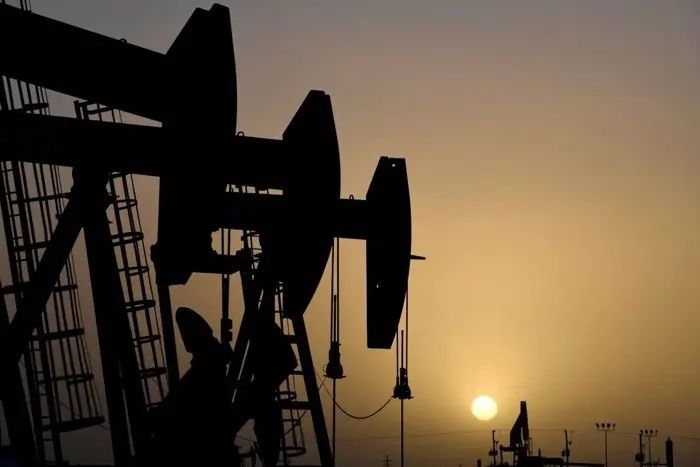
Oil prices climbed sharply on Friday as military tensions between the United States and Iran reached fresh intensity, with both nations trading significant strikes across the Persian Gulf region. The escalation raises fresh concerns about potential disruptions to critical shipping lanes that handle vast quantities of the world's crude exports. Brent crude futures advanced 70 cents to settle at $84.93 a barrel, representing a gain of roughly 0.83 percent, while US West Texas Intermediate crude rose 81 cents, or 1.03 percent, to $79.76 a barrel. Both contracts erased losses from the previous trading session, reflecting investor nervousness about the expanding conflict.
The weekly performance of both benchmark contracts underscores the market's anxiety about geopolitical risk. Brent has climbed nearly 12 percent this week and is on track for a third consecutive weekly advance, while WTI has similarly gained ground and appears headed for a second weekly climb. These figures reveal the degree to which traders are pricing in supply disruption scenarios as tensions between Washington and Tehran spiral beyond recent diplomatic pauses. The cumulative gains reflect deepening concerns that the conflict could metastasize into broader regional instability affecting energy infrastructure.
A key dimension of the current crisis involves Iran's signals to its Houthi allies regarding the Red Sea shipping corridor. According to three sources who briefed Reuters, Iran's leadership has instructed the Houthi political and military organisation to prepare for potential closure of this vital oil export route should the United States strike Iranian power infrastructure. Such a development would compound existing supply anxieties and represent a dramatic escalation of the months-long tensions that have periodically disrupted maritime commerce in the region. The prospect transforms the Red Sea from a relatively secure passage into another potential chokepoint comparable to the Strait of Hormuz, through which approximately one-third of globally traded oil passes.
Market commentators emphasize the severity of this dual-risk scenario. Tim Waterer, chief market analyst at KCM Trade, characterised the emerging situation as particularly concerning given the simultaneous threats to two major energy transit points. He noted that the combination of Hormuz tensions and the newly articulated Red Sea risk is embedding what traders describe as a geopolitical premium into both Brent and WTI valuations. This premium essentially reflects the market's assessment that oil supplies face enhanced risks beyond normal supply-demand dynamics, pushing prices higher even absent immediate physical disruptions.
The military escalation itself has intensified markedly over recent days. On Wednesday, the United States launched two substantial waves of air strikes in a single day, marking the first major operations since a memorandum of understanding had paused hostilities the previous month. These strikes targeted locations near Iran's southern coast and continued into Thursday. The Central Command characterised the operations as degrading Iranian military capabilities and confirmed that American forces conducted strikes for a sixth consecutive night beginning at 1800 GMT.
Iran has responded with its own barrage of missiles and drones targeting US military installations throughout neighbouring states. A recently expanded air base in Jordan came under particular fire, demonstrating that Iranian retaliation extends beyond direct US positions to broader regional infrastructure. This tit-for-tat dynamic, with each side's actions triggering reciprocal responses, carries genuine risk of unintended escalation or miscalculation that could dramatically widen the conflict.
Qatar has emerged as an unexpected focal point in the escalating tensions. The country's defence ministry announced that its armed forces successfully intercepted an Iranian missile attack in the early hours of Friday, though the interior ministry reported that a child sustained shrapnel injuries from the interception operations themselves. Qatar's location on the Persian Gulf, combined with its hosting of substantial US military infrastructure, places it directly in the path of any broad regional conflict.
Energy security experts have begun voicing alarm about the trajectory of events. Fatih Birol, Executive Director of the International Energy Agency, told the Council on Foreign Relations in Washington on Thursday that oil security remains critically important to global stability. He expressed specific worry about whether the situation would deteriorate further over the coming weeks, noting that inadequate improvement could trigger severe consequences for energy markets and the broader global economy.
From a technical perspective, market analysts suggest that WTI could potentially test mid-$80s territory should it maintain support levels in the mid-$70s range. This assessment reflects trader expectations that prices will remain volatile and potentially elevated so long as geopolitical risks persist. For Malaysian readers and regional observers, the implications are substantial: any sustained disruption to Gulf oil supplies would affect energy costs throughout Southeast Asia and complicate economic planning for petroleum-dependent industries and economies already grappling with inflation concerns.
The unfolding crisis highlights the vulnerability of global energy markets to political instability in strategically crucial regions. Malaysia, as a net energy importer with significant petrochemical and manufacturing sectors, faces direct exposure to crude price volatility stemming from Middle Eastern tensions. Insurance premiums for maritime shipping through contested waters have already begun rising, embedding additional costs into international trade beyond the raw price of oil itself. Regional policymakers will likely monitor developments closely, with particular attention to whether diplomatic channels can be reopened before military escalation crosses additional thresholds.

