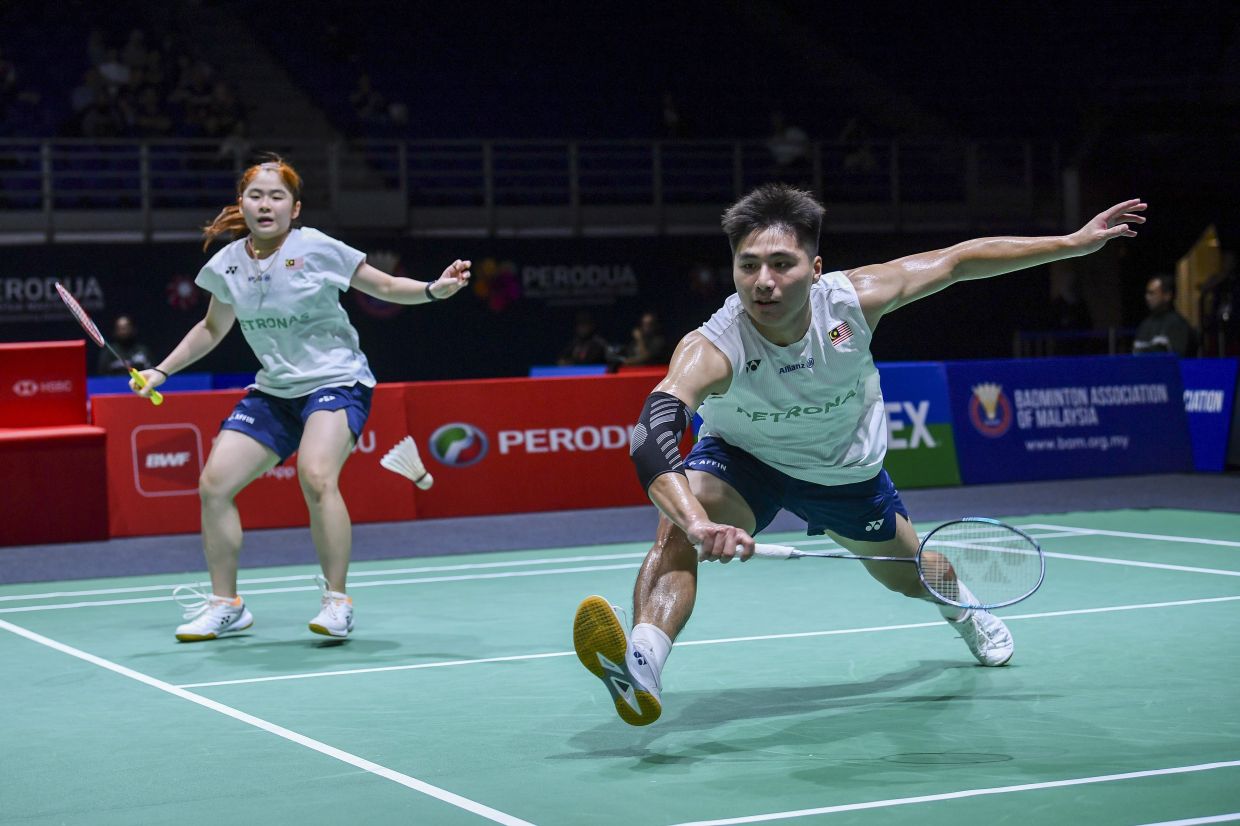
The 23-year-old Malaysian mixed doubles shuttler Jimmy Wong has expressed renewed optimism about achieving his Olympic aspirations since rejoining the Badminton Association of Malaysia in April, marking a significant juncture in his career trajectory. Having settled back into the competitive structure of the national team, Wong is channelling his efforts toward qualifying for the 2028 Los Angeles Olympics alongside partner Cheng Su Yin, viewing his reinstatement as a pivotal stepping stone toward that ultimate goal.
Wong's approach to his career demonstrates a balanced perspective on goal-setting, acknowledging that while Olympic qualification remains a primary objective, he is equally focused on managing the psychological dimensions of elite sport. Rather than overwhelm himself with a long list of targets, he has chosen to concentrate on maximising his performance during each match, recognising that excessive pressure can undermine rather than enhance athletic output. This measured mentality suggests a player who has learned valuable lessons about the demands of professional badminton and the importance of mental resilience alongside technical excellence.
A pivotal influence in Wong's development since returning to the national setup has been his appointment under Nova Widianto, the mixed doubles coach whose credentials as an Olympic silver-medallist and former world champion bring unparalleled credibility to the coaching role. The opportunity to train under someone of such calibre represents a substantial upgrade for Wong, who credits Widianto with facilitating improvements not merely in tactical and technical aspects of his game but also in his maturation as a competitor. The coach's vast experience navigating high-pressure situations has proven instrumental in helping Wong develop the resilience necessary to perform consistently at elite levels.
The partnership between Wong and Cheng Su Yin remains relatively nascent, yet early indicators suggest genuine compatibility and potential for growth. Communication between mixed doubles partners is crucial—the sport demands seamless coordination, split-second decision-making, and mutual understanding during matches—and Wong has indicated that this foundation is solid. However, both players recognise gaps in their current performance that require focused attention and continued refinement, demonstrating a realistic assessment of where their partnership currently stands within the competitive hierarchy.
Currently positioned at 118th in the world rankings, Wong and Su Yin have established a concrete intermediate milestone: breaking into the top 32 by the conclusion of 2024. This target carries significant strategic importance, as entry into the elite ranking bracket unlocks access to the sport's most prestigious tournaments, including the Super 750 and Super 1000 series events. These competitions are essential for accumulating ranking points and gaining exposure to world-class opposition, both of which are indispensable for any pair aspiring toward Olympic qualification. The progression from their current position to top 32 would represent a substantial leap, but one that Wong appears to believe is achievable with sustained effort and proper guidance.
Wong and Su Yin have already demonstrated flashes of excellence that justify optimism about their prospects. Their performance at the recent Singapore Open exemplified the calibre they can achieve on given days; their upset victory over world number one Feng Yanzhe-Huang Dongping in the opening round announced their presence as a pairing with genuine competitive potential. While their campaign ultimately concluded in the second round, such moments against top-ranked opponents provide valuable experience and confidence-building evidence that they can compete at the highest levels. These occasional victories against elite pairings serve as crucial psychological anchors during periods of development.
The Malaysian badminton landscape has historically produced formidable mixed doubles performers, and Wong's ambitions sit within this proud tradition. The national association's continued investment in competitive coaching structures and support systems reflects a broader institutional commitment to developing talent across multiple disciplines. For players like Wong, this ecosystem provides both tangible resources and an intangible sense of shared purpose within an organisation focused on international competitiveness.
The four-tournament sample size Wong has accumulated since returning to the national setup, while limited, offers sufficient data for preliminary assessment of the partnership's viability. Rather than viewing early performances as definitive indicators, Wong appears to be treating these events as learning opportunities, components of a longer developmental arc extending toward the 2028 Olympics. This marathon perspective, combined with quarterly milestones like the top-32 target, creates a sustainable framework for progression without inviting complacency.
For Malaysian badminton enthusiasts and sports administrators monitoring domestic talent development, Wong's trajectory represents a microcosm of the challenges and opportunities facing the sport nationally. The decision to return to the national setup, the availability of world-class coaching in the person of Widianto, and the young player's demonstrated commitment to improvement all suggest that Malaysia's badminton infrastructure remains capable of nurturing competitive athletes. Whether Wong and Su Yin ultimately reach Los Angeles 2028 will depend on consistent execution, injury avoidance, and the competitive quality of international pairings during the next three and a half years—variables that remain partly beyond their direct control. Yet their immediate focus on achieving the top-32 milestone provides a measurable next chapter in what could become a significant story of Malaysian sporting achievement.

