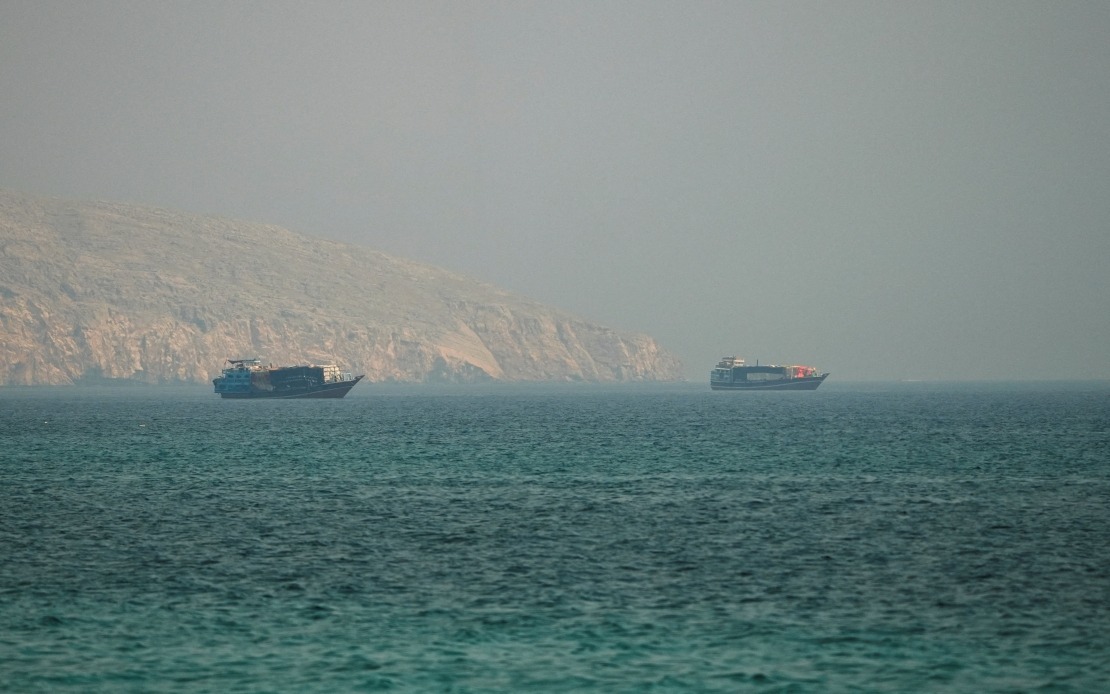
Oman has firmly positioned itself against compulsory transit levies in the Strait of Hormuz, instead advocating for a voluntary approach to funding navigational assistance services. The stance was articulated by an Omani delegate at the 137th session of the International Maritime Organisation Council in London this week, signalling the sultanate's distinct diplomatic posture amid escalating tensions over toll schemes in one of the world's most strategically vital waterways. The intervention underscores how regional powers are seeking middle-ground solutions to contentious issues affecting global maritime commerce, with implications that extend well beyond the Middle East to developing economies across Asia that depend heavily on freedom of navigation.
The Omani representative used the IMO forum to underline that his country prioritises the established principle of transit passage enshrined in international maritime law. This principle guarantees vessels from all nations the right to traverse the waterway without obstruction or discrimination. By emphasising this commitment, Oman has effectively distanced itself from any scheme that would render shipping more costly or burdensome for commercial operators. Such clarity matters significantly given the geopolitical volatility surrounding the Strait, where competing claims over jurisdiction and authority have repeatedly threatened to disrupt trade flows worth hundreds of billions of dollars annually.
The proposal attributed to Oman draws inspiration from operational models successfully deployed in the Strait of Malacca and Singapore, two congested Southeast Asian chokepoints where maritime traffic intensity rivals that of Hormuz. Under these regional arrangements, shipping lines contribute voluntary fees to support navigational safety infrastructure, hydrographic surveying, and rescue operations. Unlike binding tariffs imposed unilaterally, such mechanisms rely on industry cooperation and perceived mutual benefit. For Malaysian and Singaporean readers, the reference to the Malacca Strait framework carries particular resonance, as that passage handles roughly one-quarter of global maritime trade and demonstrates how voluntary contributions can fund maintenance without resorting to compulsory tolls that invite international legal challenges.
The timing of Oman's proposal reflects growing anxiety among maritime stakeholders about Iran's conduct in the Strait. According to reports, Tehran has begun collecting fees from vessels transiting its claimed territorial waters, a practice that the United Arab Emirates and allied nations have formally condemned at the IMO. This unilateral action by Iran has alarmed shipping companies, insurance underwriters, and oil importers globally, as it injects unpredictability and cost into supply chains already strained by geopolitical fragmentation. The prospect of arbitrary levies threatens the commercial viability of routes that cannot be easily substituted, placing particular pressure on energy-importing nations and developing economies that lack strategic alternatives.
Iran's countervailing submission to the IMO Council asserts that it has maintained ongoing consultations with Oman regarding management and coordination arrangements for the waterway, framing any measures as consistent with international law and domestic regulations. This rhetorical positioning suggests that Tehran views its actions as territorially justified rather than extraterritorial overreach. However, the framing also reveals diplomatic complexity: Iran acknowledges the need for multilateral engagement and appears to be calibrating its stance in light of regional and international pushback. The fact that Oman, Iran's closest neighbour and a state with historically good relations across sectarian divides, has publicly signalled discomfort with mandatory fees sends a powerful signal about the limits of Tehran's regional acceptance on this issue.
Oman's diplomatic initiative reflects the sultanate's broader strategic interest in maintaining stability along its coastlines and preserving its position as a neutral, pragmatic actor in an increasingly fractious region. Historically, Oman has positioned itself as a bridge-builder and mediator in Middle Eastern disputes, leveraging its geographic location and measured foreign policy approach. By proposing a voluntary framework modelled on proven maritime practices, Oman is attempting to defuse a confrontation that could escalate into military engagement or sustained trade disruption. For Malaysia and other Southeast Asian nations, Oman's proposal carries instructive value: it demonstrates how regional states with limited military power can nonetheless exercise diplomatic influence by offering constructive alternatives to zero-sum confrontation.
The voluntary contribution model has inherent advantages over mandatory schemes from a legal standpoint. International maritime law, codified primarily in the United Nations Convention on the Law of the Sea, prohibits coastal states from levying tolls on transit passage through straits used for international navigation. A shift toward voluntary contributions would sidestep such legal jeopardy by reframing charges as payments for optional enhanced services rather than compulsory transit taxes. Shipping lines could theoretically opt into premium navigational support while proceeding without it at lower cost. This framework would preserve the principle of free passage while generating revenue for legitimate maritime safety functions, creating what might be termed a legally defensible compromise.
The implications for global trade and Southeast Asian economies warrant careful consideration. Any prolonged disruption or uncertainty in Strait of Hormuz transit would immediately ripple through regional energy markets and supply chains that depend on Gulf oil and liquefied natural gas imports. Malaysia, as a major shipping hub and petrochemical producer, has direct stakes in maintaining predictable passage costs and reliable maritime corridors. Similarly, Singapore's position as the world's largest bunkering port would suffer if geopolitical risks elevated insurance premiums and fuel surcharges for vessels navigating high-tension waters. Thailand, the Philippines, and Vietnam, which all import substantial petroleum volumes from the Middle East, would face inflationary pressures stemming from elevated shipping costs.
The IMO Council session itself provides important procedural context. By formalising positions through this multilateral institution, Oman, Iran, the UAE, and other stakeholders are channelling their dispute into a rules-based framework rather than allowing it to devolve into unilateral actions or military confrontation. The IMO's role as arbiter of maritime standards and practices carries weight precisely because it represents broad international consensus on maritime safety and freedom of navigation. Oman's emphasis on working closely with the IMO and member states underscores this commitment to institutional diplomacy, even as underlying tensions remain unresolved.
Looking ahead, the success of Oman's proposal will likely depend on whether Iran perceives sufficient political benefit in pivoting away from mandatory tolls toward a voluntary model. The sultanate's proposal implicitly acknowledges Iran's security and revenue concerns while proposing a path that avoids international legal exposure and maintains broader regional and global acceptance. However, if Tehran interprets voluntary arrangements as insufficient compensation for what it views as legitimate economic rights over the Strait, the confrontation could intensify. Southeast Asian states and other maritime trading nations should monitor these developments closely, as the precedent set in Hormuz could influence disputes over other strategic waterways, including the South China Sea.
The Strait of Hormuz controversy also illustrates the broader challenge facing the international maritime order: how to balance state sovereignty, coastal authority, and the universal interest in free and open seas. Oman's proposal, by drawing on the Malacca Strait precedent, suggests that customised, context-specific solutions negotiated among stakeholders can yield workable compromises. Whether this formula can overcome the deeper political antagonisms driving the current impasse remains uncertain, but the diplomatic effort itself reflects recognition that escalation serves no party's interests and that maritime commerce benefits from predictability, legal clarity, and institutionalised cooperation.

