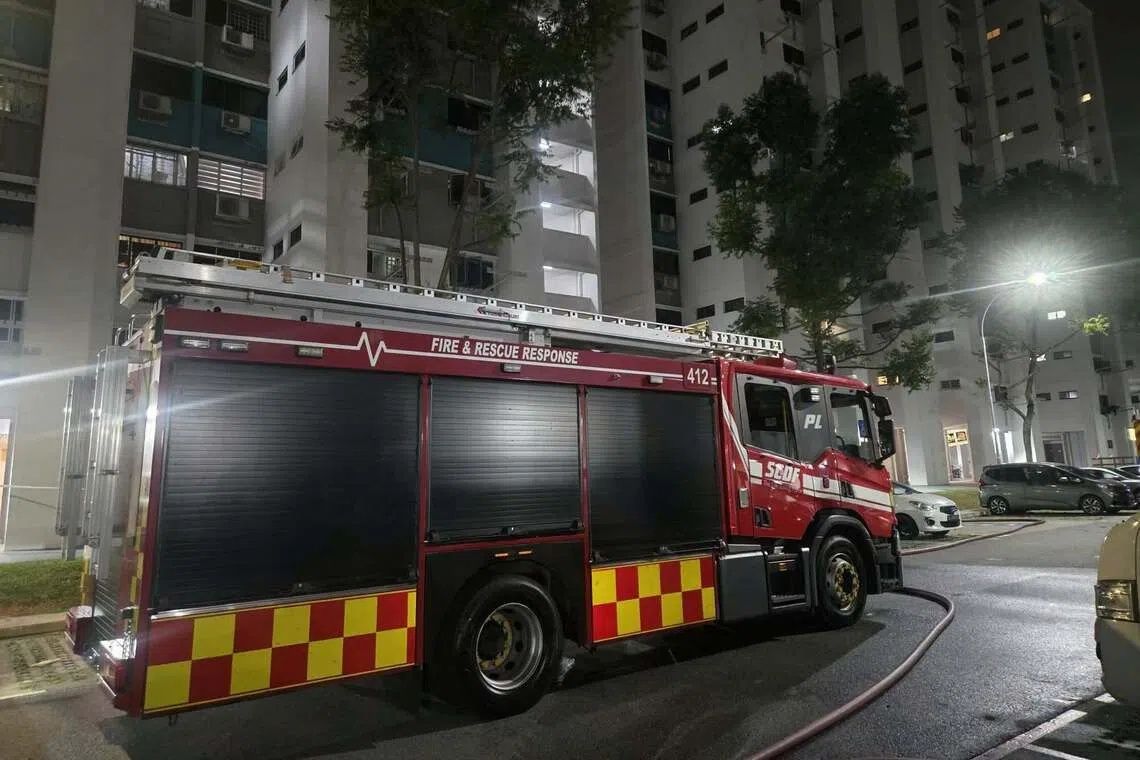
A deadly fire tore through a flat in the Jurong East precinct early on August 16, resulting in one fatality and prompting emergency crews to evacuate 50 residents from the affected building. The incident occurred at Block 339 Jurong East Avenue 1, where the Singapore Civil Defence Force responded to an emergency call at 3.55am. Upon arrival, firefighters encountered heavy black smoke billowing from a unit on the third storey, with flames consuming furnishings and other items within the living room area.
Rescue personnel forced entry into the affected unit and discovered an unresponsive individual lying in the living room. A paramedic arrived at the scene and pronounced the person dead, bringing an end to any hopes of survival. The identity of the deceased and the circumstances leading to their presence in the flat at that early hour have not been disclosed. The Singapore Civil Defence Force has indicated that investigators are pursuing multiple lines of inquiry to determine what sparked the blaze, though preliminary findings have not yet been made public.
This tragedy represents a disturbing escalation in residential fire incidents across Singapore's public housing sector. Within a span of roughly three weeks, at least four separate fires have claimed lives in Housing and Development Board flats, signalling a troubling trend that has drawn attention from authorities and residents alike. The frequency of these incidents suggests that underlying factors—whether related to fire safety practices, building maintenance, or resident awareness—warrant urgent examination and remedial action.
The first in this cluster of fatal fires occurred on July 28 at Block 39 Circuit Road, where a 70-year-old man perished in the flames. That blaze ignited concern about fire prevention measures across the HDB estate system. Just three days later, on July 31, another fire ravaged an eighth-floor unit at Block 309 Clementi Avenue 4, claiming the life of a 65-year-old man and injuring two firefighters who were attempting to contain the blaze and rescue occupants. The injuries sustained by the firefighters underscored the hazardous nature of responding to such incidents and the risks undertaken by emergency personnel.
The fourth incident in this grim sequence took place on August 3, when a blaze broke out on the fifth floor of Block 684 Race Course Road. That fire affected multiple residents, with five individuals aged between 55 and 88 years old being hospitalised with injuries and smoke inhalation. Tragically, the oldest victim, an 88-year-old resident, succumbed to complications from the fire on August 5, just two days after the incident. The successive occurrence of these fires within a compact geographic and temporal radius has raised questions about common risk factors and whether preventive measures are adequate.
From a Southeast Asian perspective, Singapore's experience with these fires reflects challenges that plague residential towers across the region. Ageing public housing stocks, higher density living arrangements, and the concentration of vulnerable populations—elderly and low-income residents—in these buildings create compounding risks. Malaysia, which has faced its own share of tragic residential fires in recent years, as well as other regional neighbours managing similar housing challenges, may find valuable lessons in how Singapore investigates and responds to these emergencies. The rapid succession of incidents demands systemic analysis rather than treating each fire as an isolated tragedy.
The Singapore Civil Defence Force's response protocols appear robust, with emergency crews reaching the Jurong East flat within minutes of the alert and conducting forcible entry operations to search for victims. However, the outcomes suggest that prevention and early detection must be strengthened. Fire safety advocates have long emphasised the importance of functional smoke detectors, clear evacuation routes, and resident education about fire risks. The fact that multiple residents required evacuation indicates that while the response team performed admirably, the number of lives at risk in high-rise residential settings remains substantial.
Investigators will now focus on determining the origin and cause of the Jurong East fire. Understanding whether the incident stemmed from electrical faults, cooking mishaps, carelessly discarded smoking materials, or other common triggers is critical for developing targeted prevention strategies. Each fire in this sequence may reveal different causative factors, and comparative analysis across all four incidents could identify whether a single underlying problem—such as building code violations or inadequate maintenance—connects them.
The human toll extends beyond the immediate fatalities. Survivors and evacuated residents often experience psychological trauma, displacement, and material losses. Community support services and counselling resources become essential in the aftermath of such incidents. Insurance coverage, temporary housing assistance, and emotional support systems require coordination between government agencies and social welfare organisations.
Looking forward, Singapore authorities face mounting pressure to prevent further tragedies. Enhanced inspections of HDB blocks, particularly those with similar architectural features or age profiles to the affected buildings, may become necessary. Public awareness campaigns emphasising fire safety could help residents recognise and mitigate risks within their homes. Additionally, investing in advanced detection and suppression technologies—such as improved sprinkler systems and early warning devices—might provide additional layers of protection in buildings housing vulnerable populations.

