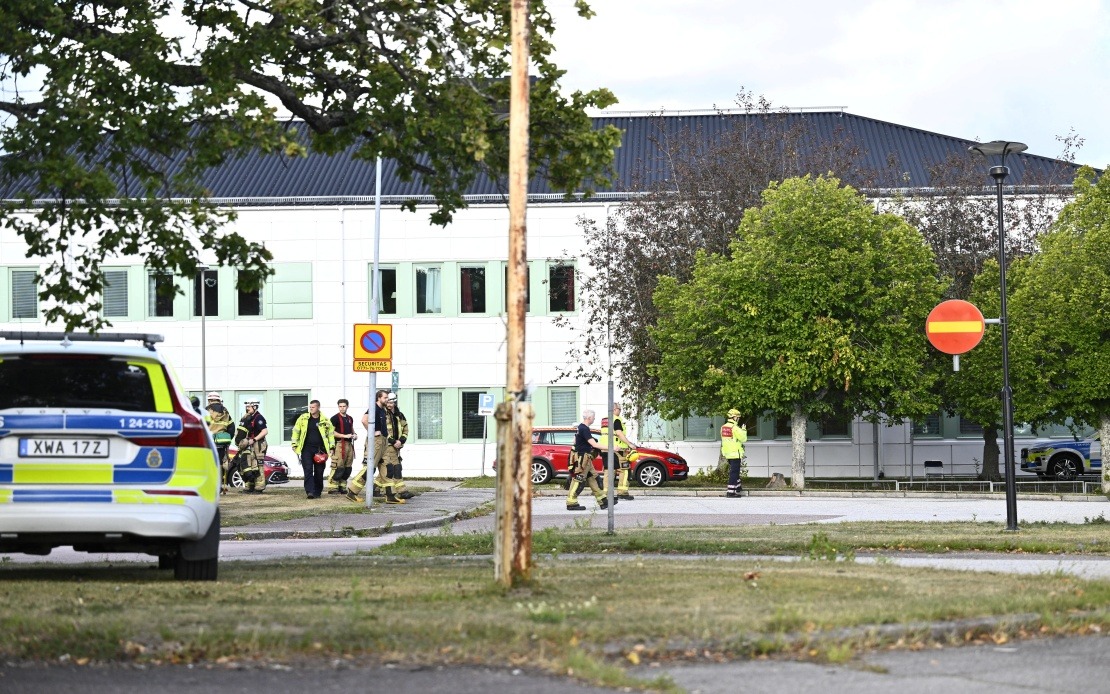
A deadly assault involving a sword has shaken a small town in central Sweden, leaving one person dead and two teenagers with serious injuries. The attack occurred at Brinell School in Fagersta when an armed individual entered the premises and launched an assault on students and staff. Emergency services and police responded swiftly to the incident, which unfolded at 2.06 pm local time on Thursday, according to authorities in Fagersta Municipality.
The two seriously injured victims are both male students under the age of 18, and while their conditions are reported as critical, they remain stable at this stage. A third person sustained minor injuries during the altercation. The rapid response by emergency medical services has been credited with stabilising the more severely wounded individuals, though the psychological impact on the school community will likely persist far longer than the physical injuries themselves.
Police have apprehended an 18-year-old male suspect in connection with the assault. The suspect has been linked to two residential addresses within Fagersta and is believed to be a former pupil of Brinell School. The decision to arrest someone of school age raises troubling questions about what circumstances could drive a young person to commit such a violent act against former classmates and educators. Investigators are now working to establish the motive behind the attack and determine whether any warning signs had been overlooked.
In response to the immediate threat, authorities implemented comprehensive lockdown procedures across multiple educational and recreational facilities in Fagersta. Seven institutions were placed under security lockdown, including Olympen, Fagerstahallen, Risbroskolan, Skogsglantan, Bjorksta, Prastkragen, and Norrbybacken. These precautionary measures reflected concerns that the attacker might pose additional danger or that multiple incidents could be occurring simultaneously, though subsequent events did not confirm such fears.
Sweden, like many Nordic nations, has experienced relatively low rates of violent crime in educational settings compared to many other developed countries. However, this incident represents a jarring reminder that such tragedies are not confined to any particular geography or socioeconomic context. School safety has increasingly become a pressing concern for policymakers across Europe, particularly following high-profile incidents in recent years that have prompted broader discussions about mental health screening, early intervention, and security measures in educational institutions.
The attack has prompted immediate governmental attention at the highest levels. Justice Minister Gunnar Strommer released a statement confirming that the government is actively monitoring the situation and maintaining close coordination with law enforcement agencies. His remarks emphasised that police are conducting an intensive investigation into the circumstances surrounding the assault, with authorities working to piece together the sequence of events and understand the attacker's motivations.
For Malaysian observers, this incident serves as a sobering illustration of how school violence transcends borders and cultures. While Sweden is often cited as a model society with strong social safety nets and education systems, the occurrence of such an attack demonstrates that no community is entirely immune to sudden violent tragedy. The incident underscores the importance of robust threat assessment protocols, mental health services accessible to young people, and staff training in crisis response within educational environments.
The response from Swedish authorities has been methodical and transparent, with information being shared promptly with the public and media. This contrasts with how some nations handle such incidents, and reflects Nordic norms around governmental accountability and public communication during crises. The coordination between police, emergency medical services, and municipal authorities appears to have functioned effectively, potentially preventing a more catastrophic outcome.
Investigators will now focus on establishing whether the suspect acted alone, whether any prior threats or concerning behaviour had been documented, and what access the individual had to the weapon used in the attack. The fact that the perpetrator is a former student may provide investigators with valuable contextual information about potential grievances or social conflicts that may have motivated the violence. Interviews with school staff, current and former students, and the suspect's family members will form a crucial component of the inquiry.
The broader implications of this incident extend beyond Fagersta. School administrators across Sweden and indeed throughout Europe will be reviewing their security protocols and emergency response procedures. Insurance companies, security consultants, and educational authorities will likely experience renewed demand for their services as institutions seek to fortify themselves against similar attacks. Yet security measures alone cannot address the underlying psychological or social factors that drive young people toward violence.
As the investigation continues, Fagersta's community will grapple with trauma and unanswered questions. The incident has cast a shadow over what should have been an ordinary school day, reminding residents that unexpected violence can pierce even the most peaceful communities. For the families of the deceased and injured, the coming months and years will involve long processes of grief, recovery, and attempted understanding of how such tragedy befell their loved ones.

