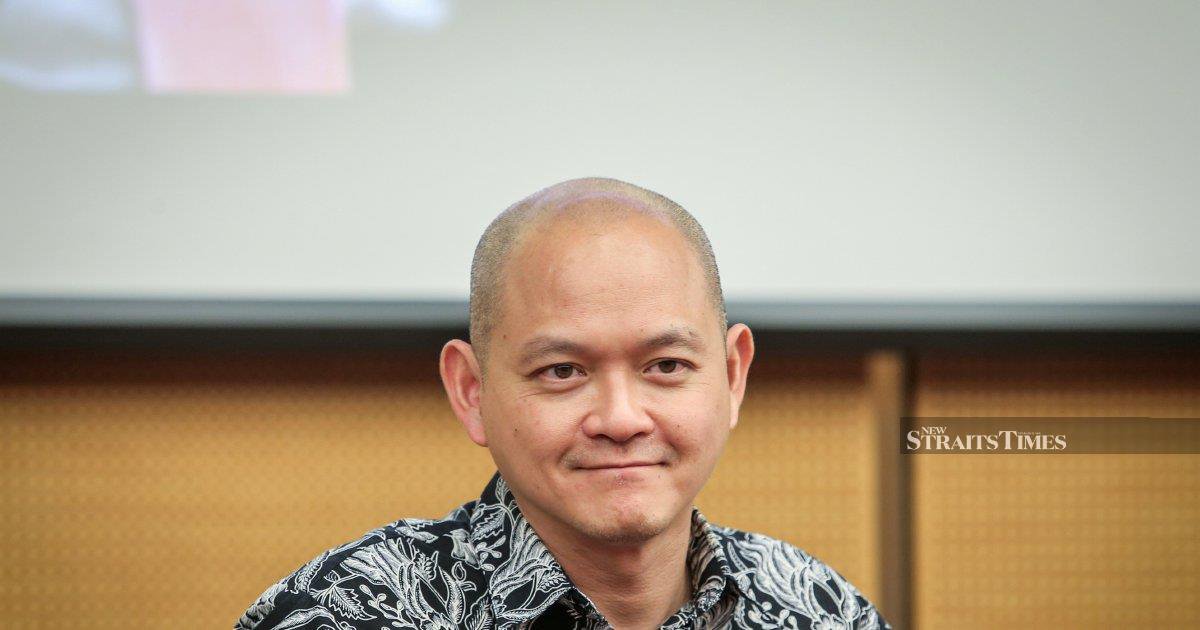
Dr Ong Kian Ming, the economist and former member of parliament for Bangi, has ended his association with the Democratic Action Party after several years with the opposition coalition. The decision marks a significant realignment in Malaysia's political landscape as the country approaches its next general election, with Ong now positioning himself to provide support to Khairy Jamaluddin's political endeavours.
Ong's departure from DAP represents a notable shift in the opposition bloc's composition at a time when political formations remain fluid across the country. His resignation signals broader movements within Malaysia's party system, where personalities and political strategies continue to evolve in response to changing electoral dynamics. The former legislator, known for his economic analysis and public commentary, has been a visible figure in Malaysian political discourse since his initial election to parliament.
Khairy Jamaluddin, a prominent figure within UMNO and the current Minister of Science, Technology, and Innovation, has been actively building support networks ahead of the anticipated general election. Ong's decision to assist Jamaluddin's campaign represents a convergence of political interests that reflects the complex coalition-building efforts occurring across Malaysia's major parties. This partnership brings together individuals with distinct political trajectories and policy priorities.
The timing of Ong's announcement carries significance for DAP, which has maintained its position as a major component of the opposition alliance. The party has continued to consolidate its urban support base and parliamentary representation, particularly in Selangor and Kuala Lumpur. Ong's exit, while potentially affecting DAP's internal dynamics, occurs within a broader context of competitive Malaysian politics where party members occasionally seek new political alignments.
Ong's background in economics and his previous parliamentary service have established him as a credible voice on policy matters affecting urban constituencies. His technical expertise and analytical capabilities have made him a sought-after commentator on fiscal policy, taxation, and economic development issues relevant to Malaysian voters. The decision to support Jamaluddin's campaign indicates confidence in the viability of this political partnership for addressing electoral objectives in the coming poll.
For Khairy Jamaluddin, securing support from figures like Ong demonstrates efforts to build a broad coalition capable of appealing to urban and educated voters who prioritise substantive policy discussion. Jamaluddin has established himself as a modernizing figure within UMNO, advocating for pragmatic governance and technology-driven solutions. Ong's technical expertise complements this positioning and provides additional credibility in policy-focused campaigns.
The announcement also reflects Malaysia's evolving electoral environment, where voters increasingly evaluate candidates based on their technical competence and policy proposals alongside party affiliation. Urban constituencies in particular have demonstrated receptiveness to cross-party collaborations and individual-focused campaigns where personalities bring specific skill sets to governance debates. Ong's transition exemplifies this trend toward candidate-centric politics.
DAP's response to this development will be closely monitored by political observers assessing the stability of the opposition coalition. The party has weathered various departures and internal challenges while maintaining its electoral performance in key battlegrounds. Ong's resignation, announced publicly, represents a clean break from the party rather than an internal dispute, suggesting manageable implications for DAP's organizational coherence.
The upcoming general election will serve as a significant test for the various political alignments forming across Malaysia. Khairy Jamaluddin's campaign, now buttressed by Ong's participation, will compete for votes in constituencies where economic management and policy implementation become central to electoral messaging. The traditional party-based campaign structure increasingly shares space with issue-focused and personality-driven political strategies.
Ong's move underscores the pragmatic calculations driving Malaysian political actors as they prepare for electoral competition. His technical capabilities and public profile represent assets that can enhance campaign credibility and voter engagement across different demographic segments. This transaction of political capital reflects the transactional nature of modern Malaysian electoral politics, where actors continuously recalibrate their positions in pursuit of electoral advantage and influence.
Moreover, Ong's departure highlights the tension between ideological commitment to specific parties and the pursuit of policy influence through alternative political channels. For individuals prioritizing substantive policy impact over party loyalty, shifts in alignment become strategically rational when other political vehicles appear capable of translating policy ideas into implementation. This calculation likely influenced Ong's decision to support Jamaluddin's initiatives rather than remaining within DAP's framework.
As Malaysia navigates its electoral cycle, political realignments such as Ong's transition will continue to shape the competitive landscape. The capacity of major parties to retain talented members depends partly on their ability to offer credible pathways to policy influence and effective governance. Ong's experience illustrates how political actors seek maximum impact for their expertise, sometimes requiring movement between organizational structures to achieve desired outcomes.

