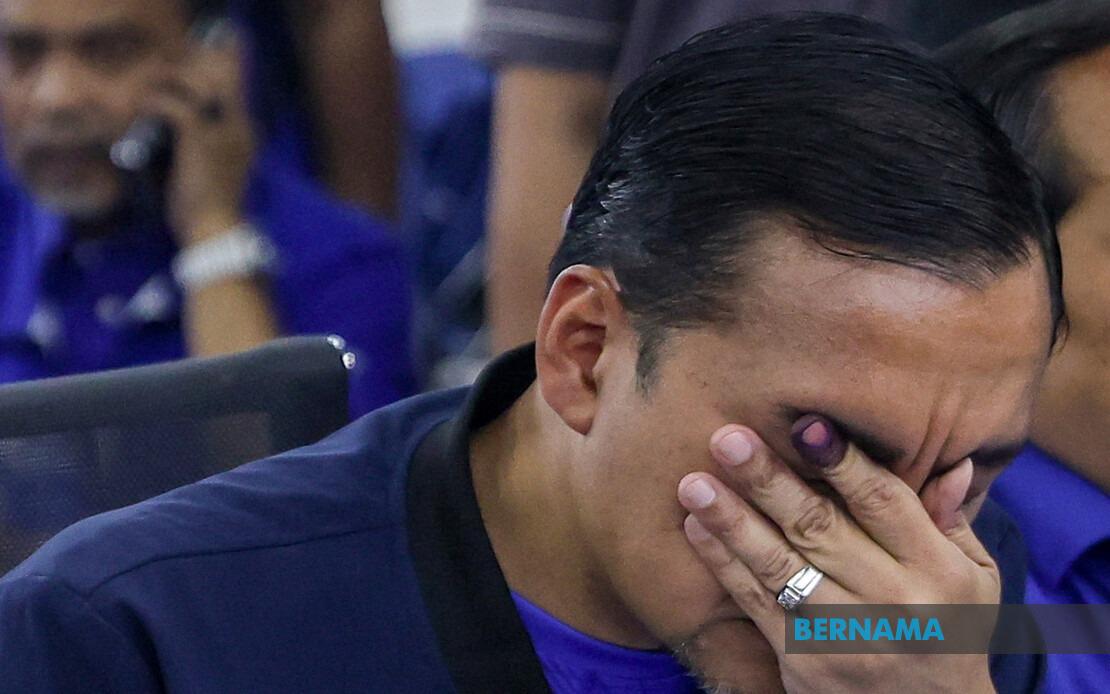
Datuk Onn Hafiz Ghazi has consolidated his political standing in Johor by decisively retaining the Machap seat for Barisan Nasional in the 16th state election held today. The Johor Menteri Besar emerged victorious with 20,382 votes cast in his favour, according to the official tally released by the Election Commission. His commanding performance represents a significant personal endorsement from voters in this crucial constituency that falls within the Johor Bahru parliamentary district.
The scale of Onn Hafiz's victory over his Pakatan Harapan rival Nur Hafiz Roslan was particularly striking. With a majority of 15,375 votes in a direct contest between the two candidates, the result underscores the relative weakness of opposition support in what has become a BN stronghold. The straight-fight contest meant there was no splitting of the anti-government vote, presenting a clearer picture of voter preference in the state capital's satellite constituency. Such a dominant margin provides Onn Hafiz with renewed political capital as he leads BN's efforts in the state assembly.
Comparison with Onn Hafiz's performance in the previous state election reveals both continuity and important shifts in voter behaviour. In 2022, when he first won the Machap seat, he secured a majority of 6,543 votes—less than half his current margin—despite facing a four-cornered contest involving candidates from Perikatan Nasional, MUDA, and PEJUANG. The presence of multiple opposition candidates had fragmented the anti-BN vote, but even accounting for this structural difference, his substantially increased vote share suggests genuine growth in his personal support base within the constituency. His improved performance despite the transition to a two-candidate race points to successful consolidation of voter loyalty across different demographic segments.
The 2022 election featured a considerably more fragmented political landscape in Machap. Perikatan Nasional's Azlisham Azahar, MUDA's R. Sangaran, and PEJUANG's Sharuddin Md Salleh all competed alongside Onn Hafiz, diluting opposition strength and benefiting the BN candidate. Today's configuration, with only Pakatan Harapan mounting a challenge, reflects the broader regional realignment of Malaysian politics following the 2023 federal election. The concentration of opposition support behind a single banner, while still resulting in defeat, demonstrates PH's ability to field a competitive candidate but also reveals the structural difficulties the coalition faces in penetrating BN-held territory in the more urbanised portions of Johor.
Onn Hafiz's retention of Machap carries implications beyond the electoral mathematics of the state assembly. As state BN chairman, his personal electoral strength provides him with enhanced legitimacy within party structures at a time when coalition politics in Johor remain fluid. The state has been a focus of intense political competition, with BN seeking to reinforce its dominance after the 2022 election shifted the balance of power. A strong showing by the chairman in a competitive urban-adjacent seat sends clear signals about BN's organisational capacity and grassroots appeal in constituencies that include significant voter populations from the state capital.
The voting pattern in Machap also reflects the broader political geography of Johor. While some state constituencies have shown receptiveness to opposition messages, particularly those with younger or more ethnically diverse electorates, Machap has remained aligned with BN. The constituency's composition and demographic characteristics have evidently favoured the ruling coalition's messaging and organisational advantages. Understanding what maintains BN's advantage in such constituencies—whether it relates to local service delivery perceptions, community ties, or other factors—remains important for opposition parties seeking to broaden their appeal in the state.
Election Commission procedures ensured the integrity and transparency of the polling process. The official results announcement through the EC provided authoritative confirmation of the voting outcome, allowing for immediate public recognition of the result. The systematic tabulation and public declaration of voting figures maintain confidence in the electoral system's fairness and impartiality, elements crucial to maintaining democratic legitimacy across Malaysia's diverse political landscape.
Onn Hafiz's victory positions him to continue his role as Menteri Besar with strengthened personal political credentials. In Malaysia's system, where individual electoral performance can influence factional dynamics within ruling coalitions, his strong showing enhances his standing among fellow assemblymen and within the larger BN structure. The magnitude of his majority provides a cushion against any potential political volatility, allowing him greater flexibility in navigating both state-level and national coalition politics during the remaining term of this administration.
The result also carries implications for how opposition parties approach forthcoming political contests in Johor. While Pakatan Harapan succeeded in presenting a unified challenge through Nur Hafiz Roslan, the scale of the defeat suggests that structural or organisational factors beyond candidate quality may be limiting opposition penetration in certain constituencies. This may prompt internal discussions within opposition circles about strategic deployment of resources and the need for more targeted efforts to shift voter perceptions or outreach in constituencies where they face entrenched incumbent advantages. The pattern of results across the 16th Johor election will collectively shape opposition strategy heading into the next electoral cycle.

