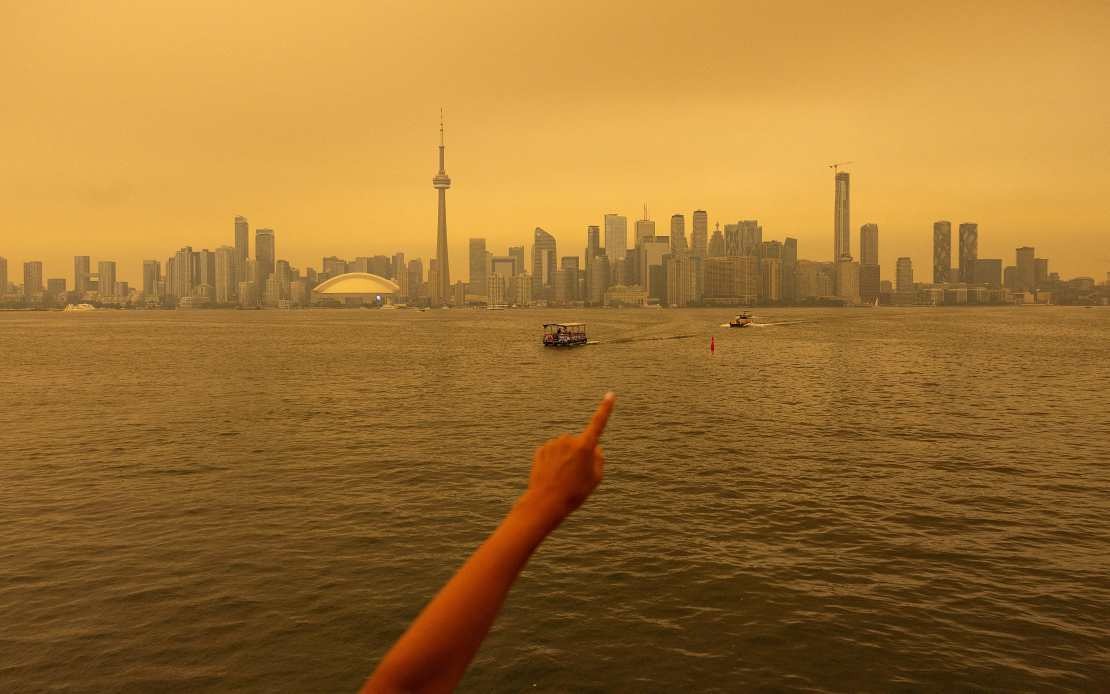
A severe air quality crisis has gripped Canada's most populous urban centers as uncontrolled wildfires sweep through northwestern Ontario, transforming the skies above Toronto and Ottawa into a dense haze of smoke and particulate matter. The situation has deteriorated dramatically over recent days, with meteorological conditions trapping smoke at ground level and creating health hazards for millions of residents across the affected regions. On Wednesday morning, Toronto registered the poorest air quality among major cities worldwide, underscoring the unprecedented severity of the atmospheric pollution event affecting eastern Canada.
Environment Canada's monitoring data revealed that Toronto's Air Quality Health Index had reached "very high risk" levels, triggering widespread public health warnings and recommendations for vulnerable populations to remain indoors. The capital city, Ottawa, similarly issued urgent air quality alerts to its residents, compounding concerns about respiratory health across the nation's government seat. Meteorologists attributed the lingering smog to a combination of factors: the sheer volume of smoke being generated by over 100 currently active fires in the northwestern region, coupled with atmospheric conditions that created a stagnant layer of air incapable of dispersing the pollutants effectively. The high humidity levels further exacerbated the problem, as moisture-laden air proved unable to ventilate the smoke adequately, instead trapping particles near ground level where they posed the greatest risk to human health.
The visual impact of the crisis has been unmistakable, with residents in affected areas reporting that daylight hours took on an eerie, yellowish tint as the sky became shrouded in smoke. Social media platforms have been inundated with photographs and videos documenting the dystopian scenes, many showing visibility reduced to mere blocks in cities accustomed to clear skies. The pervasive nature of the pollution extended beyond simple visibility concerns; air quality monitoring networks recorded dangerously elevated concentrations of fine particulate matter known as PM2.5, particles small enough to penetrate deep into the lungs and contribute to respiratory and cardiovascular complications.
The crisis has extended beyond environmental and health ramifications to disrupt critical transportation infrastructure. A dramatic video that circulated widely on social media depicted a Canadian National (CN) locomotive crew member's harrowing experience as their train found itself surrounded by towering flames near Armstrong, Ontario during filming late Monday evening. The footage captured the intensity of the wildfire threat, showing raging infernos engulfing forested areas on both sides of the rail line, the flames casting an intense crimson glow throughout the locomotive cab itself. This incident, far from being an isolated occurrence, exemplified the genuine danger posed by the wildfire situation to transportation corridors that traverse the affected region.
Following the incident, CN formally confirmed the authenticity of the video and disclosed that all crew members had been safely evacuated without injury. Nevertheless, the company announced the immediate implementation of a temporary suspension of train operations throughout the affected section of its network, a significant disruption to freight and passenger services that depend on these critical corridors. The decision reflected the genuine risks posed by active wildfires to both personnel and rolling stock, with temperatures and smoke intensity in fire zones creating hazardous working conditions that rendered normal operations untenable. This suspension has cascading effects across Canada's supply chains, as CN's network handles substantial volumes of freight traffic essential to the nation's economic functioning.
The wildfire situation itself reflects the scale of the emergency unfolding in northwestern Ontario. With more than 100 fires currently burning simultaneously across the region, emergency management authorities have been forced to initiate the evacuation of multiple communities, moving residents out of areas directly threatened by the advancing flames. These evacuations have disrupted the lives of thousands of people, who have been displaced from their homes with uncertain timelines for return. The sheer number of simultaneous fires has strained provincial emergency response capabilities, with firefighting resources stretched thin attempting to contain blazes that are spreading across vast areas of terrain.
Environmental forecasters have delivered sobering predictions regarding the persistence of the air quality crisis. Meteorological modeling indicates that prevailing atmospheric circulation patterns and wind conditions are expected to maintain the transport of smoke into the major population centers of Ontario for at least several additional days. This extended forecast means that residents of Toronto, Ottawa, and surrounding regions should anticipate continuing poor air quality, requiring ongoing precautions particularly for elderly residents, children, and individuals with pre-existing respiratory conditions. The prolonged nature of the event raises questions about cumulative health impacts and the adequacy of public health resources to manage the crisis effectively.
For Malaysian readers, this catastrophe offers cautionary perspective on how climate-driven environmental events are increasingly disrupting large, developed economies. Canada's sophisticated infrastructure and resource-rich governance systems have still been challenged by the scale of this wildfire event, illustrating that even wealthy nations remain vulnerable to extreme weather phenomena. The incident demonstrates how environmental crises cascade across multiple sectors simultaneously—health systems, transportation networks, supply chains—creating interconnected challenges that prove difficult to manage in isolation. Southeast Asian nations, many of which face their own seasonal wildfire risks and air quality challenges, can observe how even advanced economies struggle with adequate response mechanisms when environmental disasters reach critical proportions.
The economic implications extend beyond transportation disruptions. The suspension of CN rail services affects not only Canadian commerce but also continental trade flows, as CN operates one of North America's most critical freight networks. Companies dependent on rail transport for time-sensitive shipments face delays and increased costs, potentially affecting consumers across multiple sectors. The air quality crisis similarly impacts productivity and worker health across numerous industries, with businesses reporting reduced output as employees either remain absent due to health concerns or operate at reduced efficiency due to the challenging atmospheric conditions. Insurance companies may face significant claims related to property damage from wildfires and smoke-related incidents.
Looking forward, the situation highlights ongoing debates within Canada regarding forest management practices, climate adaptation strategies, and investment in emergency response capabilities. Officials will face considerable pressure to explain why 100 active fires could develop simultaneously and spread so rapidly, raising questions about prevention and early intervention systems. The disruption to major urban centers and critical infrastructure has already prompted discussions about whether existing protocols adequately address the scale of modern wildfire phenomena. Environmental scientists have noted that climate change is contributing to conditions that make wildfires more frequent, more intense, and more resistant to containment efforts, suggesting that events of this magnitude may become increasingly common without fundamental changes to forestry management and emissions reduction strategies.

