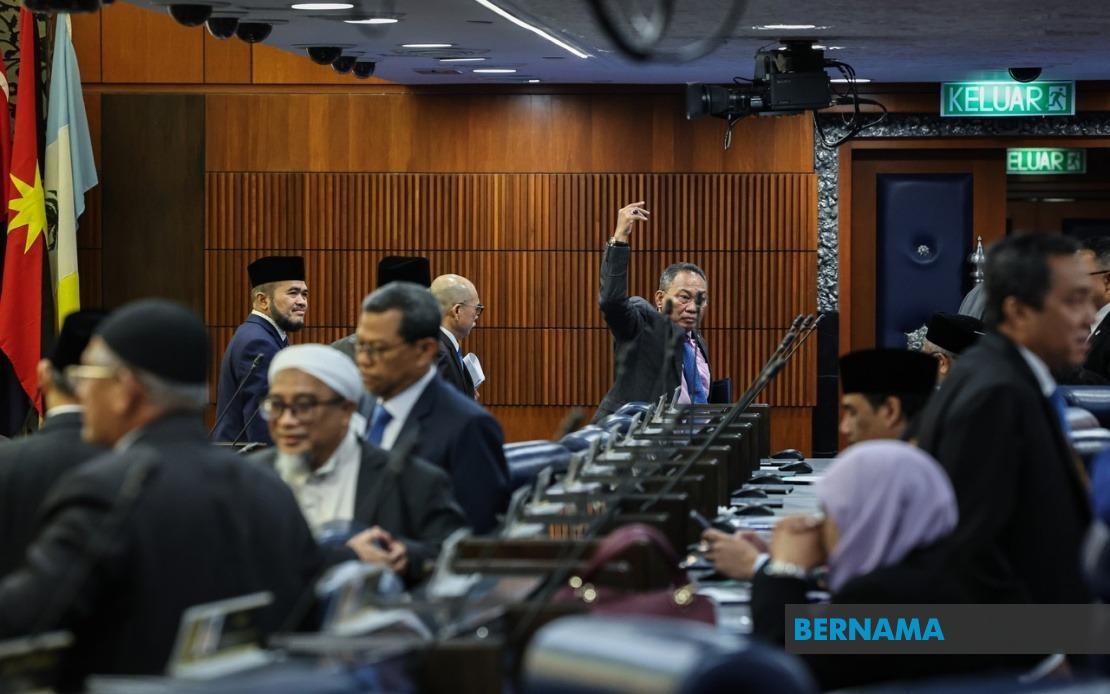
The opposition's decision to walk out of parliament and skip a ministerial briefing on the Tabung Haji Royal Commission of Inquiry findings has triggered significant criticism from governance experts, who argue the move undermines the fundamental checks-and-balance role that parliament must play in protecting the interests of the institution's 10 million depositors. The walkout, led by Perikatan Nasional MPs including Opposition Leader Datuk Seri Hamzah Zainuddin, represents a missed opportunity for elected representatives to use their parliamentary platform to scrutinise findings and demand accountability from government on a matter of substantial public concern.
Associate Professor Dr Mazlan Ali of Universiti Teknologi Malaysia expressed particular disappointment at the opposition's choice, noting that depositors had legitimate expectations their representatives would attend parliament to question the government directly about the RCI report's contents and the implications for their savings. The academic pointed out that parliament exists precisely as a venue where ministers must answer tough questions, and that boycotting such proceedings undermines the institution's credibility as a place where facts are examined openly rather than concealed. By staying away, the opposition surrendered an opportunity to place concerns on the official parliamentary record, ensuring they remain part of the public discourse and government accountability framework.
The opposition's stated reason for the boycott—the absence of Prime Minister Datuk Seri Anwar Ibrahim from the debate—has drawn particular scrutiny from analysts who question whether this justifies abandoning oversight responsibilities. Dr Mazlan noted that the Minister in the Prime Minister's Department (Religious Affairs) Dr Zulkifli Hasan held sufficient authority and expertise within his portfolio to provide comprehensive explanations about the RCI's findings and the government's response. The distinction between questioning a Prime Minister and questioning a relevant minister, he suggested, becomes less significant when the core issue—institutional governance and depositor protection at Tabung Haji—remains the focus. Given that the Prime Minister was receiving hospital treatment, Dr Mazlan argued, allowing him rest time was a reasonable consideration that should not have triggered a parliamentary boycott.
Beyond the immediate parliamentary dynamics, the walkout carries longer-term political consequences that may damage the opposition's credibility. By absenting themselves from the debate, opposition MPs create an impression that they care less about defending depositors' interests than about scoring political points, particularly when the sustainability and management of an institution serving Malaysia's Muslim community requires sustained, serious scrutiny across political boundaries. This perception could undermine their electoral standing among Tabung Haji contributors, who might reasonably ask why their representatives refused to engage with government on such a consequential matter affecting their financial security.
Dr Nazreena Mohammed Yasin, a senior lecturer in the Department of Social Sciences at Universiti Tun Hussein Onn, emphasised that active parliamentary participation represents the most effective mechanism through which MPs can execute their check-and-balance function substantively rather than theatrically. The Dewan Rakyat debate on the RCI report provided a formal institutional platform where representatives could scrutinise findings, pose detailed questions, and demand explanations, thereby strengthening the principle of government accountability. Through such engagement, the government demonstrates responsibility not only to elected representatives but ultimately to the public itself, creating a transparent chain of accountability that cannot exist when key players absent themselves from proceedings.
The question of accountability does not rest solely on the Prime Minister's shoulders, Dr Nazreena stressed, since all relevant ministers bear responsibility for responding to parliamentary questions and defending their decisions before MPs. This constitutional reality means that boycotting because one specific minister is absent represents a misunderstanding or deliberate evasion of parliamentary procedure. When matters carry direct implications for public welfare—as the Tabung Haji situation clearly does—elected representatives shoulder a dual responsibility: not merely to voice criticism but to ensure their concerns receive substantive answers and that the government commits to specific follow-up actions, all subject to transparent parliamentary scrutiny.
The RCI report itself had identified significant management and operational weaknesses spanning 2014 to 2020, making the parliamentary session particularly crucial for examining what measures the government intended to implement in response. The briefing was meant to address not only the historical failings the commission uncovered but also the concrete steps being taken to restore Tabung Haji's financial position and prevent future problems. These are precisely the sorts of details that depositors need assurance about, and parliament provides the formal mechanism through which such assurances can be demanded and recorded, creating a public commitment that transcends electoral cycles.
The special sitting that drew the opposition's boycott had been convened specifically to allow Minister Zulkifli to detail the government's response to RCI findings. The absence of opposition voices meant fewer challenging questions were posed, fewer alternative perspectives were raised, and fewer specific commitments were extracted from the minister. This reduction in parliamentary debate intensity weakens the democratic function, since accountability thrives on vigorous questioning and requires representatives willing to challenge official explanations when they seem inadequate or evasive. Boycotts, by contrast, cede the parliamentary space entirely to the government without competition or friction.
The broader implication for Malaysian governance concerns whether parliament retains its character as a substantive check on executive power or whether it increasingly becomes a stage where political theatrics overshadow institutional responsibilities. When opposition MPs walkout over the absence of a Prime Minister rather than engage with the available minister, they signal that parliamentary procedure itself matters less than winning tactical political points. This represents a concerning precedent that weakens parliament's independence and effectiveness as an institution, with consequences that extend far beyond any single debate about Tabung Haji.
For the 10 million Tabung Haji depositors whose savings and religious obligations are intertwined with the institution, the opposition's absence was ultimately immaterial to policy outcomes but highly significant for democratic legitimacy. Those depositors had every right to expect that their elected representatives, regardless of party, would attend parliament to interrogate government on matters affecting their financial security. That expectation went unmet, representing a failure of representative democracy that transcends normal partisan competition. Going forward, whether this episode prompts reflection on the opposition's parliamentary strategy remains unclear, but the governance experts' concerns suggest that depositor interests would be better served by consistent, robust parliamentary engagement than by selective boycotts based on which cabinet minister appears at the dispatch box.

