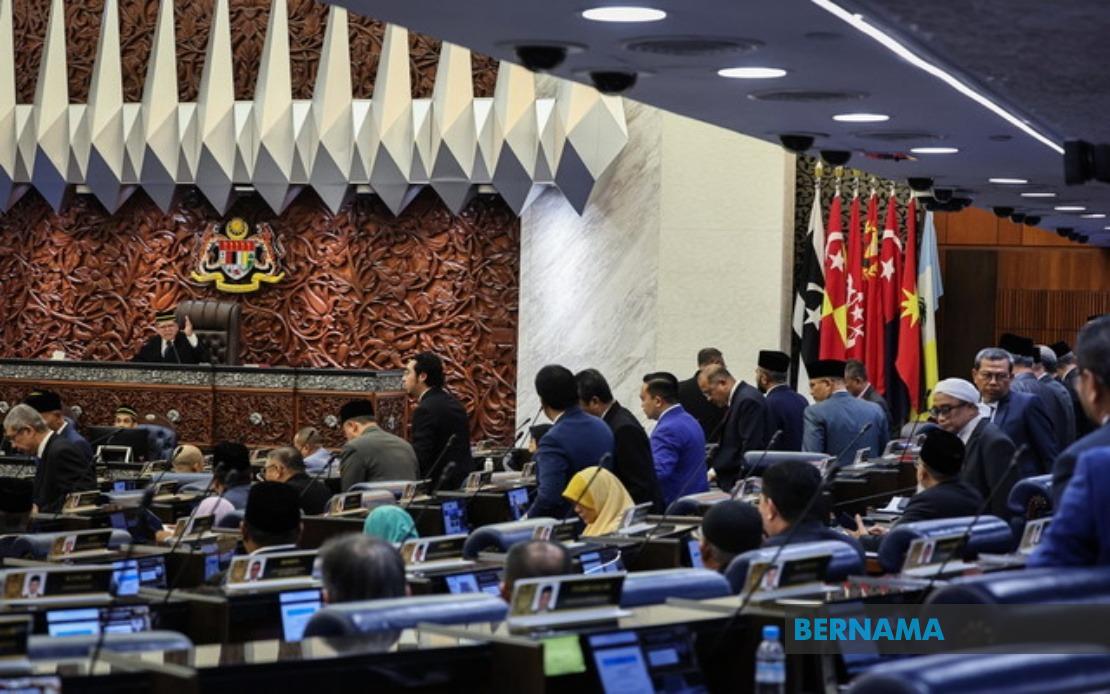
Opposition members of parliament staged a dramatic exit from the Dewan Rakyat on August 11, refusing to participate in a ministerial briefing session focused on the Royal Commission of Inquiry report examining the management and operational practices of Lembaga Tabung Haji. The coordinated departure marked a significant moment of parliamentary discord and reflected deeper tensions within Malaysia's political landscape regarding the handling of the pilgrim fund's recent governance scrutiny.
The walkout erupted following dissatisfaction with Dewan Rakyat Speaker Tan Sri Johari Abdul's decision to allow the briefing to proceed despite the notable absence of Prime Minister Datuk Seri Anwar Ibrahim. Opposition lawmakers contended that the absence of the nation's chief executive rendered the session insufficient, particularly given the high-profile nature of the Tabung Haji inquiry and its implications for millions of Malaysian Muslims who depend on the fund's services. The opposition viewed the continuation without Anwar's presence as diminishing the significance of what many considered a matter deserving the highest level of government attention.
Peikatan Nasional opposition chief whip Datuk Seri Takiyuddin Hassan had previously moved to postpone the special sitting, citing not only Anwar's absence but also that of Deputy Prime Minister Datuk Seri Fadillah Yusof, both reportedly undergoing medical treatment for unspecified health concerns. This proposal reflected a calculated parliamentary strategy to either delay proceedings or force a reschedule that would accommodate senior leadership participation. The request underscored opposition concerns that a secondary-level briefing lacked the gravitas necessary to address public concerns about institutional accountability within Malaysia's largest Islamic financial institution.
In response to the exodus, Speaker Johari exercised his parliamentary authority with a firm but measured approach. Rather than compelling attendance or adjourning proceedings, he acknowledged the departing MPs while simultaneously appealing to public perception, noting that citizens would judge how lawmakers treated the matter. His statement—inviting those uncomfortable with the discussion to leave while encouraging those who valued transparency to remain—carried an implicit criticism of the opposition's boycott strategy, framing their exit as a rejection of accountability and public interest.
Following the speaker's remarks, Minister in the Prime Minister's Department (Religious Affairs) Dr Zulkifli Hasan proceeded with the briefing as scheduled. The decision to continue despite the walkout ensured that parliament at least received formal updates on the RCI findings, preventing complete parliamentary silence on an issue affecting Malaysia's Islamic finance sector and public trust in religious institutions. The briefing represented the government's commitment to ensuring parliamentary discourse proceeded, even amid political disagreement over optimal procedures.
The Tabung Haji RCI inquiry itself emerged from longstanding concerns about the fund's management practices, investment performance, and governance structures. As a body managing billions in savings from Malaysian Muslims preparing for the hajj pilgrimage, Tabung Haji operates under intense scrutiny from both lawmakers and the Malaysian public. Any shadow cast over its operations carries implications extending beyond administrative efficiency to questions about institutional integrity and protection of citizen assets.
For Malaysian voters and observers, the parliamentary confrontation illustrated the persistent polarization characterizing the nation's political environment since the 2022 general election. Rather than approaching governance challenges collaboratively, opposition and government benches often adopt adversarial postures that can obscure substantive policy discussion. The Tabung Haji briefing became another flashpoint in which procedural disputes and confidence questions overshadowed the core issue: ensuring transparent accounting and reformed management practices within the institution.
The opposition's tactical walkout reflected legitimate concerns about decision-making protocols and the weight accorded to senior leadership presence during critical parliamentary moments. However, it simultaneously risked appearing to abandon scrutiny of an institution requiring robust parliamentary oversight. By withdrawing rather than remaining to question ministers and demand accountability, the opposition ceded its influence over the parliamentary record and public narrative surrounding the RCI findings.
The incident also highlighted ongoing questions about Malaysia's political stability and institutional maturity. Developed democracies typically manage significant policy disagreements through parliamentary debate rather than boycotts or walkouts. The frequency with which Malaysian parliament experiences such confrontations suggests underlying institutional weaknesses in consensus-building and norms around constructive engagement across the political divide.
Moving forward, the episode raises questions about how the Tabung Haji RCI report's recommendations will be received and implemented. Without opposition party participation and constructive scrutiny, government initiatives to reform the fund may lack comprehensive parliamentary validation. Effective institutional reform typically requires broad political consensus, particularly when addressing entities serving diverse Malaysian communities across religious and socioeconomic lines.
The broader implications for Southeast Asia's democratic institutions merit consideration as well. Malaysia's parliament serves as a model for neighboring democracies grappling with balancing political competition and institutional stability. Episodes of parliamentary dysfunction or boycotts can influence regional perceptions of democratic robustness and institutional resilience.

