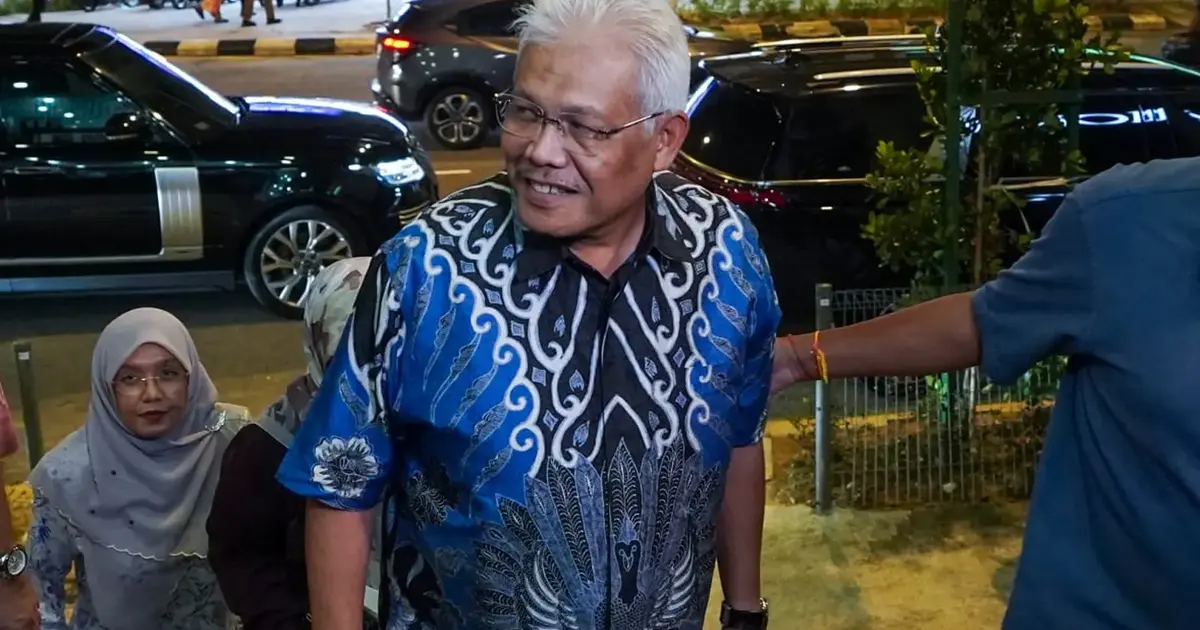
A notable gathering of opposition parliamentarians has taken place at PAS headquarters, signalling fresh developments in Malaysia's volatile political landscape as Perikatan Nasional experiences significant internal upheaval. Among those spotted at the meeting was Hamzah, a figure of considerable influence within opposition circles, alongside other MPs whose participation underscores the heightened level of strategic coordination occurring within the broader opposition bloc.
The timing of this assembly carries particular weight given the turbulent situation unfolding within PN itself. The coalition has become the focal point of intense political activity in recent days, driven largely by a dramatic rupture in relations between two of its principal components. PAS, the Islamic party which has emerged as PN's dominant force, made the consequential decision last week to formally dissolve its political partnership with Bersatu, an action that has sent shockwaves through the entire coalition structure and fundamentally altered the power dynamics at play.
This severance between PAS and Bersatu represents far more than a routine political disagreement. The split signals a deeper fracture within PN, a coalition that had positioned itself as an alternative governing force following the 2022 general elections. For Malaysian observers, the timing suggests that opposition parties are actively assessing the implications of this rupture and potentially positioning themselves to capitalise on the resulting instability within the ruling bloc's primary competitor.
PAS's decision to cut ties with Bersatu follows escalating tensions that had been building within the coalition for some time. The two parties had maintained an uneasy relationship, with competing interests and divergent strategic visions increasingly difficult to reconcile. The formal break represents a point of no return in their cooperation, necessitating rapid repositioning by political actors across the spectrum who had built their strategies around PN's continued cohesion.
For the opposition, this development presents both opportunities and complications. On one hand, a fractured PN could translate into reduced political pressure and greater legislative flexibility. On the other hand, the unpredictability of the current environment demands careful navigation and continuous assessment of how the new configuration might affect parliamentary dynamics and electoral calculations. The presence of figures like Hamzah at PAS headquarters suggests that opposition leadership is actively engaged in understanding these shifting contours.
The significance of the meeting extends beyond mere fact-finding. Opposition MPs gathering at a location associated with one component of the fractured coalition indicates preliminary discussions about potential alignments, legislative cooperation, or simply intelligence-gathering regarding PAS's future direction. In Malaysia's complex parliamentary mathematics, where narrow majorities and shifting allegiances frequently determine outcomes, such consultations can have outsized strategic importance.
Context matters considerably here. Since the 2022 elections, Malaysian politics has been characterised by fluid coalitions and unexpected realignments. The ruling Pakatan Harapan coalition has faced persistent internal challenges, while PN emerged as a seemingly coherent alternative. The PAS-Bersatu split fundamentally destabilises this equation, potentially opening pathways that previously seemed foreclosed and closing others that had appeared secure. For the opposition, understanding whether PAS intends to strengthen itself independently, seek alternative partnerships, or pursue other strategic directions has immediate practical consequences.
The gathering also reflects how Malaysian political leadership remains highly personalised and relationship-driven. Rather than relying solely on public statements or formal communications, political figures across the spectrum prefer direct face-to-face engagement when navigating significant transitions. The deliberate presence of opposition MPs at PAS headquarters, rather than at neutral venues or opposition party offices, demonstrates the active cultivation of relationships across institutional boundaries during periods of uncertainty.
For Southeast Asia's broader political landscape, these developments warrant attention. Malaysia's internal political realignment can influence regional dynamics, particularly given the country's role within ASEAN and its strategic importance as a moderate Muslim-majority democracy. The specific direction that PAS takes—whether toward greater religious conservatism, pragmatic governance, or renewed alliance-building—carries implications beyond domestic Malaysian politics.
The current ferment also illustrates the fluid nature of Malaysian coalitional politics. Unlike some democracies with more stable party structures, Malaysia's political system remains highly responsive to personality-driven leadership changes and tactical reassessments. The opposition's active engagement with unfolding developments demonstrates the expectation that the PN fracture could produce further surprises and structural rearrangements in coming weeks and months.
Looking ahead, these early post-split consultations will likely constitute the foundation for more substantial repositioning. Whether the opposition ultimately seeks to exploit PN's weakness through legislative manoeuvres, attempts to court individual components like PAS toward collaboration, or simply fortifies its own coalition remains unclear. What is evident is that opposition leadership recognises the current moment as consequential and is acting accordingly to preserve flexibility and maintain strategic options.
The meeting observed at PAS headquarters thus represents a snapshot of Malaysian politics in transition—a moment when established alignments have broken down but new permanent structures have not yet crystallised. For observers tracking the country's governance landscape, the coming days and weeks will determine whether this rupture within PN triggers genuine systemic realignment or represents merely a temporary disruption in an otherwise stable constellation of political forces.