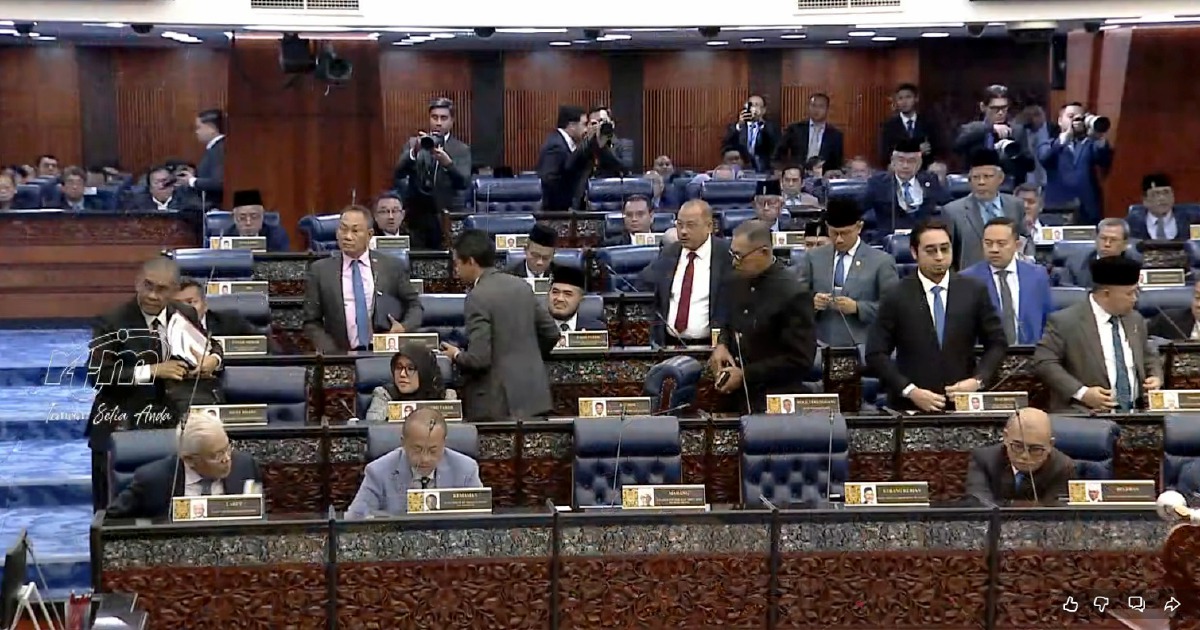
Opposition members withdrew from the Dewan Rakyat chamber this afternoon following the Speaker's refusal to delay the special sitting devoted to examining findings from the Royal Commission of Inquiry into Tabung Haji, Malaysia's pilgrimage fund. The lawmakers had sought a postponement until Prime Minister Datuk Seri Anwar Ibrahim could attend, but the parliamentary leadership declined their request, prompting the coordinated departure from the chamber.
The walkout underscores mounting tensions within Parliament regarding how oversight matters of significant public interest should be handled. Opposition members contend that deliberating on the RCI's conclusions without the Prime Minister's direct participation undermines the gravity of such proceedings and prevents lawmakers from receiving authoritative responses to critical questions about governance and financial management at Tabung Haji.
Tabung Haji, formally the Pilgrimage Fund Board of Malaysia, manages investments and savings for Malaysian Muslims preparing for the Hajj pilgrimage. The organisation has faced scrutiny in recent years over its financial performance and investment decisions. The Royal Commission of Inquiry was established to investigate matters of concern within the institution, making its findings a subject of considerable public and parliamentary interest, particularly given the institution's custodianship of substantial funds belonging to ordinary Malaysians.
The decision by the Speaker to proceed without rescheduling reflects the government's determination to advance the parliamentary agenda according to the sitting schedule. However, this stance has created friction with the opposition bloc, which views the absence of the Prime Minister as a procedural shortcoming that diminishes the quality and accountability of parliamentary debate on matters touching national governance.
Parliamentary procedure in Malaysia typically grants the Speaker considerable discretion in managing the chamber's business, including decisions about postponements and scheduling adjustments. The Speaker's ruling today suggests officials believe the debate can proceed substantively without the PM in attendance, or that constitutional requirements do not mandate his participation in all special sittings, regardless of subject matter.
Opposition MPs have increasingly sought to use parliamentary procedures to highlight what they consider shortcomings in government transparency and accountability. Their decision to stage a collective walkout serves as a symbolic protest and sends a message to constituents about their commitment to scrutinizing executive authority. Such gestures, while not blocking legislation or motions, can generate political pressure and media attention around governance issues.
The Tabung Haji investigation carries particular significance for Malaysian voters because the fund holds accumulated savings from millions of citizens who contribute regularly towards their pilgrimage obligations. Any mismanagement or governance failures at the institution directly affect household wealth and religious observance for a substantial segment of the population, making the RCI's conclusions matters of genuine public concern.
The timing of this confrontation reflects broader parliamentary dynamics in Malaysia following the 2022 general election, which produced a fragmented Parliament where no single coalition commands overwhelming majority support. This environment has emboldened opposition members to challenge government initiatives more assertively, using procedural objections and symbolic protests to contest the pace and framing of important debates.
Prime Minister Anwar, who leads the government coalition, has been balancing numerous policy priorities, and his absence from Parliament today likely relates to other urgent matters requiring his attention. Nevertheless, opposition MPs argue that certain subjects—particularly those involving public institutions managing citizen savings—warrant the PM's direct engagement in parliamentary discussions to ensure complete explanations and accountability.
The RCI report itself represents months of investigation and deliberation by appointed commissioners tasked with examining Tabung Haji's operations. The inquiry's findings could influence future policy decisions regarding the fund's governance structure, investment strategy, and oversight mechanisms. For this reason, opposition lawmakers emphasize that parliamentary consideration of such findings deserves optimal conditions for rigorous questioning and debate.
This parliamentary incident reflects growing challenges in Malaysian legislative governance when consensus breaks down over procedural matters. While government majorities can typically advance their agenda, opposition walkouts highlight fractures in institutional cooperation and suggest deeper disagreements about how Parliament should function when accountability and public interest concerns intersect.
Looking forward, the incident may influence how Parliament handles future special sittings on sensitive governance matters. Opposition parties may repeat such protests if they perceive future proceedings as inadequately structured, while the government coalition will likely defend its right to maintain the parliamentary schedule and determine which officials must attend specific debates.

