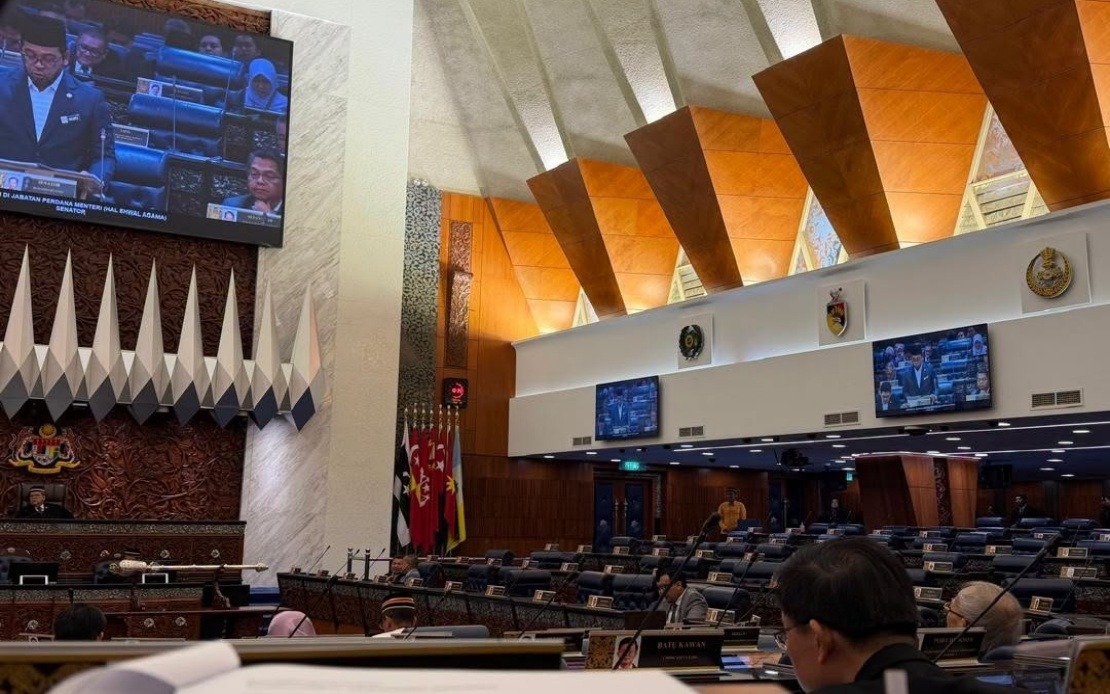
Parliament's special sitting on August 11 to discuss the Royal Commission of Inquiry findings concerning Lembaga Tabung Haji became mired in controversy when opposition Members of Parliament staged a coordinated walkout before Minister in the Prime Minister's Department for Religious Affairs Dr Zulkifli Hasan could present the report to the chamber. The departure, which preceded the ministerial briefing and substantive debate, has drawn sharp criticism from government quarters, particularly from MADANI Government Backbenchers Club chairman Datuk Seri Dr Zaliha Mustafa, who characterized the protest as a missed opportunity to engage with findings that directly affect millions of Malaysian depositors.
The walkout stemmed from Speaker Tan Sri Johari Abdul's decision to proceed with the sitting despite the absence of Prime Minister Datuk Seri Anwar Ibrahim and Deputy Prime Minister Datuk Seri Fadillah Yusof, both of whom were undergoing medical treatment. Perikatan Nasional chief whip Datuk Seri Takiyuddin Hassan had earlier proposed postponing the session given these significant absences, but the Speaker overruled the motion and permitted the scheduled briefing to commence. Opposition lawmakers, interpreting this decision as inappropriate procedural conduct, responded by vacating the chamber in protest.
Dr Zaliha's response to the opposition's departure centered on a fundamental question about parliamentary accountability and the seriousness with which lawmakers approach issues of genuine national importance. In remarks posted on Facebook, she asserted that the opposition had long positioned itself as the staunchest defenders of Islamic principles and Muslim welfare, yet when afforded a parliamentary platform to scrutinize, challenge, and debate every finding contained within the RCI report, they chose instead to withdraw from the proceedings. This contradiction, she suggested, undermines the credibility of opposition claims regarding their commitment to transparency and stakeholder protection.
The Sekijang Member of Parliament emphasized that Parliament represents the appropriate forum for resolving disputes about contentious RCI findings or government policy decisions emanating from the report. Rather than engaging in parliamentary debate supported by factual evidence and reasoned argument, she argued, the opposition selected a protest that she characterized as theatrical and counterproductive. Her critique extended beyond mere parliamentary procedure to encompass what she described as a disconnect between opposition messaging conducted outside Parliament and their behavior when confronted with an actual opportunity to defend their positions on the parliamentary record.
At the heart of Dr Zaliha's complaint lies frustration with what she perceives as selective advocacy. She noted that opposition figures consistently emphasize transparency, institutional trust, and the protection of Islamic institutions and Muslim interests in public discourse and media statements. However, when Parliament created a formal mechanism to examine governance failures at Tabung Haji—an institution entrusted with the savings of millions of Malaysian Muslims—opposition lawmakers absented themselves from the very debate that would have enabled them to champion these principles in the legislative arena. This disparity, in her view, reveals a troubling pattern of political calculation superseding substantive engagement.
The Tabung Haji issue carries particular weight in Malaysian political discourse because the institution manages savings for pilgrims and represents a symbol of Islamic financial stewardship. Problems identified in the RCI report directly implicate questions of fiduciary responsibility, institutional governance, and protection of depositor interests. Dr Zaliha underscored that debate over such matters cannot reasonably be dismissed as a minor procedural question or treated as an opportunity for partisan performance. Instead, she characterized it as a matter of genuine national significance requiring serious parliamentary engagement from lawmakers across the political spectrum.
From Dr Zaliha's perspective as a PKR vice-president aligned with the MADANI government, opposition lawmakers claiming serious commitment to protecting Muslim interests should have remained in the chamber to scrutinize the RCI report's contents and articulate their disagreements through legitimate parliamentary channels. Such engagement would have created a public record of their concerns, provided opportunity for government rebuttal, and potentially influenced policy implementation or corrective measures. Their absence, conversely, forfeited such leverage and contradicted public statements about their dedication to these constituencies.
The broader political implications extend beyond the immediate Tabung Haji controversy to encompass parliamentary culture and norms of legislative engagement in Malaysia. Walkouts and boycotts serve purposes in parliamentary systems as expressions of protest against procedural impropriety or substantive disagreement with government actions. However, when opposition parties withdraw from debate on matters they have publicly championed as critical to national and community interests, questions inevitably arise about whether such tactics reflect principled objection or political convenience. Dr Zaliha's intervention attempts to reframe the opposition's action not as legitimate parliamentary protest but as abandonment of responsibility.
She posed a pointed challenge to opposition lawmakers and their supporters: what specifically does the opposition want to achieve regarding Tabung Haji governance, and why would they forfeit parliamentary opportunity to articulate that vision to fellow lawmakers and the Malaysian public? By walking out rather than remaining to debate, the opposition, in her assessment, surrendered the capacity to shape the narrative surrounding RCI findings and government response. Instead, they allowed the government to present its position without substantive legislative challenge, undermining their stated commitment to robust parliamentary oversight.
The timing of the walkout—before substantive briefing or debate could occur—compounds Dr Zaliha's criticism. Had opposition lawmakers remained through the minister's presentation and then staged a walkout or registered formal objection based on the briefing's content, their protest might have appeared as a reaction to specific government positions or RCI conclusions they found unacceptable. Instead, their departure before such content was shared suggested objection to the procedural question of the Speaker's decision, which Dr Zaliha characterized as insufficient justification for avoiding debate on depositor protection and institutional governance.
For Malaysian readers and observers of parliamentary politics, this exchange illustrates the ongoing tension between government and opposition regarding parliamentary norms, procedural propriety, and substantive legislative engagement. The opposition's concern about the Speaker's decision regarding absent senior leadership reflects broader questions about whether parliamentary business should proceed without key government figures present. Yet Dr Zaliha's counterargument—that these procedural concerns did not justify avoiding substantive debate—raises legitimate questions about when and how opposition protest achieves its intended effect versus when it backfires by allowing government to claim high ground on issues of genuine public importance.
Looking forward, the episode may influence how both government and opposition approach parliamentary business on contentious matters. If opposition walkouts consistently result in criticism that they represent abandonment of accountability rather than principled protest, opposition parties may calculate differently before withdrawing from legislative chambers. Conversely, if the government's decision to proceed without Prime Minister and Deputy Prime Minister present is perceived as procedurally questionable, future special sittings may face similar coordination challenges. The Tabung Haji RCI report, meanwhile, remains an issue requiring serious parliamentary examination of governance failures affecting millions of Malaysian Muslims, regardless of the procedural disputes that overshadowed the initial briefing session.

