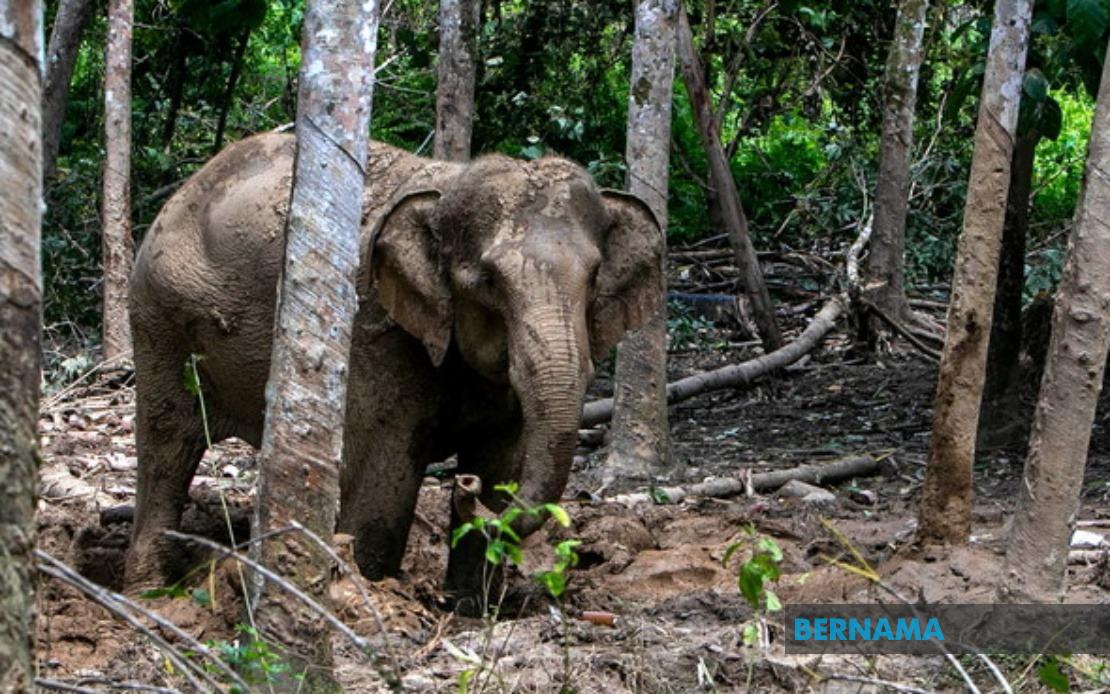
A resident of Kampung Orang Asli Perjek in the Legap Resettlement Scheme, Sungai Siput, Perak sustained serious injuries after being attacked by an elephant during an attempt to protect his community's crops last Friday evening. The incident underscores the growing tensions between rural communities and wildlife in Peninsular Malaysia, particularly among indigenous populations living on the frontline of human-elephant conflict.
The Department of Wildlife and National Parks (PERHILITAN) responded after receiving an alert at approximately 10 pm, dispatching personnel from its Sungai Siput district office to gather details and launch an investigation. Initial findings revealed that a herd of four elephants had penetrated the settlement's perimeter and begun grazing on cultivated cassava and banana plants in the vicinity of residential properties, creating an immediate threat to both livelihoods and safety.
When the villager and several of his neighbours moved to repel the animals from their gardens, the situation escalated dangerously. The man ventured too close to the herd's protective circle, triggering an aggressive response from one of the animals. The elephant struck with sufficient force to cause substantial trauma, leaving the victim with bleeding injuries and a loss of consciousness at the scene. His neighbours immediately provided assistance, recovering him and arranging transportation to Raja Permaisuri Bainun Hospital, where medical staff stabilised his condition.
The incident reflects a persistent challenge facing rural and indigenous communities across Peninsular Malaysia. As forest habitats contract and human settlements expand into traditional wildlife corridors, encounters between elephants and villagers have become increasingly frequent and unpredictable. For populations like the Orang Asli, who often lack extensive resources for protective infrastructure or alternative livelihood options, such confrontations represent not merely a safety hazard but a genuine economic and existential threat.
PERHILITAN deployed drone surveillance technology to monitor the elephants' movements, confirming that the herd had eventually departed the settlement. The department indicated that it had subsequently implemented a range of management strategies intended to diminish the prospect of repeated incidents in the area, though specific details of these preventive measures were not disclosed. This reactive approach, while necessary, highlights the underlying systemic issue: many rural settlements remain inadequately equipped with long-term wildlife deterrence infrastructure.
A significant development emerging from the case is the department's commitment to facilitate the victim's family's application for compensation under the Wildlife Attack Victim Assistance initiative, a scheme administered by the Ministry of Natural Resources and Environmental Sustainability. This programme represents a critical safety net for communities facing the economic fallout from wildlife interactions, though questions persist about its adequacy and accessibility, particularly among marginalised groups.
PERHILITAN has cautioned the public against attempting independent management of dangerous wildlife encounters, emphasising that such interventions frequently escalate rather than defuse dangerous situations. The department's advisory carries particular weight given the outcome of this incident, which demonstrates the genuine hazard posed by close proximity to large animals, especially when they perceive a threat to their group. Elephants are highly intelligent and protective creatures whose defensive responses can be fatal or permanently disabling.
For those witnessing wildlife incidents or living in areas prone to human-animal conflict, PERHILITAN has established dedicated reporting channels. The department's hotline at 1-800-88-5151 provides immediate emergency contact, while the Public Complaints Management System (SISPAA) on the department's official website enables formal documentation of ongoing concerns. These mechanisms offer pathways for communities to alert authorities and document patterns that might inform longer-term planning.
The case raises broader questions about land use policy and indigenous land rights in Malaysia. The Legap Resettlement Scheme was designed to provide the Orang Asli with secure settlements, yet its location appears situated within or adjacent to elephant migration routes, suggesting potential planning gaps. As Malaysia seeks to balance conservation objectives with the development needs of its indigenous population, incidents like this underscore the urgency of more sophisticated spatial planning that genuinely considers the coexistence requirements of both human and animal communities.
For regional observers, this incident exemplifies challenges faced across Southeast Asia as human populations and wildlife populations increasingly overlap. Thailand, Laos, and Cambodia have reported similar escalations in human-elephant conflict, often with tragic consequences. Malaysia's experience with compensation schemes and public safety advisories may offer instructive lessons for neighbouring nations grappling with comparable tensions, particularly regarding how smaller nations manage large predator populations within densely settling regions.
The victim's recovery progress will likely inform future policy discussions around settlement design, community education, and wildlife management in indigenous areas. His stabilisation at hospital provides immediate relief, yet the broader challenge of preventing future such incidents remains largely unresolved, demanding coordinated action across government departments, indigenous community organisations, and conservation specialists.

