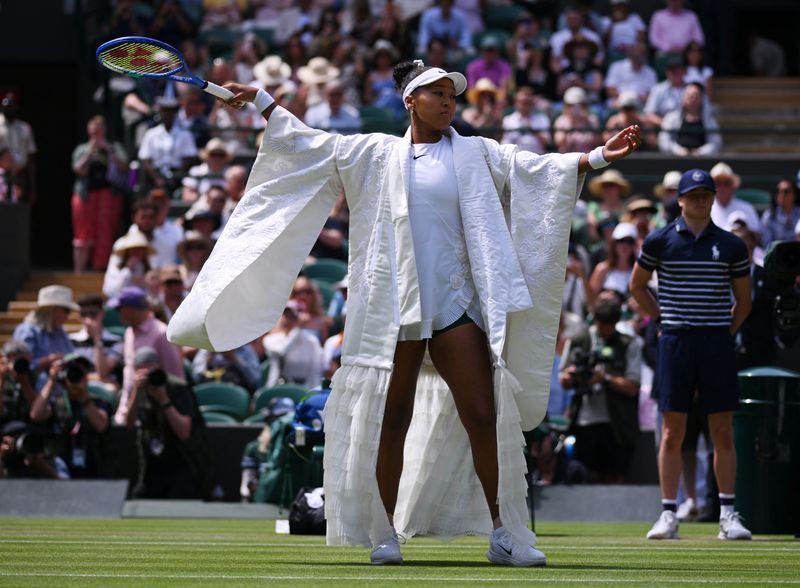
Naomi Osaka's fortnight at the All England Club has evolved into something more substantial than the striking aesthetics that initially dominated the conversation around her tournament presence. The four-time Grand Slam champion from Japan dismantled Russian-born Daria Kasatkina 6-1 6-3 on Friday to secure her first appearance in the Wimbledon last 16, a breakthrough that suggests her grass court credentials extend far beyond the carefully curated theatrical elements that have garnered considerable media attention in recent days.
Osaka's journey through the opening week captured imagination largely through her wardrobe selections, particularly a series of elaborate kimono-inspired entrance robes that channelled Kill Bill aesthetics and demonstrated her standing as one of professional tennis's most influential style ambassadors. This Friday's iteration, a flower-patterned garment worn on a sun-drenched Court One, continued that thematic flourish. Yet the 14th seed's performance against the unranked Kasatkina revealed something more consequential: a player whose technical arsenal and mental resilience are sharpening with each successive match on grass courts over the past fortnight.
The match unfolded as a straightforward clinical exercise in controlled aggression. Osaka broke Kasatkina's serve in the opening exchanges, combining a perfectly placed backhand winner with a subsequent deep forehand that generated a double break advantage. The first set fell in barely more time than it took observers to settle into their seats, the Japanese star moving with purpose and striking with conviction that suggested familiarity with grass court tennis was returning to her repertoire after an extended absence from the professional circuit.
When Kasatkina mounted a modest resistance in the second set, briefly threatening to consolidate her position, Osaka responded with the kind of composure and firepower that separates tournament contenders from early-round casualties. She squandered an initial cushion but recovered decisively, constructing two match points before converting the second with characteristic flair. The entire contest lasted little more than an hour, testimony to the efficiency of her execution and the gulf in quality between the competitors.
Osaka's post-match remarks reflected genuine gratification at a venue that had previously eluded her trophy cabinet. Speaking courtside to sustained applause, she acknowledged never having previously won on this particular surface at the championships, describing the occasion as creating a genuinely meaningful memory. Her comments underscored the significance she attributes to this milestone, recognising that breakthrough performances at Wimbledon carry particular weight within professional tennis's cultural hierarchy.
The champion's path to this second week was consolidated through intensive preparation on the grass court circuit, with Osaka competing extensively in the preceding two weeks across multiple tournaments. This accumulated experience manifested visibly in her footwork, positioning, and court awareness—elements that cannot be fabricated through stylistic presentation alone. She acknowledged feeling genuinely confident entering the Kasatkina encounter, a psychological state that translates directly into improved decision-making and execution under pressure.
Osaka's upcoming quarterfinal opponent will emerge from the ongoing clash between world number one Aryna Sabalenka and former French Open champion Jelena Ostapenko, a pairing that guarantees a formidable challenger. Sabalenka's raw power presents particular complications for grass court specialists, while Ostapenko's technical sophistication and improving consistency command respect from any opponent. Either matchup will represent a categorical step up in competition from Kasatkina, fundamentally testing whether Osaka's recent improvements constitute a genuine resurgence or represent merely one strong performance against moderate opposition.
The broader narrative surrounding Osaka's Wimbledon campaign reflects the complexity of modern professional tennis, where personality, commercial appeal, and sartorial impact coexist alongside the unforgiving technical and physical demands of elite competition. While her fashion statements have generated considerable discourse, they risk obscuring the substance of what is genuinely occurring on court. Her progression to the second week suggests that Osaka is reclaiming professional credibility following her well-documented struggles with injury and motivation that have characterised her tennis journey since early 2023.
For Malaysian and Southeast Asian tennis enthusiasts, Osaka's trajectory holds particular resonance as a signal that established champions can navigate career disruption and emerge with renewed competitive purpose. Her performance against Kasatkina demonstrates that sustained investment in grassroots preparation and technical refinement produces tangible dividends, even for players returning from extended absences. The combination of obvious talent with demonstrable commitment to incremental improvement offers instructive lessons for developing talent across the region.
Osaka's campaign also underscores Wimbledon's enduring capacity to refresh competitive hierarchies and generate unexpected narratives. The tournament's unique surface, its cultural significance, and its particular tactical demands create conditions where established champions occasionally rediscover previous excellence. Her advancement rewards both the aesthetic dimension she brings to professional sports and the genuine quality of tennis execution that underlies her status as a four-time Grand Slam winner.
Looking forward, Osaka's quarterfinal awaits, a stage that will definitively clarify whether her Wimbledon momentum represents sustainable improvement or represents merely the accumulation of fortune against beatable opposition. The psychological benefits of advancing to tennis's second week cannot be discounted, but genuine progress demands victory against genuinely elite opposition. Her approach of progressing one day and one point at a time reflects appropriate realistic expectations and demonstrates the mental discipline required to sustain tournament runs at this elite level.

