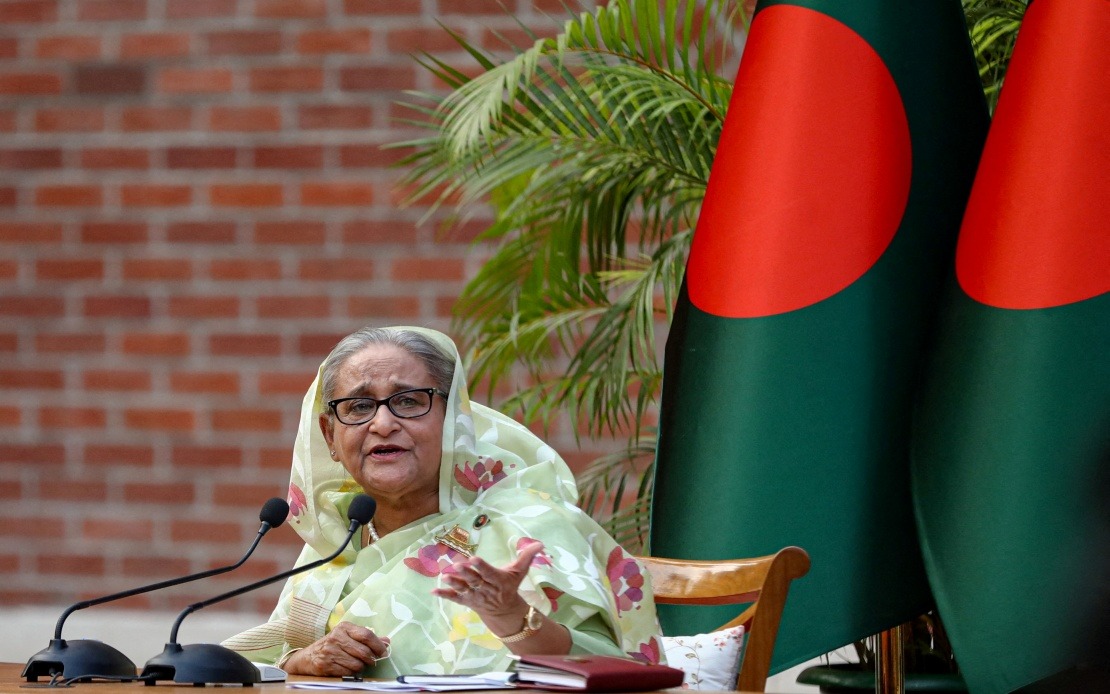
Sheikh Hasina, the 78-year-old former Prime Minister of Bangladesh, has signalled her determination to return to face the judiciary despite a death sentence handed down by the country's war crimes tribunal, marking a significant development in the ongoing political turmoil that has gripped the nation since August 2024. Speaking through a written interview with Kyodo News, Hasina articulated her resolve to appear before the courts, acknowledging the severe personal risks involved in such a decision. Her statement arrives amid mounting international scrutiny of Bangladesh's post-protest transition and raises questions about the country's ability to move forward through legitimate legal processes rather than prolonged political exile.
Hashina's departure from Bangladesh last August followed escalating civil unrest triggered by a court decision to reinstate a 30 percent recruitment quota for descendants of the 1971 independence war veterans. What began as student-led demonstrations against the civil service quota system rapidly transformed into a broader movement against her government, drawing international attention when the United Nations estimated approximately 1,400 deaths during the upheaval, predominantly from security force operations. The protests created a humanitarian crisis that exposed deep fractures within Bangladeshi society and tested the government's crisis management capabilities during a period of significant national tension.
Since fleeing to India last year, Hasina has lived under the shadow of her November 2025 conviction by Bangladesh's war crimes tribunal for crimes against humanity connected to the security forces' response to the demonstrations. The tribunal conducted proceedings in her absence, a procedural aspect that has drawn criticism from international human rights organisations including Human Rights Watch, which emphasised that accountability must be pursued through credible judicial mechanisms. India has received an extradition request from Dhaka but has not yet responded conclusively, indicating it is weighing the matter against relevant legal and judicial considerations. This diplomatic holding pattern has created uncertainty regarding whether Hasina's stated intention to return will materialise and under what circumstances.
Hashina's defence against the charges centres on her insistence that she never ordered any killings during the protests and that political opponents deliberately manipulated the movement to undermine her administration. She has called for independent international forensic expertise to examine the circumstances surrounding each death, suggesting that external investigation could establish the factual record more reliably than proceedings conducted without her presence. This proposal reflects a broader tension in post-conflict transitional justice, where questions of accountability, legitimacy, and procedural fairness intersect with demands for truth and closure. Her emphasis on the need for proper forensic analysis underscores the technical and evidentiary complexities inherent in investigating large-scale security incidents.
The political landscape in Bangladesh has shifted dramatically since Hasina's departure. An interim government headed by Nobel Peace Prize laureate Muhammad Yunus initially took charge following her exit, before the opposition Bangladesh Nationalist Party secured victory in February 2026 elections, bringing Tarique Rahman to the prime ministership. Rahman's government has actively pursued Hasina's extradition and has sought to prevent her political rehabilitation within Bangladesh. The banning of all Awami League activities since May 2025 represents a comprehensive effort to dismantle the institutional structures that supported Hasina's three decades of political dominance, signalling that the new authorities view her return as incompatible with their vision for Bangladesh's future direction.
Zahed Ur Rahman, information adviser to Prime Minister Rahman, responded to earlier media reports of Hasina's intention to return by reaffirming the government's commitment to bringing her back for trial while guaranteeing her the opportunity to mount a legal defence. This statement suggests that the current administration, despite its evident antagonism toward Hasina, recognises the international importance of maintaining procedural legitimacy in judicial proceedings. Yet the gap between formal assurances of fair trial guarantees and Hasina's lived experience of political persecution remains substantial, creating legitimate concerns about whether her return would result in genuine justice or politicised prosecution conducted under new management.
The implications of Hasina's potential return extend well beyond Bangladesh's borders, resonating throughout South Asia and affecting the interests of multiple countries that have invested in Bangladesh's stability and development. During her tenure, Bangladesh experienced a major terrorist attack in July 2016 when militants stormed the Holey Artisan Bakery in Dhaka, killing 20 hostages including nine Italian nationals, seven Japanese citizens, two Bangladeshis, one Indian, and one American of Bangladeshi heritage, alongside two police officers. The Japanese victims were engaged in a rapid railway project supported by Japan International Cooperation Agency, illustrating how Bangladesh's internal security challenges directly impact foreign nationals and international development partnerships. These connections underscore why regional powers and development partners maintain keen interest in Bangladesh's political stabilisation and institutional credibility.
Hashina has framed Bangladesh's future challenges in terms of healing and reconciliation rather than retribution, arguing that while the nation requires recovery from the trauma of 2024's protests, accountability through proper legal channels must accompany any reconciliation efforts. She has explicitly stated that reconciliation cannot translate into impunity for those responsible for crimes, positioning herself as someone willing to accept legal consequences provided the processes are genuinely fair and evidence-based. This rhetorical stance appeals to international audiences concerned about rule of law and suggests Hasina recognises that her political rehabilitation, should it occur, depends partly on her willingness to engage legitimately with judicial proceedings rather than seeking to escape accountability entirely.
The question of whether Hasina will actually return remains unresolved, dependent on India's response to the extradition request, the strength of her health and personal circumstances, and her political calculation regarding the likelihood of securing a fair trial. Her history as the daughter of Bangladesh's founding father Sheikh Mujibur Rahman, combined with her five terms as Prime Minister, has established her as a towering figure in the country's political narrative. Yet her ousting occurred with remarkable swiftness, suggesting that accumulated grievances against her administration cut deeper than typically acknowledged in diplomatic discourse. The coming months will reveal whether her vow represents genuine commitment or political posturing designed to maintain her relevance as Bangladesh navigates transition without her.
For Malaysian observers and Southeast Asian policymakers, Bangladesh's unfolding political drama carries lessons about the fragility of electoral dominance, the risks of prolonged monopolisation of power, and the importance of maintaining institutional safeguards that prevent either successive governments or opposition movements from weaponising state institutions for partisan advantage. The region has experienced multiple instances of democratically elected leaders facing removal through protests, military intervention, or electoral reversal, making Bangladesh's trajectory particularly instructive. Whether Hasina's declared intention to return and face justice will advance genuine reconciliation or deepen political polarisation remains to be seen, but her willingness to contemplate return despite a death sentence suggests she has not abandoned hopes of political relevance within a transformed Bangladesh.

