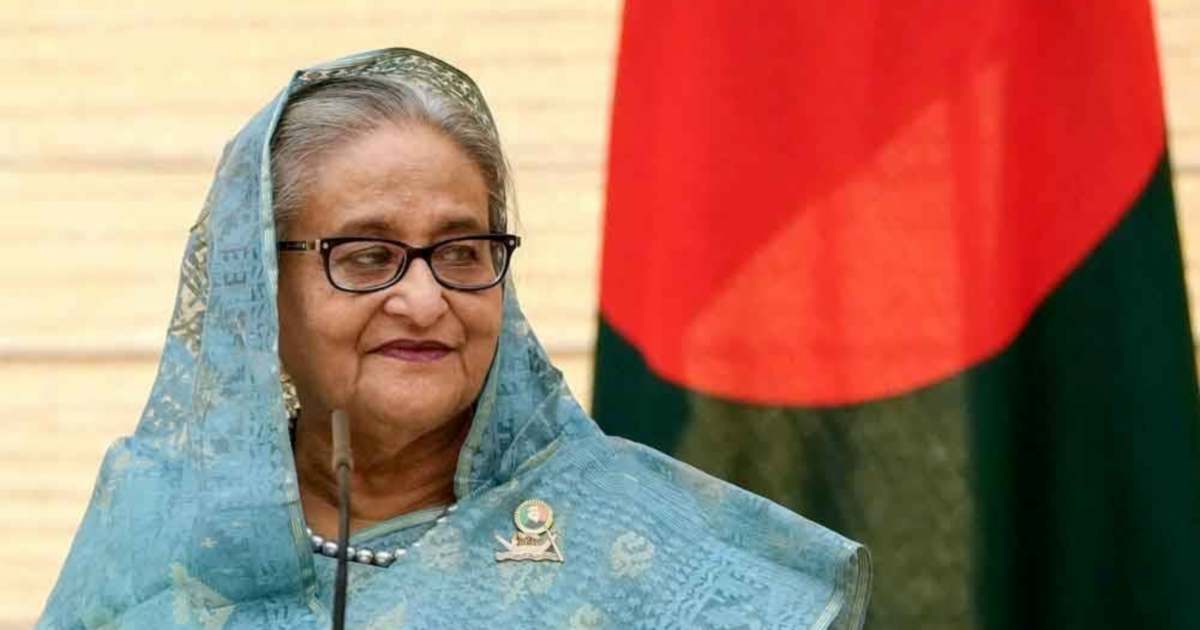
Former Prime Minister Sheikh Hasina has signalled her determination to return to Bangladesh within the current year, making a defiant public statement that disregards a capital punishment sentence delivered in absentia. The ousted leader characterised the judicial proceedings against her as fundamentally flawed, asserting that the verdict represents not legitimate jurisprudence but rather a calculated political manoeuvre orchestrated by her rivals.
Hashina's declaration marks a significant escalation in the political turbulence that has engulfed Bangladesh since her government fell from power. Her commitment to return represents more than a personal ambition—it signals an intent to re-engage directly in the domestic political arena and challenge the legitimacy of the interim administration that has assumed control of state institutions. For neighbouring countries and the broader Southeast Asian region, the prospect of Hasina's homecoming carries substantial implications, given Bangladesh's strategic importance as a nation of over 170 million people and its role as a major economy in South Asia.
The death sentence imposed on Hasina was delivered through legal proceedings that proceeded without her physical presence in the courtroom, a procedural method that has become increasingly contentious in international legal discourse. Her dismissal of the verdict as "illegal, unconstitutional and politically motivated" reflects her argument that the judicial process lacked fundamental fairness and was weaponised for political purposes rather than serving genuine justice. This characterisation raises broader questions about the state of Bangladesh's legal system and whether courts are functioning as impartial arbiters or have become instruments of partisan conflict.
Hashina's political trajectory illustrates the volatile nature of power transitions in South Asia. Her tenure as Prime Minister represented a significant period in Bangladesh's post-independence history, during which the country pursued economic development policies and engaged actively in regional affairs. The sudden reversal of her political fortunes and her current exile status underscore the profound divisions within Bangladesh's political establishment, where transitions of power have historically proven destabilising rather than merely procedural.
The interim administration that has filled the vacuum left by Hasina's departure faces considerable challenges in establishing its legitimacy and demonstrating effective governance. The presence of an exiled former leader pledging to return creates an ongoing source of uncertainty in Bangladesh's political landscape. For businesses, investors, and civil society organisations, this sustained political tension complicates long-term planning and creates an atmosphere of unpredictability that can affect economic performance and social stability.
Hashina's supporters have long maintained that the charges against her constitute a form of political persecution rather than legitimate prosecution. They point to what they characterise as selective justice, wherein leading figures from opposing political factions face differential treatment by the courts depending on their proximity to power at any given moment. This pattern, if substantiated, suggests that Bangladesh's judiciary may lack the independence necessary to earn public confidence in its impartiality.
The question of whether Hasina can actually execute her stated intention to return home remains fraught with practical and legal obstacles. Her death sentence creates a formal barrier to her safe return, as security forces could theoretically apprehend her upon arrival. However, the political calculus surrounding such an action would be extraordinarily complex, particularly if her return generates significant public support or international attention. Regional observers will be watching closely to determine whether any political settlement or negotiated arrangement emerges that might pave the way for her restoration or a broader political resolution.
For Malaysia and other Southeast Asian nations, Bangladesh's internal convulsions warrant careful attention. As a member of the same regional community, Bangladesh's political stability—or lack thereof—affects regional cooperation frameworks, trade relationships, and security arrangements. The potential for prolonged political conflict in Bangladesh could have reverberations across the subregion, particularly concerning maritime disputes, labour migration, and counterterrorism cooperation.
Hashina's pledge to return within the year should be understood not merely as a personal declaration but as a signal that she and her political faction remain active forces in Bangladesh's ongoing power struggle. Whether viewed as a courageous commitment to resist what she frames as unjust persecution or as a provocative gesture that could further destabilise the country depends substantially on one's political perspective within Bangladesh. What remains certain is that her intended homecoming would represent a dramatic turning point that could fundamentally reshape Bangladesh's political landscape and determine the trajectory of the nation's governance for years to come.

