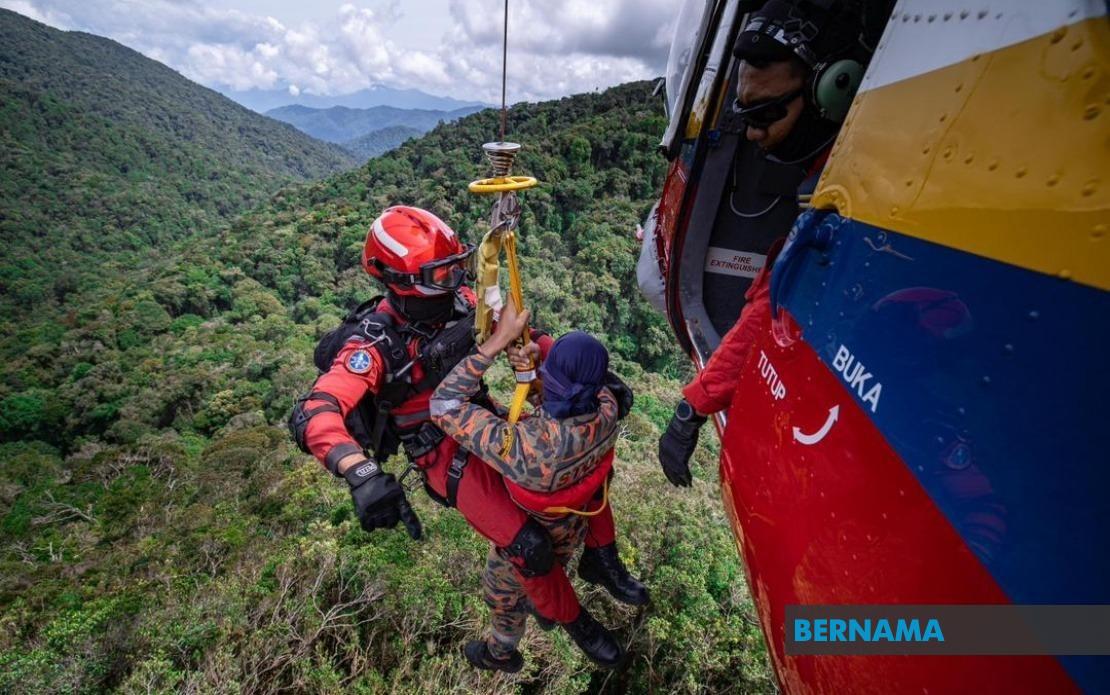
The scale of hiking-related incidents across Malaysia has emerged as a significant public safety concern, with parliamentary disclosure revealing that nearly 1,100 accidents have claimed 63 lives over the past four years. Deputy Minister of Natural Resources and Environmental Sustainability Syed Ibrahim Syed Noh presented these statistics to the Dewan Rakyat, drawing attention to the accelerating risks posed by the country's expanding appetite for forest-based recreational pursuits. The figures, compiled by the Fire and Rescue Department of Malaysia, underscored a troubling pattern that has prompted government intervention to establish structured safety protocols across hiking destinations nationwide.
The climbing toll reflects broader trends in Southeast Asia where outdoor recreation has surged among urban populations seeking weekend escapes and wellness activities. Malaysia's diverse topography—from volcanic peaks to rainforest trails—has made hiking increasingly accessible to middle-class adventurers, yet many ventures into reserved forests occur without adequate preparation, supervision, or emergency preparedness. The 63 fatalities alongside 87 recorded injuries suggest that accident severity has intensified alongside participation rates, with some incidents likely involving multiple casualties or complex rescue scenarios in remote terrain.
Government response has centred on establishing technical frameworks and human capital development. The Peninsular Malaysia Forestry Department, working with United Nations Development Programme support, created the Mountain Risk Assessment and Management Guideline to provide consistent benchmarking for trail safety evaluation and visitor capacity limits. This guideline represents a shift away from ad-hoc trail management towards evidence-based risk mitigation, reflecting international best practices in outdoor recreation governance. By establishing systematic risk categorisation, authorities can allocate resources proportionally and set realistic visitor thresholds that balance economic benefits against safety imperatives.
A cornerstone of the safety strategy involves deploying certified Forestry Mountain Guides across high-risk areas. Currently, 2,322 individuals—drawn substantially from indigenous and local communities—have completed accreditation through skills development programmes. These guides, mandated in 189 designated high-risk hiking zones, function as the immediate safety infrastructure on trails by monitoring hiker behaviour, providing emergency medical response capacity, and facilitating rapid communication with rescue services. The programme simultaneously addresses regional economic disparities by formalising guide work and creating sustainable livelihoods dependent on conservation outcomes.
The government's vision extends toward technological integration through a geospatial-based hiking trail management system being developed collaboratively with the Malaysian Space Agency. This initiative leverages geographic information systems and remote sensing technology to create comprehensive spatial databases of hiking trails, enabling real-time monitoring and enhanced search-and-rescue coordination. Such infrastructure would represent a substantial upgrade from the current fragmented system where state forestry departments maintain separate registration records, often through inconsistent manual or basic online processes. Centralised digital logging would establish an audit trail of hiker movements, facilitating faster emergency response and post-incident analysis.
The proposed national digital hiking registration system addresses a critical operational gap. Currently, hikers entering Permanent Reserved Forests register locally according to state-level protocols, creating information silos that complicate inter-state rescue coordination. A unified national platform would enable rescue teams to rapidly identify missing persons, understand last-known locations and intended routes, and mobilise resources with precise spatial intelligence. The system would also generate longitudinal data on accident patterns, trail conditions, and seasonal risk factors—information essential for continuously refining safety protocols and identifying systemic vulnerabilities before they accumulate into cascading incidents.
Certification and professional development of mountain guides forms the qualitative dimension of safety enhancement. Beyond basic guide qualifications, training curricula encompass hiking safety principles, risk assessment methodologies, first aid and medical emergency procedures, wilderness survival techniques, and search-and-rescue protocols. This comprehensive approach reflects recognition that accidents rarely stem from single causes but rather from intersecting failures—inadequate fitness assessment, poor route planning, unexpected weather, equipment failure, and communication breakdowns. Guides equipped across these domains serve as multiplayer safeguards rather than simple pathfinders.
The fragmentation of hiking management across state jurisdictions presents ongoing coordination challenges. Because state governments retain constitutional authority over forest reserves and permit issuance, centralised safety standards must operate within federalised frameworks. This necessitates negotiated cooperation and incentive alignment across multiple administrations—a complex undertaking that explains why comprehensive reform has moved incrementally. The national digital registration system, positioned as a voluntary coordination mechanism rather than centralised control, offers a pragmatic pathway to integrate safety information without directly challenging state authority.
Context matters for understanding accident causation. Many incidents appear preventable through better preparation, including improved fitness screening, adequate equipment provision, and realistic timeline planning. Seasonal factors also influence risk profiles; monsoon-season incidents often involve flash flooding and soil instability, while dry-season accidents frequently relate to heat exhaustion and dehydration. The diversity of hiking experiences—from casual day walks to multi-day treks in remote ranges—creates heterogeneous risk environments that resist one-size-fits-all prescriptions. Tiered guide requirements aligned with trail difficulty ratings reflect this complexity.
The economic implications warrant consideration alongside safety messaging. Tourism promotion has emphasised Malaysia's natural attractions, particularly among regional visitors from Singapore, Thailand, and Indonesia. Hiking incidents generating negative international attention risk reputational damage that could suppress visitor arrivals across the tourism sector. Conversely, demonstrable safety investments may enhance market positioning. The Malaysian hiking sector occupies a middle ground where neither abandoning outdoor recreation nor accepting preventable deaths represents acceptable policy, necessitating continuous calibration of safety infrastructure with economic objectives.
International comparison provides useful perspective. Developed nations with established hiking cultures typically maintain guide licensing systems, trail maintenance protocols, and comprehensive emergency services. Alpine countries like Switzerland enforce mandatory guide usage on challenging terrain and maintain dense rescue helicopter networks. The Malaysian approach, while advancing, still operates with more limited resources and less mature institutional capacity. The emphasis on community-based guide programmes reflects pragmatic adaptation to resource constraints while building local economic stakes in safety outcomes.
Looking forward, several implementation challenges merit monitoring. Ensuring consistent guide quality across 2,322+ certified individuals requires ongoing supervision and accountability mechanisms. Digital system adoption by hikers demands user-friendly interface design and progressive rollout to build participation. Sustaining political commitment to safety spending amid budgetary pressures requires demonstrating effectiveness through reduced casualty statistics. Balancing accessibility—particularly for lower-income Malaysians for whom hiking represents affordable recreation—against risk-based restrictions demands nuanced policy calibration. The next phase of hiking safety evolution will likely determine whether these emerging systems translate technical sophistication into measurable lives saved.