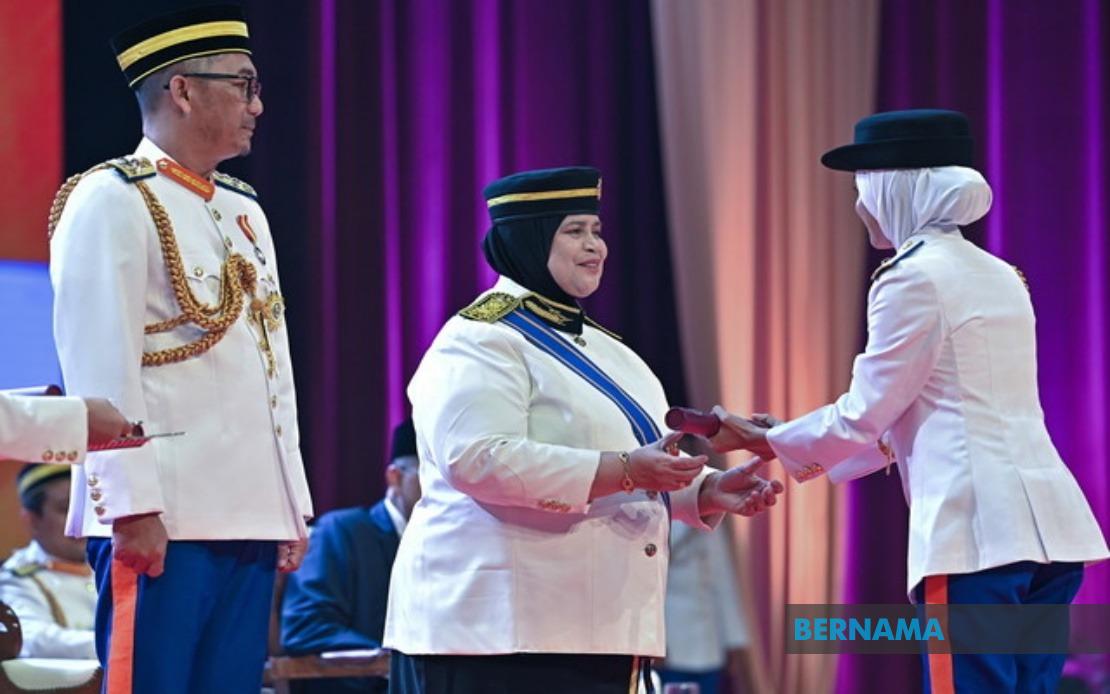
The Malaysian government has rolled out a long-awaited allowance scheme for members of the Civil Defence Student Corps (Kor SISPA), marking a significant step in recognising the contributions of student volunteers across the nation's higher learning institutions. Some 1,107 cadets enrolled at 36 institutions nationwide will form the pioneering group to benefit from this initiative, with disbursements beginning this month under a phased implementation strategy.
Deputy Minister of Rural and Regional Development Datuk Rubiah Wang announced the development at the 17th National Kor SISPA Commissioning Ceremony at Universiti Pendidikan Sultan Idris in Tanjong Malim, where she represented Deputy Prime Minister Datuk Seri Dr Ahmad Zahid Hamidi. She underscored that the allowance programme represents a watershed moment in the government's commitment to improving welfare provisions for civil defence student volunteers, shifting aspirations from theoretical discussions into concrete action on the ground.
The inaugural phase of the allowance scheme carries a budgetary commitment of approximately RM500,000, with Datuk Rubiah indicating that the government intends to explore additional fiscal mechanisms to broaden the programme's scope. This cautiously optimistic approach suggests policymakers recognise both the immediate financial constraints and the long-term potential for expansion as the scheme matures and demonstrates its benefits.
The allowance structure incorporates a merit-based differential system tied to educational qualification levels. Cadets holding bachelor's degrees will receive RM9.80 per hour, while diploma-level students will earn RM8 per hour, with all payments calculated according to recorded hours of duty. This graduated scale reflects standard government practice in compensating student workers and acknowledges the enhanced responsibilities typically assigned to degree-level personnel within volunteer organisations.
According to Datuk Rubiah, who also serves as Civil Defence honorary commissioner, the allowance initiative aims to incentivise participation among university and college students in Kor SISPA activities while furnishing them with meaningful exposure to public safety operations. Beyond the immediate motivation of monetary compensation, the programme seeks to cultivate a generation of young professionals acquainted with disaster response protocols and community service obligations, attributes increasingly valued in Malaysia's civil society and professional landscape.
The scope of Kor SISPA responsibilities extends considerably beyond emergency response operations. Civil Defence personnel, including student cadets, provide assistance throughout the calendar year at institutional events, campus activities, and community programmes beyond academic settings. This year-round engagement reflects the evolving nature of civil defence work in modern Malaysia, where preparedness and public safety support constitute ongoing commitments rather than episodic interventions.
Since its establishment in 2010, Kor SISPA has established itself as a significant pipeline for developing civic-minded young Malaysians within university and teacher education institutes. The programme has thus far produced 11,802 graduates who have cycled through its ranks, suggesting a well-entrenched institutional presence across the higher education sector. The longevity and scale of the programme underpin the government's decision to formalise allowance provisions, recognising that stable incentives could enhance retention and engagement quality among participating institutions.
The allowance approval signals shifting government priorities regarding the valuation of volunteer student labour. Historically, such positions often operated without monetary compensation, relying primarily on institutional prestige and leadership development opportunities to attract participants. The introduction of hourly remuneration acknowledges both the real time commitment demanded of student cadets and broader labour market expectations among tertiary students regarding compensation for organised service work.
For Malaysian universities and colleges, the allowance scheme introduces a new dimension to student engagement programming. Institutions must now factor allowance administration and documentation into their Kor SISPA operations, creating additional administrative requirements but also potentially enhancing the perceived value and legitimacy of the programme within student communities. This formalisation could encourage greater enrolment, particularly among students who juggle multiple financial pressures.
The sequential implementation approach, with the first phase targeting selected cadets and institutions, permits government officials to assess programme efficacy, identify administrative challenges, and refine processes before broader rollout. This graduated strategy reflects lessons learned from previous initiative launches and demonstrates administrative sophistication in programme management. Subsequent phases will likely incorporate feedback from initial participants and institutional coordinators.
Datak Rubiah's announcement that the next commissioning ceremony will be held at Universiti Sultan Zainal Abidin (UniSZA) next year indicates the government's intention to maintain momentum and visibility for the Kor SISPA initiative. Regular commissioning ceremonies serve ceremonial and motivational functions, reinforcing institutional commitment to the programme and providing public recognition for participant contributions. The geographic rotation of these events also ensures equitable institutional exposure across the nation's higher education landscape.
The allowance scheme reflects broader global trends in formalising and compensating student volunteer work, acknowledging that meaningful civic engagement requires tangible recognition beyond abstract social benefit. For Malaysia, where youth engagement in public service remains a policy priority, the initiative positions government as supportive of student volunteers rather than exploitative of their labour. This reframing could enhance recruitment prospects and deepen commitment levels among participating cohorts, ultimately strengthening civil defence capacity at the grassroots level across Malaysian campuses.

