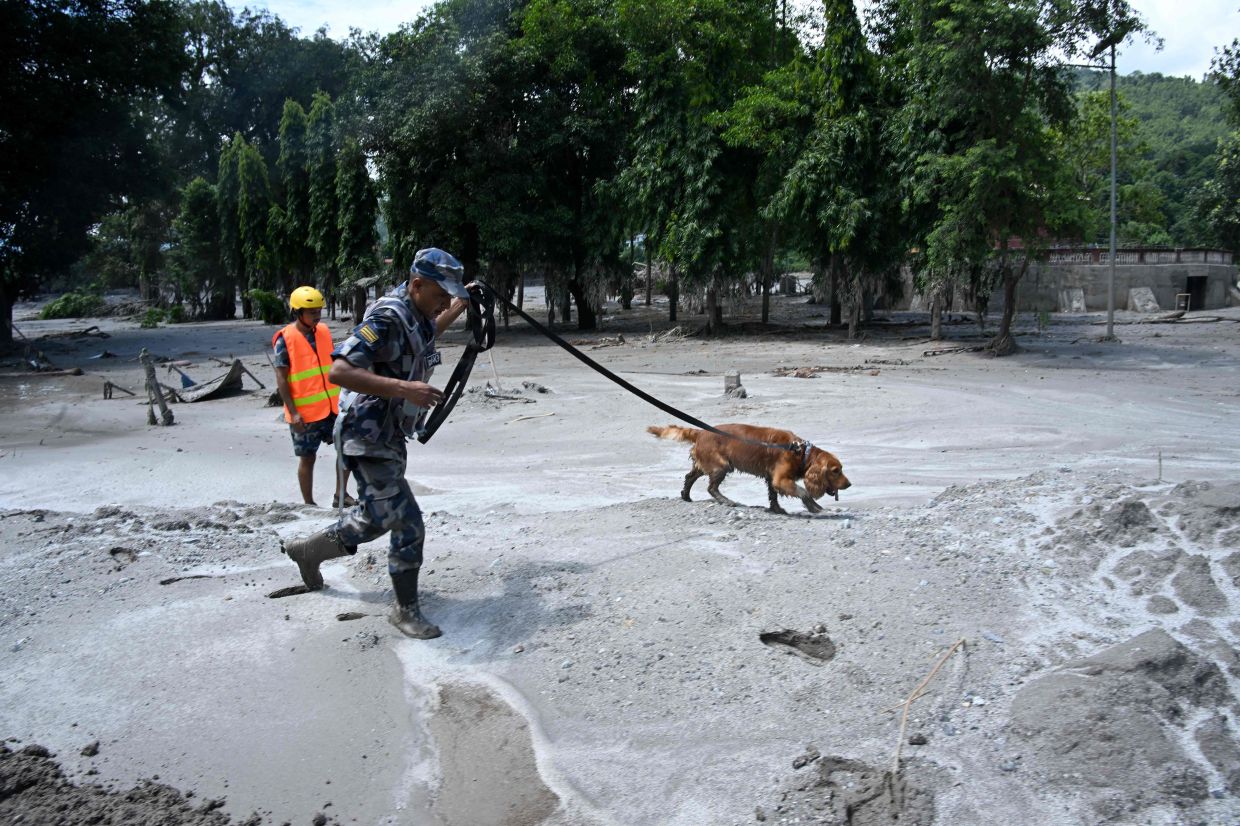
The Nepal-Tibet border region faces a mounting humanitarian crisis as flash floods and landslides claim hundreds of lives and leave over 1,400 people unaccounted for. With 392 deaths confirmed so far, the toll continues to climb as rescue operations intensify across one of South Asia's most challenging terrain. Officials caution that casualty figures remain fluid, a typical pattern in the chaotic aftermath of large-scale disasters where verification and accurate accounting take time to establish.
The scale of confusion surrounding missing persons reflects the complexity of tracking individuals across a remote, mountainous border region with limited communication infrastructure. Nepal's disaster management agency reported 910 people unaccounted for as of Thursday, including at least 517 foreigners, though specific nationality breakdowns were not immediately available. Simultaneously, Chinese authorities reported 558 missing persons on their side of the border, including 260 foreigners, bringing the combined total across both sides to 1,468 individuals. The discrepancies between figures reported by different agencies underscore the difficulty in establishing accurate counts when disaster zones span multiple jurisdictions and international boundaries.
In Malaysia, the situation has particular resonance as the country's government confirmed more than 50 citizens are unreachable in the affected area. Prime Minister Anwar Ibrahim addressed the concern on Thursday, while Nepal's Tourism Board independently listed 51 Malaysians among the missing. For Malaysian families awaiting news, the uncertainty compounds an already tragic situation, as communications remain disrupted and rescue teams struggle to access isolated pockets where Nepali and foreign nationals may be sheltering. The Malaysian government's swift acknowledgement of the missing reflects growing responsibility among regional nations to account for and assist their citizens caught in transnational disasters.
The international dimensions of this catastrophe are staggering, with citizens from at least two dozen nations unaccounted for across the border region. The United States faces particular concern with approximately 90 of its citizens missing according to the State Department, though the Nepal Tourism Board offered a lower estimate of 65. Three Americans have been rescued and the State Department reported no confirmed US fatalities at the time of Thursday's update. India has reported 178 nationals missing, with 11 having been successfully rescued, while Canadian authorities indicated they were tracking 30 Canadians and permanent residents whose status remained unconfirmed—slightly higher than the Nepal Tourism Board's count of 25.
Europe has also suffered significant losses in the disaster. The United Kingdom has 33 citizens missing, while Germany reported eight unaccounted for and France four. Ukraine's foreign ministry stated that 56 Ukrainians were listed as out of contact, though importantly noted that according to available verified information, no Ukrainians had been found among the injured or deceased. Russia reported eight nationals missing with two rescued. Australia's toll rose to 39 missing nationals, according to Foreign Minister Penny Wong's Friday update, while New Zealand accounted for five missing citizens.
Asia-Pacific nations besides Malaysia face their own counting challenges. South Korea's foreign ministry identified nine hydropower workers unaccounted for in the Rasuwa district, though the Nepal Tourism Board separately reported that four South Koreans had been rescued, suggesting partial success in extraction efforts. Singapore reported nine nationals missing, while Japan documented five. These figures highlight how the disaster has swept across multiple economic sectors, from tourism to infrastructure development, affecting not only leisure travellers but workers engaged in regional hydropower and development projects.
The Nepal Tourism Board has emerged as a critical source of consolidated information, systematically documenting missing tourists and travellers of both Nepali and foreign nationality. Its figures showed significant representation from Eastern European nations including Latvia with six missing, alongside smaller contingents from South Africa and France. However, discrepancies persist between the tourism board's tallies and official government pronouncements from various nations, a common occurrence when international disasters overwhelm local administrative capacity and create competing information streams.
Missing persons accounting in disaster zones involves multiple compounding factors that create legitimate fluctuations in reported figures. Double-counting occasionally occurs when individuals are reported missing by multiple family members or institutions, while identifying remains and matching them to missing persons lists requires time and forensic resources. The geographic spread across a border region administered by two separate governments adds bureaucratic complexity, as does the involvement of mountainous terrain where communication with remote areas remains difficult even under normal circumstances. For Malaysian families and those from other nations, the waiting period involves not just emotional distress but practical uncertainty about rescue timelines.
The rescue operations themselves face formidable obstacles in the Nepal-Tibet border terrain. Flash floods and landslides continue to threaten response efforts, while infrastructure damage complicates access to affected villages and valleys where survivors may be sheltering or where bodies may yet be found. The successful rescues already achieved—including three American citizens, 11 Indian nationals, two Russians, and four South Koreans—demonstrate that survival is possible even in severely impacted areas, offering hope that additional missing persons may yet be located alive. However, with rescue windows narrowing as weather conditions deteriorate, time has become a critical factor in locating survivors.
For Southeast Asia specifically, this disaster underscores the vulnerability of the region to rapid-onset natural hazards and the challenges in coordinating international response when citizens are scattered across multiple countries. Malaysia's situation with over 50 nationals missing illustrates how natural disasters in neighbouring regions directly impact home nations and their diplomatic obligations. The incident also highlights the importance of travel registries and consular networks that allow governments to track citizens abroad and mobilize assistance quickly. Regional governments are likely to review their disaster response protocols and cross-border coordination mechanisms in light of how the Nepal-Tibet crisis has unfolded.

