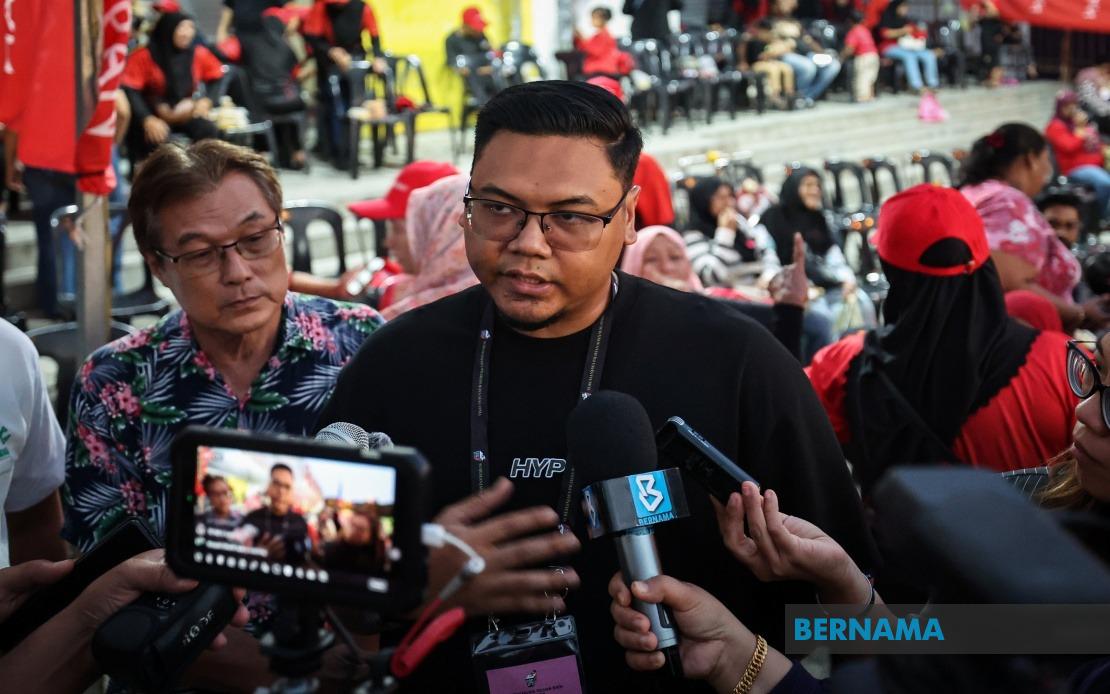
A substantial defection from Bersatu to Pakatan Harapan unfolded in Johor Bahru on July 8, as more than 120 former members and leaders from the party's Pulai division publicly announced their support for the opposition coalition. The announcement came during a press conference by Muhammad Faezuddin Mohd Puad, the PH candidate contesting the Kempas state seat, marking a significant show of strength for the coalition as Johor headed toward its 16th state election scheduled for July 11. The timing of the declaration highlighted the fluid political landscape in Malaysia's southern stronghold, where party loyalty has become increasingly contingent on performance and grassroots service delivery.
Muhammad Faezuddin disclosed that the defectors had signalled their intention to join PH considerably earlier, but the group strategically delayed the public announcement until conditions were optimal for maximum political impact. The delegation of former Bersatu figures who switched included Rafidah Ani, who held the position of Pulai Bersatu Srikandi Information chief, Noriah Mat Daud, who served as Pulai Srikandi secretary, and Mohd Suhimi Abdul Rahman, a former branch chief in Bukit Mewah. Beyond these named leaders, the contingent encompassed numerous division and branch committee members whose collective departure represented a visible fracture in Bersatu's organisational cohesion in the region. The departing members had formally notified Bersatu leadership of their decision, underscoring that the move represented an orderly transition rather than spontaneous defection.
The primary narrative offered by PH for the defection centred on what Muhammad Faezuddin characterised as a fundamental difference in governance philosophy. He articulated PH's approach as one transcending partisan boundaries, whereby elected representatives and government officials dispensed assistance to constituents regardless of whether they held membership in Bersatu, UMNO, PKR, DAP, or any other political entity. This framing positioned PH as committed to dismantling what he termed the "old culture" of directing state resources exclusively to party loyalists and connected individuals. By contrast, he suggested that PH's inclusive approach to public service had created sufficient goodwill to convince seasoned political operators to realign their allegiances. The argument resonated with themes of institutional reform that had gained traction following Malaysia's political realignments in recent years.
Rafidah Ani elaborated on her personal motivations for abandoning Bersatu, attributing her decision to deep disappointment with how the party's leadership managed both internal affairs and community engagement. Throughout her tenure within the party structure, she emphasised that her consistent focus had been assisting vulnerable populations, particularly single mothers navigating economic hardship. However, she described finding it persistently difficult to mobilise party resources to support such initiatives, suggesting institutional indifference to social welfare concerns. Her grievance extended to the treatment accorded to Srikandi members, the women's wing of the party, whom she alleged were relegated to secondary status and denied meaningful recognition for their contributions. This dimension of her complaint highlighted how internal organisational dynamics within political parties can directly influence electoral outcomes by alienating activists at grassroots levels.
Mohd Suhimi Abdul Rahman provided a complementary perspective on the defection, framing his departure as rooted in institutional dysfunction. He characterised himself as dissatisfied with both the personal treatment he received within Bersatu's hierarchy and, more broadly, the party's apparent inability or unwillingness to secure tangible benefits for residents within his constituency. His earlier unofficial departure from Bersatu following the 2022 Johor state election suggested that his current public declaration represented the formalisation of a decision reached months previously. Looking forward, Mohd Suhimi expressed optimism that PH's candidate in Kempas would catalyse material improvements in the constituency, specifically targeting economic development initiatives and healthcare infrastructure. This forward-looking perspective indicated that the defectors were motivated not merely by grievances against their former party but by affirmative expectations regarding PH's governance capacity.
The strategic context for these defections warrants examination, as the Kempas seat presents a three-cornered contest involving Muhammad Faezuddin for PH, alongside candidates fielded by Barisan Nasional and the newer Parti Bersama Malaysia. In the preceding 2022 state election, the BN-UMNO incumbent, Datuk Ramlee Bohani, had secured victory with a majority of 3,514 votes, indicating a reasonably competitive battleground rather than a stronghold. The accumulation of over 120 additional voices advocating for PH, particularly those comprising former party activists with established community networks, potentially altered the competitive dynamics. Former party members often retain residual networks and credibility within their communities, meaning their public endorsements carry disproportionate weight relative to their numerical representation.
The broader electoral context involved 172 candidates contesting 56 state assembly seats across Johor, with approximately 2.7 million eligible voters determining the outcome. This scale meant that defections of the magnitude witnessed in Pulai, if replicated across multiple constituencies, could meaningfully influence overall results. Johor's electoral significance extends beyond its size; as a traditionally important state within Malaysian federalism and a stronghold with historical connections to UMNO, any substantial shift in voting patterns carried implications for national political dynamics. The defection narrative also contributed to framing the election as a referendum on incumbent governance, with PH presenting itself as offering superior public service orientation compared to Bersatu, a party that had entered government as part of the Perikatan Nasional coalition but had faced accusations of prioritising narrow factional interests.
The phenomenon of party switching in Malaysian electoral contests reflects underlying tensions between formal party structures and practical governance performance. Voters and party activists increasingly demonstrate willingness to reassess affiliations when they perceive that their material interests are inadequately served or when organisational cultures prove inhospitable. The Bersatu defections thus exemplified broader trends in Southeast Asian politics whereby traditional tribal loyalties and inherited party identifications face erosion when parties fail to deliver concrete benefits or maintain inclusive internal cultures. For parties like Bersatu, which had emerged as relatively recent entrants to Malaysia's political landscape, the loss of grassroots activists represented particularly acute challenges, as such parties typically depend on enthusiastic volunteer networks to compensate for organisational immaturity relative to established entities like UMNO or DAP.
Muhammad Faezuddin's emphasis on PKR's role within the PH coalition suggested that he was simultaneously promoting broader coalition coherence while pursuing his individual constituency candidacy. His position as head of Johor Angkatan Muda Keadilan (AMK), the youth wing of PKR in Johor, indicated his integration within PKR's structural hierarchy. The Kempas contest thus represented not merely a single seat but a node within broader coalition dynamics. Mohd Suhimi's specific mention of efforts to recruit additional members, particularly from the Kempas People's Housing Project area, illustrated how the defection was being operationalised as a platform for structural party-building. PPR residents, typically representing lower-income households, are identified political constituencies where bread-and-butter issues dominate voter calculations.
The defections also illuminated internal challenges within Bersatu that extended beyond the Johor context. The party, which had positioned itself as a nationalist alternative to UMNO, appeared to have struggled with transforming electoral appeal into sustainable party culture and effective grassroots service delivery. For women activists like Rafidah Ani and Noriah Mat Daud, the Srikandi structure had apparently failed to provide meaningful platforms for agency and resource allocation, driving their search for alternative political homes. This dynamic suggested that while Bersatu had captured headline attention during its peak influence, its ability to retain committed activists remained questionable, particularly when competing entities like PKR offered more inclusive organisational frameworks.
The announcement timing, just three days before the election, maximised media coverage and constituency-level mobilisation opportunities for PH while leaving minimal time for Bersatu damage control. By concentrating the announcement into a single press conference moment rather than dispersing it across multiple individual declarations, the coalition maximised the visual impression of substantial, coordinated defection. This strategic packaging indicated sophisticated campaign management by PH, transforming what might have been routine party switching into a narrative about Bersatu's institutional weakness. For Malaysian voters watching the campaign unfold, the defections served as implicit endorsement of PH's governance approach by individuals with prior experience within competing parties, potentially addressing credibility concerns among swing voters sceptical of partisan claims.
As Johor voters prepared to cast ballots on July 11, the Bersatu defection represented one element within a broader electoral landscape characterised by coalition competition, demographic shifts, and evolving voter expectations. The defectors' emphasis on service delivery, inclusivity, and economic development reflected concerns that transcended narrow partisan identity, suggesting that electoral outcomes in contemporary Malaysia increasingly hinged on voters' perception of which entities could tangibly improve their lives. For PH, the accumulation of such endorsements across multiple constituencies provided momentum heading into voting day, though the ultimate test remained whether the coalition's governance record matched the promises articulated by candidates like Muhammad Faezuddin.

