Malaysia's revised diesel subsidy initiative, BUDI MADANI Diesel, has demonstrated robust public uptake since launching on its early implementation phase, with the government portal processing more than 18,000 applications for additional monthly allocations within the first 48 hours. Second Finance Minister Datuk Seri Amir Hamzah Azizan confirmed the milestone while emphasising the scheme's operational stability, highlighting that over 40,000 transactions involving programme beneficiaries have already been recorded across the system. The rapid adoption underscores significant demand from the target demographic of diesel-powered pickup truck and sport utility vehicle owners who stand to benefit from the enhanced quotas now available to them.
The early rollout commenced yesterday in Peninsular Malaysia, allowing eligible vehicle proprietors to access subsidised diesel at RM2.15 per litre under a flexible quota structure permitting up to 200 litres monthly consumption. This quota ceiling represents a substantial increase in purchasing power for commercial operators and businesses reliant on these vehicle categories, many of whom face considerable fuel cost pressures in their daily operations. The government's decision to implement the scheme ahead of its formal July 1 commencement date reflects confidence in the system's readiness and an apparent determination to provide immediate relief to affected users during an economically sensitive period.
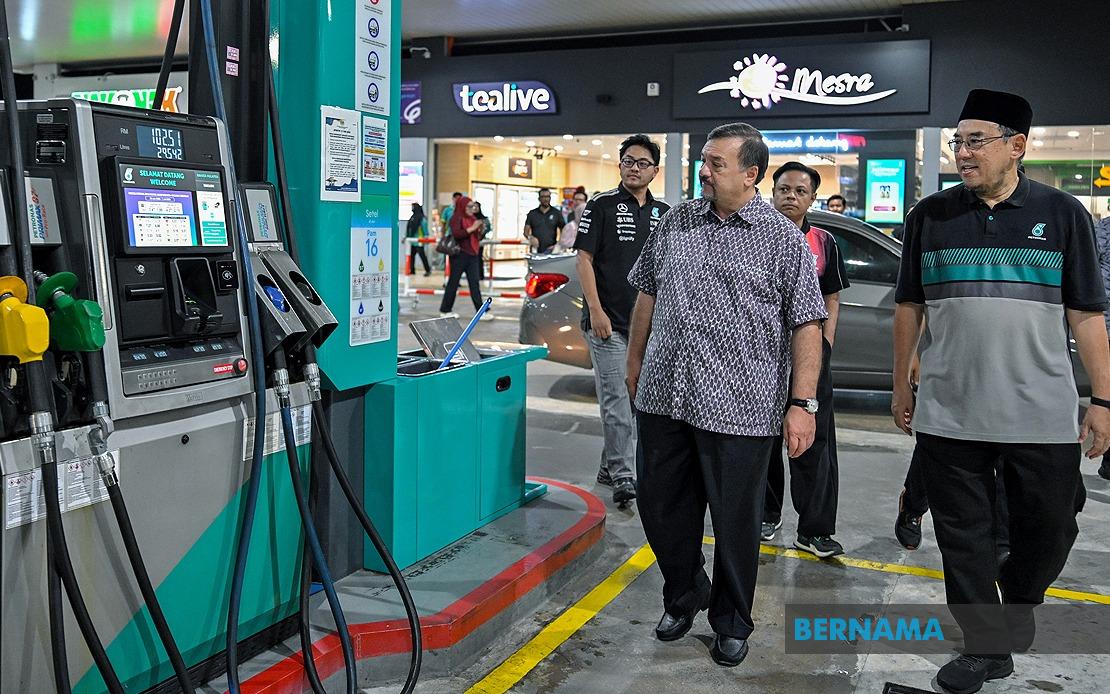
Amir Hamzah's inspection visit to a Petronas service station on the NKVE Damansara route, accompanied by Treasury secretary-general Tan Sri Johan Mahmood Merican, was designed to demonstrate government commitment to the initiative's successful deployment. The minister's emphasis on the absence of technical glitches during this critical early phase carries particular significance given the complexity of integrating subsidy verification systems across Malaysia's extensive petrol station network. Such system failures in previous subsidy schemes have created frustration and logistical bottlenecks; therefore, the current smooth operation represents a marked improvement in implementation capability.
Central to the BUDI MADANI Diesel framework is its accessibility architecture, which the government has deliberately designed to accommodate users with varying degrees of digital literacy. Applications for additional quota allocations are processable through the official BUDI MADANI portal online, yet the administration has simultaneously established multiple offline support channels. Officers stationed at Inland Revenue Board offices, Urban Transformation Centres, and service counters operated by petroleum companies can provide hands-on assistance to applicants who prefer face-to-face guidance or lack reliable internet access. This dual-channel approach recognises the demographic reality that many small business operators and agricultural workers using these vehicles may be less digitally proficient.
A particularly innovative dimension of the scheme addresses a practical problem that previous subsidy programmes largely overlooked: the distinction between registered vehicle owners and actual operational users. Recognising that commercial vehicles are frequently held in one person's name while being driven and operated by different individuals—such as hired hands, family members, or business partners—the government has incorporated a quota transfer mechanism into the system. This facility permits registered owners to designate another person as the quota beneficiary, significantly reducing potential fraud and ensuring that those genuinely using the vehicles receive the subsidy benefit intended for them.
The mechanics of this transfer process reflect considerable technical sophistication. Once a transfer request is approved through the portal, subsequent verification at petrol station pumps occurs by cross-referencing the identity card number of the designated user against the transferred quota record. The system then tags the quota allocation specifically to the new user's identification details, enabling petrol station point-of-sale systems to instantaneously recognise authorised transfers when payment is processed. Despite these technical layers, the quota amount itself remains permanently linked to the specific vehicle rather than being infinitely portable, preventing quota hoarding or secondary market trading that could undermine the subsidy's targeting objectives.
The pricing structure introduced through BUDI MADANI Diesel shows sensitivity to the economic calendar and budgetary cycles. The initial subsidised rate of RM2.15 per litre commenced during the early implementation phase, with a further reduction to RM2.10 per litre scheduled to take effect on Wednesday. This staged pricing approach may reflect petroleum market considerations or deliberate sequencing designed to ease the financial transition for diesel-dependent operators. For pickup truck and SUV owners operating on tight margins—whether engaged in haulage, construction supply, agricultural services, or other transport-dependent activities—even the differential between these two pricing tiers represents meaningful monthly savings when multiplied across the maximum 200-litre quota.
Amir Hamzah's public assertions regarding the complete absence of reported technical complications or petrol station operator difficulties warrant careful interpretation. Such assurances serve both to reassure the public of the system's stability and to underscore the government's administrative capability. Given the initiative is in its earliest phase with only 48 hours of operational history, the potential for issues to emerge remains real as transaction volumes increase and edge cases encountered by diverse operator cohorts become more prevalent. Nevertheless, the current absence of reported problems suggests that system designers invested substantial effort in pre-launch testing and that petroleum retail operators received adequate preparation.
The significance of this diesel subsidy initiative extends beyond immediate fuel price relief to encompass broader economic and political dimensions relevant to Malaysian stakeholders. Diesel-dependent sectors constitute a critical but often overlooked component of Malaysia's economy, with significant employment in haulage, agriculture, construction materials distribution, and rural services. Businesses in these sectors have experienced considerable margin compression during periods of elevated fuel costs, sometimes cutting into profitability sufficiently to force operational scaling-back or workforce reductions. By targeting these specific vehicle categories rather than attempting universal subsidy, the government has demonstrated policy selectivity that attempts to balance fiscal sustainability against targeted relief for economically vulnerable segments.
The successful early implementation also carries implications for government credibility in digital governance and subsidy administration more broadly. Malaysia's track record with major subsidy schemes has been mixed, with some programmes experiencing implementation delays, technical failures, or high administrative costs that consumed portions of intended benefits. A smoothly functioning BUDI MADANI Diesel rollout would constitute a tangible success story in digital public service delivery, potentially building confidence in the administration's capacity to manage future complex initiatives. Conversely, any subsequent problems emerging during the scaling-up phase could substantially damage public confidence in digital governance initiatives.
Looking forward to the formal July 1 commencement date, the government appears positioned to transition from this early pilot phase to full national operation with considerable institutional knowledge already accumulated. The two days of early implementation provide valuable real-world data on transaction patterns, system performance under actual operational conditions, and user behaviour across the geographical breadth of Peninsular Malaysia. This empirical foundation should enable administrators to identify and correct any systematic issues before the scheme's official launch, when substantially larger transaction volumes will likely materialise as more eligible users become aware of the programme and complete their applications.
The quota transfer mechanism and offline assistance channels represent policy innovations reflecting lessons learned from previous subsidy programme shortcomings, suggesting that Malaysia's bureaucratic apparatus has absorbed institutional learning from earlier experiences. Whether the scheme can maintain its current operational quality as usage expands, and whether the pricing tiers accurately calibrate long-term fiscal sustainability against relief objectives, will ultimately determine the initiative's success as both an economic policy tool and a demonstration of government competence in contemporary public administration.

