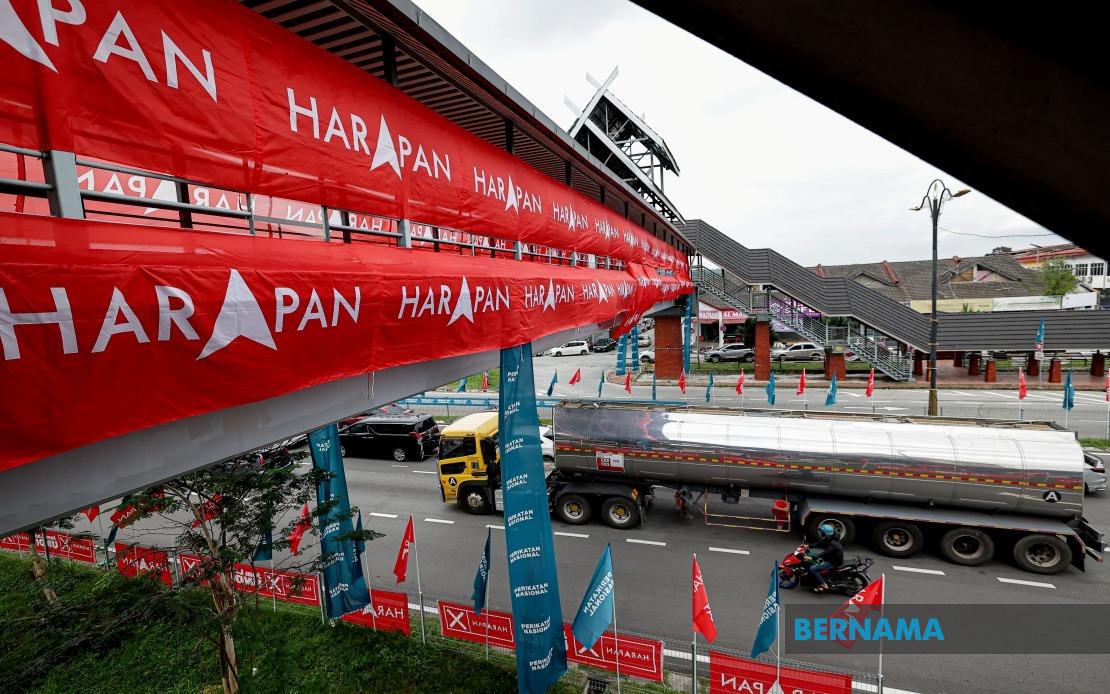
The Negeri Sembilan state election machinery is gearing up for an early voting exercise tomorrow that will see approximately 22,000 security personnel and their family members cast ballots four days before the official polling day on August 1. The Election Commission's decision to accommodate military and police voters through this advance mechanism reflects the operational demands placed on uniformed services during election periods, allowing these essential personnel to exercise their democratic rights without compromising security arrangements across the state.
Among the 22,339 eligible early voters, the military contingent significantly outweighs the police presence. Some 16,884 military personnel alongside their spouses will participate in tomorrow's voting, while the Royal Malaysian Police will contribute 5,455 officers and their spouses to the early voting tally. The disparity underscores Negeri Sembilan's substantial military infrastructure, particularly given the state's geography and strategic importance as a central region connecting multiple major corridors.
To accommodate this voter surge, the Election Commission has established 38 dedicated polling centres throughout Negeri Sembilan, strategically positioned across key military and police installations. Prominent voting locations include the Army Basic Training Centre in Port Dickson, the Negeri Sembilan Police Contingent Headquarters, the Sendayan Air Base in Seremban, and the Nilai District Police Headquarters. All centres will commence operations simultaneously at 8 am, though closing times will vary depending on each location's specific operational requirements and voter turnout patterns.
Weather conditions present a notable consideration for tomorrow's voting logistics. According to MetMalaysia forecasts, the morning period should remain predominantly clear across most of Negeri Sembilan, offering favourable conditions for early voters to access polling stations. However, Port Dickson residents and voters face a more challenging environment, with heavy rain and thunderstorms expected from early hours. The afternoon brings more widespread precipitation concerns, as nearly the entire state anticipates heavy rainfall. Election officials will need to ensure adequate measures exist to protect voting materials and maintain orderly polling operations despite these meteorological challenges.
The broader electoral context reveals a fiercely contested state election with substantial multi-party participation. The 36 available state assembly seats have attracted 103 candidates representing diverse political coalitions and independent movements. This candidate-to-seat ratio of nearly 2.9 indicates competitive races across most constituencies, suggesting voter choice will be genuinely meaningful rather than predetermined.
Pakatan Harapan maintains the most comprehensive coverage, fielding candidates in all 36 constituencies through a three-component alliance: PKR contributes 16 candidates, DAP provides 11, and Amanah fields nine. This blanket approach reflects PH's ambition to contest every available seat and build maximum voter engagement across diverse communities in the state.
Barisan Nasional adopts a more selective strategy, contesting 25 of the 36 seats while ceding 11 constituencies to other parties. UMNO fields 16 candidates as the primary component, supplemented by MCA's seven candidates and MIC's two nominees. This targeted approach suggests BN calculations about competitive viability in specific districts, potentially acknowledging demographic shifts or stronghold realities in certain areas.
Perikatan Nasional's presence, while modest at 11 candidates, reflects the coalition's expansion beyond its traditional PAS base. PAS supplies five candidates, while Parti Wawasan Negara contributes four, with Gerakan and the Malaysian Indian People Party providing one candidate each. This diversification strategy indicates PN's efforts to broaden appeal beyond Islamic-focused constituencies.
Several parties contest independently or represent niche constituencies. Bersatu, operating separately rather than within coalition frameworks, has fielded the substantial number of 24 candidates, suggesting internal confidence in grassroots support despite organisational challenges. Smaller movements including Parti Orang Asli Malaysia, Parti Sosialis Malaysia, and Parti Barisan Jemaah Islamiah Se-Malaysia collectively field nine candidates, likely targeting specific demographic segments or ideological communities.
The dissolution of the Negeri Sembilan State Legislative Assembly on June 5 initiated this election cycle, with the Election Commission scheduling the main polling day for August 1. This timeline creates a compressed campaign period that tests parties' organisational capacity and financial resources. The early voting mechanism for security personnel compresses the operational window further, requiring election officials and political parties to accelerate their outreach efforts.
For Malaysian observers and regional commentators, the Negeri Sembilan election represents a significant datapoint in ongoing assessments of federal coalition performance following recent national developments. The state's geographic and demographic profile—spanning urban centres, industrial zones, and rural constituencies—provides representative insights into voter sentiment across diverse community segments. Outcomes here may signal broader trends affecting Peninsular Malaysian politics or validate emerging electoral patterns evident in recent national surveys.
The inclusion of 22,339 security personnel voters through this dedicated early voting arrangement reflects growing election management sophistication in Malaysia. By facilitating such participation through dedicated infrastructure, the Election Commission demonstrates commitment to ensuring comprehensive voter inclusion while maintaining operational security. This approach also reduces potential disruptions to normal security operations during the main election day, allowing full deployment of personnel for broader electoral supervision and public order maintenance.
As polling stations prepare for tomorrow's early voting exercise, election officials will monitor both participation rates and operational efficiency. The early voting figures will provide preliminary indicators regarding voter enthusiasm and turnout expectations for August 1, offering political analysts and party strategists crucial signals about the electoral climate in this competitive contest.

