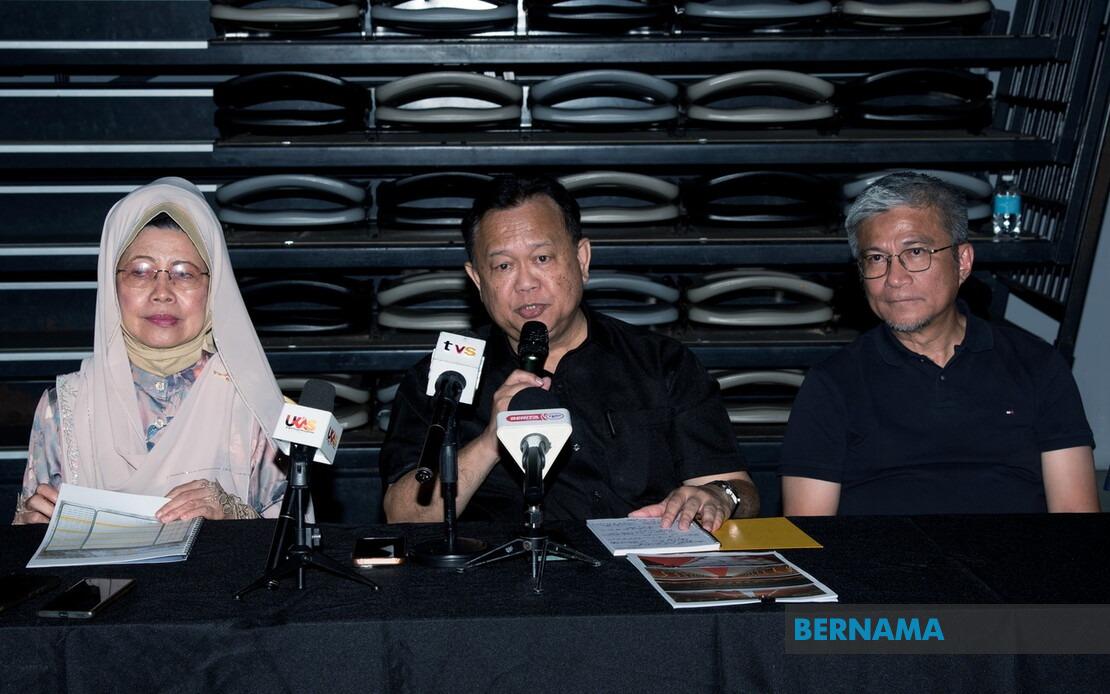
The Parti Pesaka Bumiputera Bersatu (PBB) is preparing for a significant gathering in Sarawak as the party moves forward with its regional convention schedule. The central zone special convention, scheduled for July 26 at the Sibu Indoor Stadium, will draw an anticipated turnout exceeding 3,000 delegates representing 24 party branches across the region. This substantial gathering underscores the party's commitment to engaging its grassroots membership in the lead-up to important policy discussions and strategic planning.
The convention marks the first of several regional assemblies planned across Sarawak this year, with the southern, Betong, and northern zones slated to follow the central zone event. This sequential approach allows the party to systematically engage different geographical constituencies and ensure comprehensive participation from party members across the state. PBB secretary-general Datuk Seri Alexander Nanta Linggi revealed this timeline while discussing the organisational framework being established to manage the ambitious convention schedule.
Preparations for the Sibu gathering have already advanced to detailed coordination levels, as evidenced by the organising committee meeting that took place to address logistical and substantive arrangements. The committee's focus encompasses both the practical elements of hosting over 3,000 delegates at the venue and ensuring the convention achieves its intended policy and engagement objectives. Nanta Linggi chaired this planning session, reflecting the significance attached to executing a successful event.
The convention's agenda reveals PBB's strategic priorities heading into the latter part of the decade. A major focal point will be an in-depth presentation on the Malaysia Agreement 1963 (MA63), the foundational constitutional document that established Malaysia and defined Sarawak's position within the federation. This reflects ongoing party attention to constitutional matters and state rights, issues that remain central to Sarawak political discourse and have periodically surfaced in discussions about the state's federal relationship and autonomy.
Coupled with the MA63 discussion, delegates will receive detailed briefings on the Post COVID-19 Development Strategy 2030 (PCDS 2030), signalling the party's forward-looking orientation toward economic recovery and growth in the post-pandemic period. This dual focus—anchoring discussions in constitutional foundations while simultaneously projecting toward development goals—encapsulates PBB's positioning as a party concerned with both principled governance and pragmatic advancement.
The convention agenda extends beyond these flagship presentations to encompass several additional topics, particularly matters of political significance. While Nanta Linggi did not specify the precise nature of these political matters during his announcement, the inclusion of such discussions suggests the party may address internal strategic directions, electoral positioning, or broader state and federal political developments affecting its interests and those of Sarawak.
Sarawak Premier Tan Sri Abang Johari Tun Openg will play a central ceremonial and substantive role, serving as both PBB president and chief state executive. His scheduled officiation of the convention and delivery of an address to delegates will carry particular weight, allowing him to communicate party direction and state government priorities to the assembled membership. The premier's participation underscores the integration between PBB's party structures and Sarawak's governmental apparatus, a characteristic feature of the party's dominant position in state politics.
For Malaysian observers and Southeast Asian regional analysts, the PBB convention holds significance beyond its immediate party context. The party has long served as the cornerstone of Sarawak politics, and its internal deliberations often signal shifts in state political directions or approaches to federal-state relations. The emphasis on MA63 presentations, in particular, reflects persistent conversations within Sarawak about the state's constitutional standing and the interpretation of agreements governing its participation in the Malaysian federation—conversations that periodically attract national attention.
The scale of the gathering—over 3,000 delegates—demonstrates the substantial organisational capacity PBB maintains despite the increasingly competitive political environment in Sarawak and Malaysia more broadly. The party's ability to mobilise such numbers for policy and engagement conventions indicates deep institutional roots and continued membership commitment, factors that have sustained its political dominance in the state across multiple election cycles.
The convention also occurs within a broader context of Malaysian politics where regional parties maintain significant autonomous spheres of influence. PBB's approach to conducting its own dedicated regional conventions, separate from national party structures, reflects the distinctive federal architecture of Malaysian politics and the substantial powers retained by states like Sarawak. This autonomy is codified in MA63 and represents an ongoing dimension of Sarawak's political identity and governance arrangements.
Looking forward, the sequential convention schedule across different zones will provide PBB leadership with multiple platforms to communicate with the party base and gather feedback on governance and policy matters. This distributed approach to membership engagement contrasts with centralised national conventions, allowing for more regionally tailored discussions while building cumulative momentum toward any broader party or electoral initiatives planned for the period ahead.
The July 26 gathering in Sibu will be closely watched by political observers as an indicator of party cohesion, membership enthusiasm, and the substantive directions PBB intends to pursue as Malaysia navigates the latter portion of the 2020s. The outcomes of this and subsequent zone conventions may well influence the party's positioning ahead of future electoral contests and its approach to state-federal relations during a period when questions about Malaysia's constitutional settlement and federal-state balance continue to generate serious political discussion.

