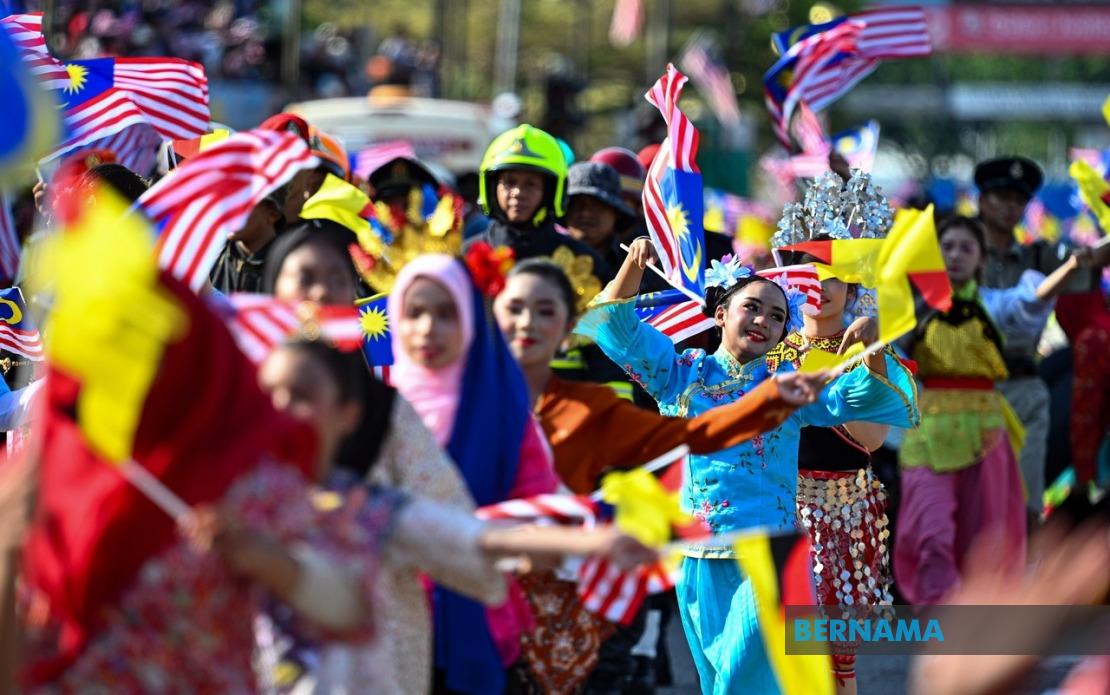
The Negeri Sembilan-level National Day celebration brought together more than 30,000 people in a vibrant demonstration of unity and patriotic enthusiasm at Dataran Majlis Bandaraya Seremban on August 31. The significant turnout, which began filling the venue from the early morning hours, underscored the enduring importance Malaysians place on commemorating independence and national identity across different communities and social backgrounds.
Menteri Besar Datuk Ismail Lasim attributed the impressive attendance to the genuine passion residents held for the occasion and their desire to participate in collective celebrations of nationhood. During conversations with early arrivals, he discovered that some attendees had arrived as early as 5:30 am, a testament to their commitment to witness the festivities. This dedication reflected broader sentiment about maintaining connections to Malaysia's founding moments and the values of togetherness that independence represents.
A notable aspect of this year's commemoration was the deliberate decision to reduce the scale of the parade contingents and assets deployed. While maintaining the celebratory atmosphere, organisers prioritised public welfare by limiting the duration of the programme, motivated by concerns about potential exposure to haze conditions that have historically affected the region during this season. Despite these precautions, atmospheric conditions on the day proved favourable, allowing spectators to enjoy the full experience comfortably.
The ceremonial proceedings benefited from the presence of Tuanku Muhriz Tuanku Munawir, the Yang Dipertuan Besar of Negeri Sembilan, along with Tunku Ampuan Besar Tuanku Aishah Rohani Tengku Besar Mahmud, who arrived at approximately 8:20 am. Their attendance lent ceremonial significance to the gathering and reinforced the state's commitment to honouring the national occasion at the highest levels of leadership.
The parade itself showcased the breadth of Negeri Sembilan's institutional fabric, with 82 contingents representing more than 4,000 participants drawn from government departments, statutory bodies, educational institutions ranging from schools to universities, non-governmental organisations, and private sector companies. This comprehensive representation demonstrated how National Day serves as a platform for bringing together the diverse elements of society under a shared national purpose.
Military ceremonial duties were executed with precision, with the Main Guard of Honour comprising 106 personnel from the 15th Battalion Royal Malay Regiment (RAMD) at Senawang, under the command of Major Dr Muhammad Hazim Abdul Qhalib. The regimental band, a joint effort involving musicians from the 24th Battalion Royal Malay Regiment and the Malaysian Army Basic Training Centre, performed traditional military marches and patriotic compositions that provided the ceremonial soundtrack to the proceedings, conducted by Drum Major Warrant Officer 2 Azwan Zakaria.
Beyond the formal military component, the celebration incorporated displays of defence and security assets, alongside a nostalgic convoy of vintage vehicles and classic automobiles that proved particularly engaging for spectators. The involvement of security agencies including the Royal Malaysia Police, Malaysian Armed Forces, Immigration Department, Fire and Rescue Department, and Health Ministry highlighted the institutional framework that underpins national sovereignty and public safety.
For many family attendees, the event carried deeper significance rooted in intergenerational transmission of national values. Housewife Siti Ruayiza Rebin, 42, explained her practice of bringing her three children—aged 19, 15, and 12—to National Day celebrations since their infancy, viewing these occasions as essential educational moments where younger Malaysians could develop appreciation for independence and recognise the sacrifices made by earlier generations.
Private sector employee Mohd Khairul Azmi, 45, similarly regarded the celebration as an investment in his children's understanding of Malaysian history and national identity. He had arrived with his five and seven-year-old children at 6:00 am to secure optimal viewing positions, recognising that witnessing military assets and vintage vehicles rarely displayed publicly offered educational value that complemented formal schooling. His children's enthusiasm for observing these displays reflected how experiential engagement with national symbols and institutions could foster civic consciousness in younger citizens.
These personal narratives illustrate how National Day celebrations function beyond ceremonial obligation, serving as moments where communities actively construct shared identity and transfer historical consciousness across generations. For states like Negeri Sembilan, such commemorations represent opportunities to reinforce social cohesion across multiethnic populations while honouring the constitutional framework that defines modern Malaysia.
The balance struck this year between maintaining robust celebration and exercising environmental prudence—particularly regarding seasonal haze concerns—reflects evolving approaches to large-scale public gatherings in Southeast Asia. By scaling the parade while preserving its essential character, organisers managed competing considerations of festive participation and public health, a consideration increasingly relevant across the region as climate variability and air quality fluctuations become more pronounced.
The strong participation from diverse institutional sectors and the enthusiastic response from families across different socioeconomic backgrounds suggests that National Day remains a potent focal point for Malaysian identity, even as the nation navigates contemporary challenges. Negeri Sembilan's successful execution of this celebration, drawing over 30,000 residents, demonstrates that commitment to commemorating independence continues to resonate authentically across Malaysian society, transcending the merely ceremonial to touch the everyday consciousness of citizens invested in their nation's ongoing story.

