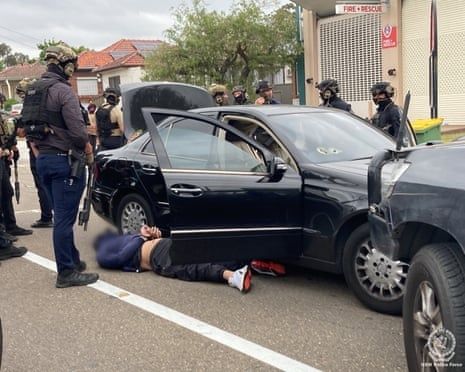
New South Wales police have wrapped up another intensive enforcement phase against public transport crime, announcing the arrest of 356 individuals across a three-day operation conducted between Thursday and Saturday. The latest push, designated Operation Waratah's sixth phase, deployed more than 400 uniformed officers daily throughout NSW's sprawling network of trains, light rail, buses and ferries, intensifying police presence in one of Australia's most densely used transportation systems.
Since its establishment in 2024, Operation Waratah has evolved into one of NSW's most sustained policing initiatives aimed at combating violent and sexual offences committed aboard public transport. The programme reflects growing community concerns about safety on commuter networks, particularly during peak hours when vulnerable passengers face heightened risks from aggressive or predatory behaviour. By centralising resources and deploying officers strategically across multiple transport modes simultaneously, police have sought to create a visible deterrent whilst gathering intelligence on repeat offenders.
The arithmetic of the latest phase underscores the scale of deployment. Officers conducted patrols across 539 trains, 127 buses and 29 light rail trams during the 72-hour operation alone. This saturation approach enables police to intercept offenders in real time, whilst also reassuring regular commuters that authorities are actively monitoring their safety. The concentration of personnel reflects a calculated response to patterns of offending identified through earlier Operation Waratah phases, allowing police to position officers where crime data suggests intervention is most needed.
Charges and seizures during the phase paint a picture of the breadth of criminal activity occurring on public transport. The 356 arrests resulted in a combined 645 criminal charges, indicating that most individuals faced multiple counts. Officers recovered 28 knives or weapons, suggesting that weapon-carrying remains a significant feature of public transport violence. An additional 137 drug detections highlight the connection between substance misuse and transport-related crime, a pattern consistent across major cities throughout the region.
The cumulative impact since Operation Waratah's launch demonstrates sustained commitment to the problem. More than 1,800 arrests across six operational phases indicates that police are removing a large population of offenders from the system, though the continuing need for successive phases suggests either recidivism rates remain high or new offenders continuously emerge. This cyclical enforcement pattern raises questions about whether arrest alone addresses underlying causes of transport violence, or whether complementary interventions in mental health, addiction services and social support might prove necessary.
For Malaysia and Southeast Asia, the NSW experience offers instructive lessons as regional transport networks expand. Kuala Lumpur's LRT and monorail systems, together with rapid expansion of metro infrastructure across Indonesia, Thailand and Vietnam, face similar safety challenges as ridership grows. The Operation Waratah model demonstrates that coordinated, resource-intensive operations can achieve measurable outcomes, though questions remain about sustainability and cost-effectiveness compared to longer-term preventive approaches.
The visibility of police presence on public transport carries psychological dimensions beyond immediate law enforcement effects. Regular passengers may experience reduced anxiety when officers are visibly present, potentially encouraging broader public transport usage and supporting urban mobility goals. Conversely, intensive enforcement operations sometimes generate tensions with communities already experiencing over-policing, particularly if demographic patterns show disproportionate impacts on minority groups. NSW Police will need to balance crime reduction objectives against equity considerations.
Weapon seizures represent a crucial public safety dimension often underestimated in transport crime discussions. Knives and weapons aboard confined spaces like trains create elevated risks of lethal outcomes compared to street violence. The recovery of 28 weapons during a single three-day phase suggests systematic weapon-carrying amongst a subset of transport users, warranting investigation into supply chains and motivations. Whether these weapons reflect gang activity, personal protection decisions in environments perceived as unsafe, or opportunistic carrying remains an important analytical question.
The drug detection component introduces additional complexity. The 137 detections during this phase likely encompass users, dealers and couriers. Public transport networks serve as convenient transit corridors for illicit narcotics distribution, whilst also attracting substance-dependent individuals seeking secure spaces for consumption. This creates overlapping public health and law enforcement challenges that single-mode policing responses may inadequately address. Integrated approaches involving health services, social workers and addiction specialists might complement traditional enforcement.
Operational sustainability presents a longer-term consideration as NSW Police balance this programme against other policing demands. Deploying 400 officers daily across public transport networks represents significant resource allocation. If Operation Waratah requires such intensive effort to maintain manageable crime levels, questions arise about whether alternative preventive investments—improved CCTV monitoring, environmental design modifications, better lighting, panic alarm systems—might achieve similar outcomes more efficiently. The programme's success should be measured not merely by arrest numbers but by whether targeted passengers experience genuinely improved safety and confidence.
Looking forward, NSW authorities must evaluate whether Operation Waratah's sixth phase represents sustainable crime management or an escalating enforcement cycle. International comparative data from other major cities implementing similar saturation policing strategies could inform strategic decision-making. Additionally, understanding victim perspectives—whether assault and harassment survivors feel empowered to report incidents and whether public awareness campaigns accompany enforcement operations—would provide valuable context for assessing programme effectiveness beyond raw arrest statistics.

