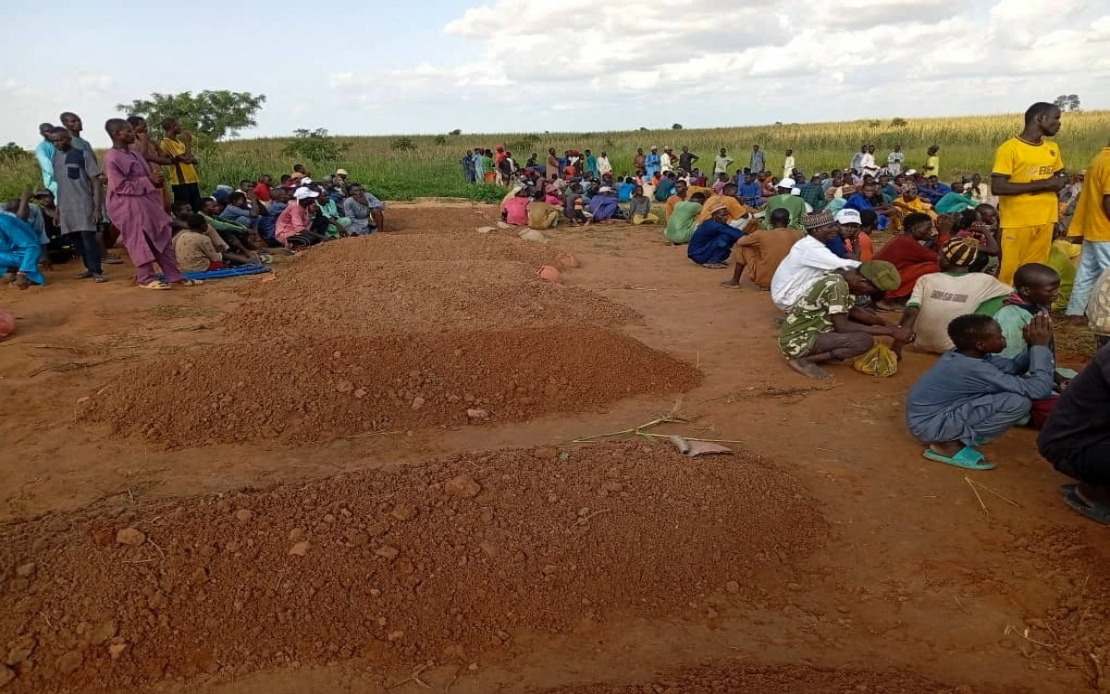
A catastrophic boat accident in northwestern Nigeria claimed the lives of more than 40 people on Thursday, with most victims being children. The vessel capsized near Gorau town in Goronyo Local Government Area of Sokoto State as it transported farmers and agricultural workers bound for rice cultivation activities. Officials and eyewitnesses confirmed the disaster, which has renewed scrutiny of maritime safety practices across Nigeria's inland water systems.
Accounting for the exact death toll remains challenging in the immediate aftermath. Abdulkadir Yusuf, the state manager of Nigeria's National Inland Waterways Authority (NIWA), initially cited 40 fatalities while noting that verification efforts were ongoing. However, community observations painted a grimmer picture. A witness reported that approximately 47 bodies, many carefully wrapped in mats and traditional cloth, had been collected at a mosque in Gorau village awaiting burial that same evening. These discrepancies between official and on-ground counts reflect the difficulties authorities face in rapid casualty assessment during rural disasters in Nigeria.
The composition of those aboard the ill-fated vessel deepens the human tragedy. Nasiru Adamu, a lawmaker representing the district in the Sokoto State House of Assembly, revealed that the majority of passengers were children between 10 and 15 years old. He indicated the boat had carried nearly 70 people in total, meaning it was severely overcrowded beyond safe capacity limits. Of these, over 40 bodies had been recovered by Thursday, though 16 individuals had been rescued alive as rescue operations proceeded into the evening hours. The heavy concentration of young victims suggests that entire families and school groups may have been aboard together.
Personal accounts from survivors and bereaved residents underscore the scale of loss. Samaila Garba, a 55-year-old local, identified his 13-year-old granddaughter, Jamila Usman, among the deceased. Garba's own observation during the recovery process indicated he counted at least 42 bodies, with women and children comprising the overwhelming majority. These firsthand testimonies provide context beyond statistics, illustrating how single incidents can devastate entire communities where extended families and neighbors travel together for agricultural work.
Search and rescue efforts extended beyond initial recovery as local divers continued combing the waterway for additional bodies and any remaining survivors. The continuation of operations through Thursday evening reflected the urgency of both rescue and recovery operations. However, the challenging conditions typical of Nigeria's waterways—murky waters, swift currents, and limited equipment—often constrain the effectiveness of such efforts. The involvement of community-based divers rather than specialized maritime rescue teams speaks to the resource constraints facing emergency response in rural areas of Nigeria.
This tragedy is not an isolated incident but rather symptomatic of systemic failures in Nigeria's inland waterway governance. The nation's waterways have become increasingly treacherous due to a combination of factors that authorities and safety experts have repeatedly identified but failed to adequately address. Overcrowding remains endemic, as operators prioritize profit over passenger safety limits. Vessels operating on these routes frequently lack proper maintenance, with aging boats operated beyond their serviceable lifespan. Most critically, enforcement of existing safety regulations remains weak, allowing dangerous practices to persist unchecked.
The seasonal nature of these accidents adds another dimension to the crisis. Boat disasters cluster during the rainy season when water levels rise and currents strengthen, yet safety protocols do not intensify correspondingly. Instead, increased travel during planting and harvest seasons—precisely when agricultural workers like those aboard Thursday's boat need transportation—coincides with peak hazard periods. This collision between economic necessity and environmental danger creates a predictable but preventable tragedy cycle.
January's capsizing in Yobe State in northeastern Nigeria, which claimed at least 25 lives, demonstrates that these disasters occur with grim regularity across different regions. The similar circumstances—overcrowding, poor vessel maintenance, weak safety enforcement—suggest that solutions require not isolated responses to individual incidents but comprehensive systemic reform. Yet such reform has proven elusive, with each tragedy generating headlines and promises of investigation without producing lasting change in operational practices or regulatory oversight.
For regional observers in Southeast Asia, Nigeria's waterway crisis offers cautionary lessons. Many Southeast Asian nations depend heavily on river and maritime transport in rural and developing areas, creating similar vulnerabilities. Malaysia, with its extensive inland waterway network, has maintained stronger regulatory frameworks, but neighboring countries with less developed maritime infrastructure face comparable pressures of overcrowding and maintenance deficits. The Sokoto tragedy illustrates how rapidly preventable human catastrophes can unfold when basic safety standards are compromised by cost-cutting and regulatory indifference.
The broader implications extend to discussions about development and infrastructure. Nigeria's inland waterways represent vital transportation arteries for communities lacking road access, particularly during rainy seasons when land routes become impassable. Rather than accepting periodic mass casualties as an inevitable cost of rural connectivity, integrated approaches combining vessel regulation, operator licensing, passenger manifest requirements, and emergency response capabilities could dramatically reduce fatalities. International maritime standards exist and have proven effective elsewhere; their application requires political will and resource commitment rather than technical innovation.
Investigations into Thursday's accident will likely follow established patterns, with officials citing overcrowding and poor vessel condition as primary factors. Promises of increased enforcement and safety awareness campaigns may follow. However, without structural changes addressing the economic incentives that drive operators to overload vessels and the governance weaknesses that permit such violations, similar tragedies will continue. The residents of Sokoto State grieving their losses Thursday represent the human cost of these systemic failures, a toll that extends far beyond statistical reports to devastate families and communities.

