The Federal Territories have embarked on an ambitious flag distribution campaign ahead of the 2026 National Day and Malaysia Day festivities, with more than 62,000 Jalur Gemilang banners now visible across Kuala Lumpur, Putrajaya and Labuan. The initiative, which commenced in early August, represents a concerted effort to infuse the three federal administrative centres with tangible patriotic symbolism as the nation approaches these significant commemorative occasions. The widespread placement of flags along ceremonial routes, public spaces and residential neighbourhoods underscores the government's commitment to making these celebrations visible and accessible to everyday Malaysians.
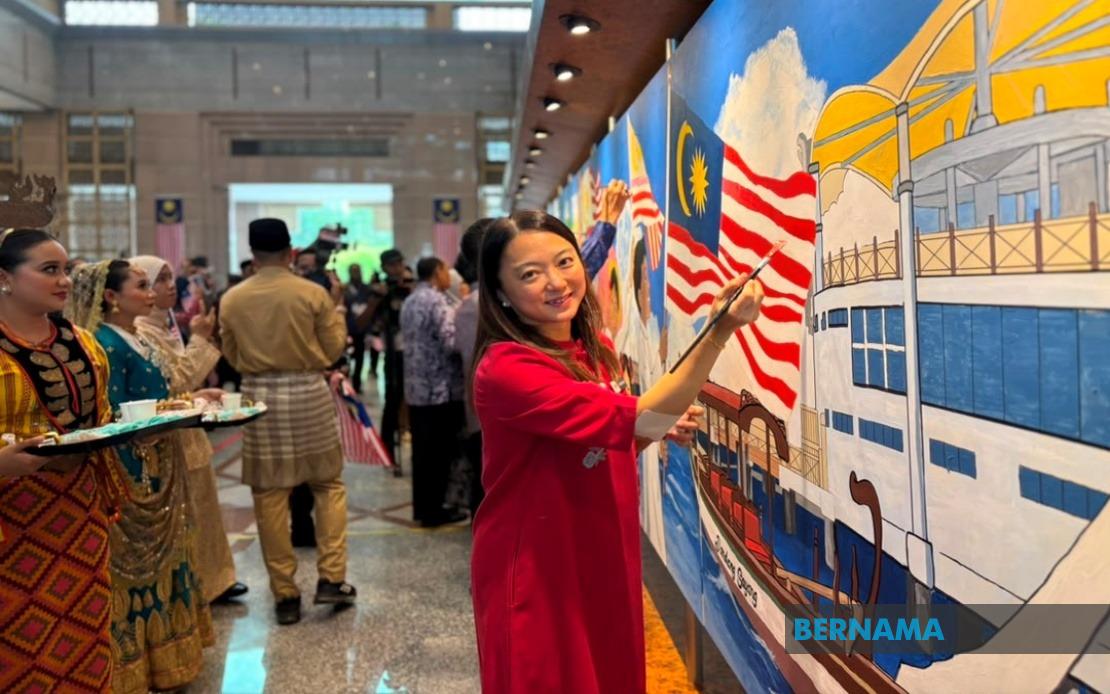
Minister in the Prime Minister's Department Hannah Yeoh unveiled the scope of this patriotic endeavour at the Aspirasi Jalur Gemilang: Mural Kemerdekaan programme in Putrajaya. She articulated a vision extending beyond mere flag distribution, calling upon citizens to express their attachment to Malaysia through varied means—physical flag displays in homes and businesses, and equally through digital platforms and social media. This two-pronged approach reflects recognition that contemporary patriotic expression encompasses both traditional and online spheres. Yeoh's emphasis on personal participation suggests an understanding that national pride becomes meaningful when embraced voluntarily by ordinary citizens rather than imposed through governmental decree alone.
Central to the campaign's messaging is a concern frequently overlooked in such initiatives: the proper display of the national flag. Yeoh identified confusion and apprehension among the public regarding correct flag protocol as a potential barrier to participation. Rather than accepting this hesitation passively, she sought to dismantle anxiety by directing citizens toward readily available resources detailing appropriate display methods. This pragmatic approach acknowledges that many Malaysians harbour genuine uncertainty about flag etiquette, whether relating to positioning, orientation or maintenance standards. By positioning correct flag display not as an onerous burden but as an accessible skill, officials hope to democratise participation in patriotic expression across socioeconomic and educational divides.
The minister's remarks regarding childhood socialisation carry particular significance for Malaysian educational policy. Her observation that flag-flying traditions should be instilled from school age onwards speaks to a broader understanding that national identity formation begins early. This suggests potential curriculum considerations for primary and secondary institutions, where experiential learning about national symbols might complement formal civics education. In the Malaysian context, where society encompasses diverse ethnic and religious communities, establishing shared patriotic practices from childhood could facilitate cross-community bonding around common symbols of national belonging.
Business and corporate sectors received specific guidance on flag protocol management. Yeoh advised proprietors to ensure workers responsible for flag installation and maintenance understand proper procedures, with supervisory oversight preventing inadvertent breaches of display standards. This emphasis reflects awareness that commercial establishments, shopping centres, hotels and office buildings serve as high-visibility platforms for national symbolism. When corporate entities display the flag incorrectly, the effect potentially undermines the entire campaign's purpose. Conversely, widespread correct display across the private sector amplifies the campaign's reach and reinforces messaging about national standards beyond governmental buildings.
The mural completion at Menara Seri Wilayah served as the campaign's centrepiece event, transforming patriotic sentiment into physical artistic expression. The 25.40-metre installation featured landmarks emblematic of each Federal Territory—distinct symbols representing Kuala Lumpur's urban dynamism, Putrajaya's administrative architecture and Labuan's geographical distinctiveness. By incorporating these location-specific elements alongside the Jalur Gemilang, the mural communicates that national sovereignty encompasses regional diversity. This artistic approach proves more sophisticated than simplistic flag repetition; instead, it validates that Malaysia's strength derives from multiple centres of development and governance operating within unified national frameworks.
The symbolic weight of completing this mural through collaborative effort between ministerial officials and JWP personnel carried intentional messaging. Rather than delegation to external contractors, direct ministerial participation in the artwork's execution signalled genuine commitment to the campaign's underlying values. Such visible involvement by government figures, even in ceremonial capacities, generates media coverage and public awareness extending far beyond the immediate event. In Malaysian political communications, these carefully choreographed moments function as powerful messaging vehicles, particularly when documented and shared through official channels.
The broader campaign timing reflects strategic considerations around the 2026 commemorative calendar. With celebrations still months away, early distribution and promotion allow maximum penetration across the Federal Territories. This extended timeline provides opportunities for citizens and organisations to integrate flag displays into upcoming festivals, family occasions and community events throughout the intervening period. Rather than concentrating flag visibility into a compressed fortnight around August and September, the phased approach sustains patriotic sentiment across a longer temporal arc.
For Southeast Asian observers, this campaign illustrates Malaysia's approach to fostering national unity through accessible, participatory mechanisms. Unlike authoritarian models imposing patriotic displays through coercive means, the Malaysian approach emphasises voluntary participation supported by practical guidance. The willingness to address public confusion about flag protocols rather than dismissing such concerns reflects mature democratic governance. Educational messaging, resource provision and corporate guidance represent softer mechanisms for shaping behaviour, relying on citizens' genuine desire to participate correctly rather than fear of sanctions.
The involvement of key stakeholders including the Federal Territories Department and Putrajaya Corporation institutionalises the campaign across relevant administrative structures. This multi-agency coordination ensures that flag distribution, display maintenance and public communication function coherently. Such institutional embedding suggests this initiative extends beyond temporary marketing spectacle, potentially establishing precedent for future national celebrations. The explicit mention of guidelines availability on government websites indicates commitment to transparent information dissemination, allowing Malaysians easy access to authoritative resources rather than relying on potentially inaccurate informal sources.
Looking ahead toward 2026, the success of this campaign will likely be measured not merely by flag counts distributed but by widespread correct display evident across the Federal Territories. The metrics of success extend beyond quantitative measures of flags produced to qualitative assessments of public understanding and voluntary participation. If Malaysians internalise proper flag protocols and embrace patriotic expression as personally meaningful rather than externally mandated, the campaign will have achieved deeper objectives than surface patriotic decoration. This emphasis on education and voluntary adoption positions the initiative as investment in long-term civic culture rather than temporary celebratory activity.

