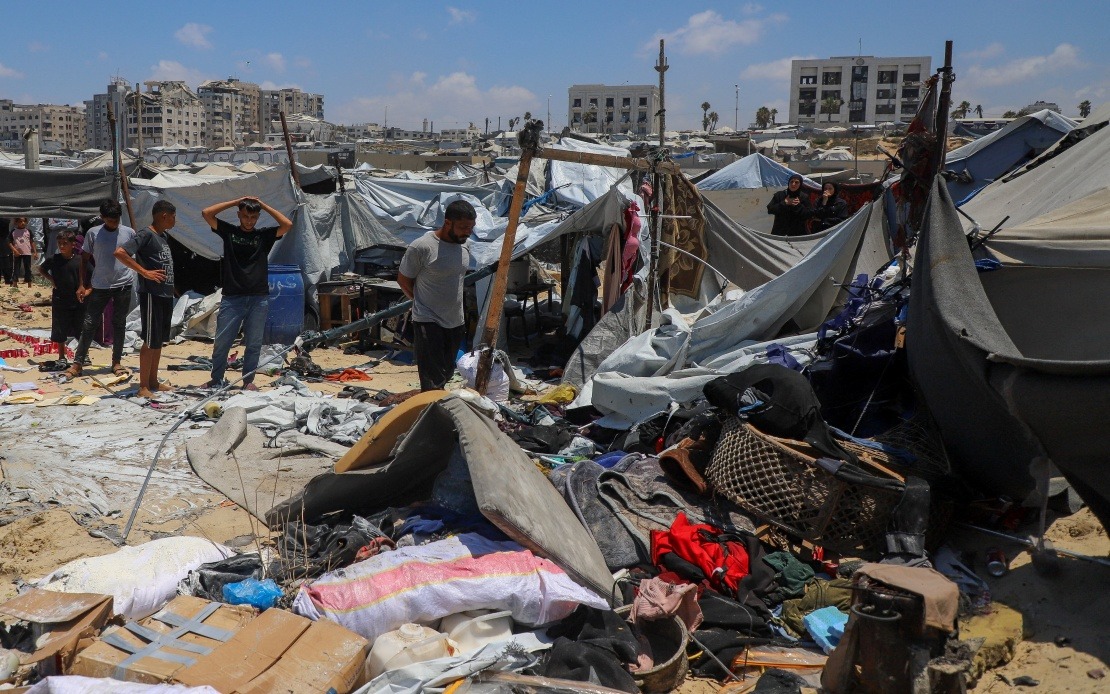
The scale of destruction in Gaza has reached catastrophic levels, with Israeli military operations having devastated more than nine-tenths of the Palestinian enclave, according to documentation issued by the Palestinian Government Communication Centre. The assessment, released through the Prime Minister's Office, underscores the unprecedented scale of physical damage inflicted during the ongoing conflict, with occupation forces now holding effective control over roughly four-fifths of the territory. This latest accounting adds weight to mounting international concern about the humanitarian toll and reconstruction challenges facing the densely populated coastal region.
During the week spanning June 29 to July 6, military activities intensified sharply across major population centres including Khan Younis, Rafah, and Gaza City. According to local medical sources, at least eight Palestinians lost their lives during this seven-day period as ground operations and aerial bombardments continued unabated. The escalation represents part of a broader pattern of sustained military pressure that has characterised the conflict in recent months, with commanders deploying heavy machinery and firepower across residential zones.
The destruction extends beyond military targets to civilian infrastructure and housing stock. Residential neighbourhoods have been subjected to artillery strikes, whilst entire residential structures have been systematically demolished. These operations have displaced numerous Palestinian families from their homes, compounding an already severe humanitarian crisis and creating fresh waves of internal displacement. The practice of razing entire residential areas has raised concerns among international observers regarding compliance with laws of armed conflict and the protection of civilian populations.
Beyond Gaza, the West Bank has witnessed a parallel surge in military activity and security operations. Israeli occupation forces have conducted sweeping raids across Palestinian population centres—from the administrative hub of Ramallah to the northern cities of Nablus and Jenin, as well as Hebron, Bethlehem, Qalqilya, Tulkarem, and occupied East Jerusalem. These operations have involved forcible home entries, arbitrary detention of residents, movement restrictions through checkpoints and road closures, and the systematic constriction of Palestinian freedom of mobility. Such measures restrict access to markets, schools, medical facilities, and employment opportunities.
Parallel to official military operations, Israeli settler militias have engaged in what Palestinian authorities characterise as coordinated violence against Palestinian civilians and their assets. During the reporting period, these groups set fire to a commercial cafeteria in al-Lubban ash-Sharqiya village, physically assaulted Palestinian shepherds grazing livestock east of Bethlehem, attempted livestock theft, and blockaded access routes to the village of Burqa. Such incidents reflect an escalating pattern of settler vigilantism that operates alongside state military operations, creating a compounded security threat for Palestinian communities.
The agricultural sector has emerged as a particularly targeted domain, with systematic destruction of crops and productive assets. The Palestinian Ministry of Agriculture documented extensive damage across the occupied West Bank during the same weekly period. Approximately 2,559 olive trees—a cornerstone of Palestinian agriculture and cultural heritage—were uprooted, incinerated, or rendered unusable. These trees, concentrated in the governorates of Salfit, Jenin, and Nablus, represent both immediate livelihood destruction and long-term economic loss, since olive trees require years to reach full productivity.
The economic impact of agricultural destruction proves substantial and measurable. At least 125 farming families have experienced direct losses quantified at approximately US$11.78 million during this single week alone. This figure encompasses not only immediate crop and tree losses but also damage to irrigation infrastructure, tools, and stored produce. For Palestinian farmers whose livelihoods depend almost entirely on agricultural production, such destruction represents an existential threat to their economic survival and family welfare.
For Southeast Asian observers and Malaysian policymakers, these developments carry particular significance. The scale of physical destruction and the control mechanisms being deployed in Gaza represent military strategies that set precedents for conflict zones globally. The documentation of systematic destruction affecting civilian infrastructure, agricultural assets, and population displacement mirrors patterns that regional states monitor closely given their own security concerns and international obligations under humanitarian law.
The humanitarian dimensions warrant attention from Malaysia's perspective as both a significant voice in the Non-Aligned Movement and a nation with substantial Palestinian diaspora communities. The weekly documentation of casualties, displacement, and economic destruction provides empirical grounding for discussions within multilateral forums about civilian protection, accountability, and conflict resolution pathways. Malaysian stakeholders in civil society, government, and international organisations increasingly reference such field reports when advocating for diplomatic interventions and ceasefire negotiations.
The destruction metrics also carry implications for regional stability and international humanitarian response capacity. When over 90 per cent of a densely populated territory faces physical destruction whilst 80 per cent remains under military occupation, reconstruction needs become staggering and questions of governance, resource allocation, and international coordination become urgent. Southeast Asian nations, several of which maintain humanitarian programmes in Palestine, face practical challenges in delivering assistance whilst navigating access restrictions imposed by occupation authorities.
The Palestinian Ministry's systematic documentation of weekly incidents reflects an institutional effort to create an authoritative record of events that may inform future accountability processes, international investigations, and peace negotiations. Such granular reporting—counting individual trees, documenting specific incidents, quantifying losses in monetary terms—serves multiple purposes: providing early warning of humanitarian deterioration, maintaining archives for potential legal proceedings, and sustaining international attention to conditions on the ground. For Malaysian observers and policymakers engaged with Middle Eastern affairs, these reports constitute primary source material for understanding conflict dynamics beyond mainstream media narratives.

