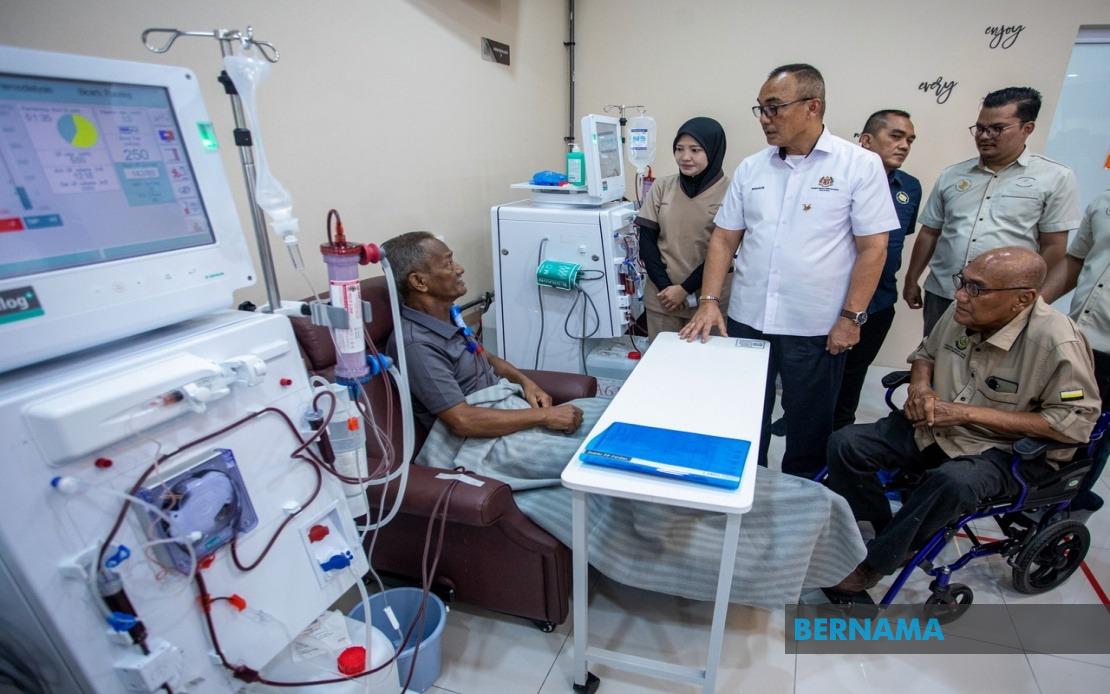
The Malaysian Armed Forces Veterans Affairs Department has committed substantial resources toward a nationwide expansion of dialysis services, allocating over RM18 million for the construction and operation of nine dedicated treatment centres. This infrastructure development represents a significant step in bridging healthcare gaps for military veterans while simultaneously extending quality medical services to civilian populations in underserved regions. The initiative reflects growing recognition of chronic kidney disease as a pressing public health concern requiring coordinated investment across multiple states.
The geographical distribution of these facilities demonstrates strategic planning to ensure equitable access across the country. Selangor will host four centres, capitalising on its dense population and existing healthcare infrastructure, while Perak receives two locations reflecting its veteran population concentrations. The remaining three centres are positioned in Negeri Sembilan, Johor, and Pahang, extending coverage into East Coast and southern regions where dialysis service availability has historically been limited. This dispersed approach aims to reduce travel burden for patients requiring multiple weekly treatment sessions, a critical consideration for individuals managing end-stage renal disease.
Major General Datuk Semaon Marjuki, the Malaysian Armed Forces Veterans Affairs Department director-general, articulated the expansion as a strategic response to identified healthcare needs within the veteran community. His remarks during the inauguration of the Batu Kurau facility in Larut highlighted how these centres represent more than basic infrastructure additions; they embody a commitment to comprehensive veteran welfare reform. The framing of dialysis access as integral to enhancing quality of life underscores the department's understanding that healthcare provision directly impacts social well-being and economic productivity among this significant population segment.
All nine facilities have been equipped with contemporary medical technology meeting Ministry of Health standards, distinguishing them from basic treatment centres. Investment in modern equipment reflects Malaysia's commitment to delivering care equivalent to private sector standards while maintaining public accessibility. Beyond physical infrastructure, recruitment of experienced nursing staff ensures clinical excellence and patient safety—concerns paramount in dialysis treatment where complications from substandard care can prove severe or irreversible. The emphasis on comfortable, patient-friendly environments acknowledges the psychological dimensions of chronic illness management, particularly important for individuals requiring lifelong treatment.
Operational responsibility rests with DVET Holding Sdn Bhd, a subsidiary entirely owned by the MAF Veterans Foundation, ensuring accountability remains within the veterans' welfare ecosystem. This structural arrangement enables integrated service delivery aligned with broader veteran support programmes while maintaining professional healthcare management standards. The subsidiary model allows for sustainable operations funding through a combination of government allocation, veteran contribution schemes, and potential partnership arrangements with insurance providers and social security programmes.
Current dialysis patient demographics reveal the magnitude of the underlying health burden within Malaysia's veteran population. Approximately 2,055 armed forces veterans are presently receiving dialysis treatment across JHEV-operated centres, Social Security Organisation facilities, and other approved providers. This substantial cohort suggests chronic kidney disease prevalence rates among veterans potentially exceeding national averages, possibly linked to occupational exposures, lifestyle factors, or untreated hypertension accumulated during service years. Understanding these epidemiological patterns remains essential for preventive health initiatives targeting younger veteran cohorts.
The expansion initiative directly addresses service capacity constraints that have forced many veterans to seek treatment at overcrowded public hospitals or expensive private clinics. By dedicating nine centres specifically to veteran and community populations, the programme reduces pressure on general healthcare systems while improving patient experience through specialisation and dedicated infrastructure. This targeted approach proves more cost-effective than dispersing resources across general hospital dialysis units operating at capacity, particularly in high-demand urban areas like Selangor where chronic kidney disease prevalence remains elevated.
For Malaysian policymakers and healthcare administrators, this investment signals commitment to integrated veteran support extending beyond retirement entitlements into active health management. The programme demonstrates recognition that welfare obligations toward military personnel require sustained investment in preventive and chronic disease management infrastructure. This contrasts with historical approaches emphasizing acute care provision, reflecting evolution toward comprehensive, longitudinal health systems thinking aligned with international best practices in veteran healthcare.
Regional implications merit consideration as neighbouring Southeast Asian nations grapple with similar dialysis access challenges. Malaysia's structured approach to funding, infrastructure development, and integrated service delivery through dedicated veteran foundations offers a replicable model. Countries including Thailand, Indonesia, and the Philippines manage substantial veteran populations with varying levels of systematic healthcare provision, potentially finding instructive lessons in Malaysia's coordinated expansion strategy.
Sustainability considerations underscore the programme's long-term viability. Dialysis centre operations require continuous investment in equipment maintenance, consumable supplies, staff salaries, and facility upkeep—expenses extending far beyond initial construction funding. The RM18 million allocation addresses capital requirements, but operational funding mechanisms requiring ongoing government commitment will prove critical for maintaining service quality across all nine locations. Establishing stable revenue streams through insurance integration, cross-subsidisation models, and strategic partnerships will determine whether expansion translates into durable healthcare access improvements.
Community health integration represents another dimension of this initiative's significance. By explicitly including the general public alongside veterans in service eligibility, the programme creates hybrid facilities serving dual populations. This approach maximises resource efficiency while democratising access to quality dialysis care, addressing national shortages of treatment capacity particularly acute in rural and semirural regions where private providers historically remain absent. Larut, Matang and Selama communities, represented by district leadership present at the Batu Kurau opening, exemplify regions previously underserved by tertiary dialysis infrastructure.
Looking forward, the success of these nine centres will likely influence future veteran healthcare policy and potentially catalyse comparable expansions in other treatment categories. If the dialysis programme achieves its objectives—improving patient outcomes, enhancing veteran welfare, and reducing strain on public healthcare systems—it establishes precedent for comprehensive infrastructure investment in areas where veteran health needs intersect with broader population health challenges. Monitoring clinical outcomes, patient satisfaction, and operational efficiency across all locations will provide evidence essential for evaluating programme effectiveness and justifying continued investment.

