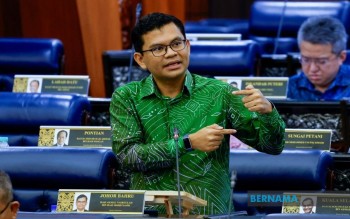
The bulk of Bank Negara Malaysia's emergency financing support for small and medium enterprises remains largely unclaimed, according to Economy Minister Akmal Nasrullah Mohd Nasir, who disclosed that over RM4 billion of the allocated RM5 billion under the SME Stabilisation Relief Facility continues to be available for qualifying businesses. Speaking during parliamentary question time, Akmal revealed that as of mid-June 2026, approved financing had reached only slightly above RM700 million benefiting more than 1,000 small enterprises, pointing to a significant uptake opportunity for the broader MSME community struggling with cash constraints and operational challenges stemming from supply chain disruptions and worldwide economic headwinds.
The SME SRF programme, launched to shield Malaysia's crucial small business sector from external shocks, represents a critical lifeline during a period marked by employment losses and corporate restructuring across multiple industries. The minister's remarks underscore a deliberate policy approach to ensure liquidity flows to companies facing temporary difficulties, with the government keen to prevent unnecessary business failures that could permanently damage the nation's entrepreneurial base. The substantial cushion of available funds signals confidence in the programme's design while simultaneously raising questions about awareness levels among eligible enterprises and the effectiveness of outreach mechanisms to smaller operators who may lack direct banking relationships or familiarity with application procedures.
Beyond the direct lending facility, the government has layered additional support mechanisms into its economic stabilisation strategy, channelling RM5 billion through Syarikat Jaminan Pembiayaan Perniagaan Bhd to provide financing guarantees that lower the risk profile for lenders extending credit to micro and small enterprises. This dual-track approach recognises that many smaller businesses struggle to access conventional financing due to insufficient collateral or weak balance sheets rather than inability to repay, and the guarantee structure aims to unlock latent credit availability by transferring portions of lending risk to the government. Financial institutions participating in the scheme have publicly committed to accelerated application processing within seven working days, removing administrative drag that typically deters time-sensitive applications from cash-strapped operators.
Businesses encountering cash flow pressures have been directed by the ministry to engage directly with their banking partners to explore tailored solutions aligned with their specific operational requirements. This approach shifts emphasis from a one-size-fits-all national programme toward customised arrangements negotiated between businesses and their financial service providers, potentially allowing for greater flexibility in loan structuring, repayment schedules, and collateral arrangements. The underlying logic presumes that banks possess intimate knowledge of their client portfolios and can swiftly identify qualifying enterprises, though in practice many smaller firms may find banking relationships frustratingly formal or perceive application requirements as prohibitive.
The ministry's broader crisis response extends substantially beyond emergency financing, encompassing the Progressive Acceleration for Capability and Employability (PACE) Economic Resilience Package, a multifaceted intervention exceeding RM710 million in annual expenditure. PACE structures support across four foundational pillars: social protection mechanisms to cushion vulnerable workers against income loss, training and job placement initiatives connecting displaced employees with available opportunities, targeted empowerment of gig and informal economy workers whose labour market position has grown increasingly precarious, and investment in youth talent development alongside SME strengthening programmes. This comprehensive framing reflects official acknowledgment that enterprise support alone cannot address the full scope of economic disruption, and that workforce stability and retraining capacity must advance in parallel.
The Employment Insurance System represents a centrepiece of the PACE approach, with PERKESO allocated over RM580 million to provide income replacement for workers who have lost employment during the current downturn. This mechanism directly addresses the hardship associated with redundancies while potentially dampening consumer spending collapses that could extend economic difficulty to other sectors. Simultaneously, HRD Corp has received RM100 million to coordinate training and job placement activities, complemented by the MYFutureJobs digital platform designed to match worker capabilities with employer vacancies and reduce frictional unemployment during labour market rebalancing. These education and placement interventions acknowledge that many displaced workers require skills updating to compete effectively for positions in emerging economic sectors.
Support for non-traditional workers reflects evolving recognition of Malaysia's expanding gig economy and informal sector workforce, groups often excluded from conventional social insurance arrangements. The Skills Education Fund Corporation has received RM20 million specifically designated for gig worker training, while TalentCorp's RM10 million allocation targets industrial training for SMEs and emerging companies. These allocations, though modest in absolute terms, signal policy commitment to inclusion of precarious workers in crisis response frameworks, even as programme scale raises questions about meaningful impact given the estimated scale of gig workforce participation across Malaysia.
Government monitoring of critical supply chains and commodity pricing for manufacturing inputs, agricultural goods, and food sector raw materials underscores the supply-side dimension of current economic stress. Beyond demand-side financing and employment support, authorities are attempting to stabilise input costs and ensure availability of essential materials that constrain production and inflate operational expenses for dependent businesses. This multi-vector approach recognises that enterprises cannot resolve all difficulties through borrowing if fundamental supply constraints or price instability persist, though the specific mechanisms and effectiveness of supply stabilisation efforts remain less explicitly detailed in ministerial responses.
Akmal indicated that the government would present a comprehensive ministerial statement to parliament on the global supply crisis, pending procedural approval for parliamentary debate. This forthcoming detailed explanation suggests official recognition that the current economic distress extends beyond local policy response to encompass structural shifts in international trade patterns, logistics networks, and commodity markets beyond immediate Malaysian control. The parliamentary framework for discussing these external constraints reflects deliberate transparency regarding the limits of domestic policy tools when confronting worldwide supply disruptions that have proven resistant to conventional monetary and fiscal interventions across multiple advanced and emerging economies.
The disclosure of substantial undeployed resources under the SME SRF programme, coupled with the parallel layers of employment support and worker retraining initiatives, projects an image of comprehensive policy response to economic stress. However, the gap between available resources and actual uptake invites scrutiny regarding information asymmetries, application complexity, or potential cash flow constraints so severe that even access to subsidised borrowing fails to restore confidence or viability. Malaysian policymakers face the persistent challenge of ensuring that crisis response infrastructure reaches intended beneficiaries efficiently, a perennial difficulty in rapid-deployment emergency programmes where bureaucratic procedures, documentation requirements, and institutional capacity often lag behind the pace of economic deterioration.

