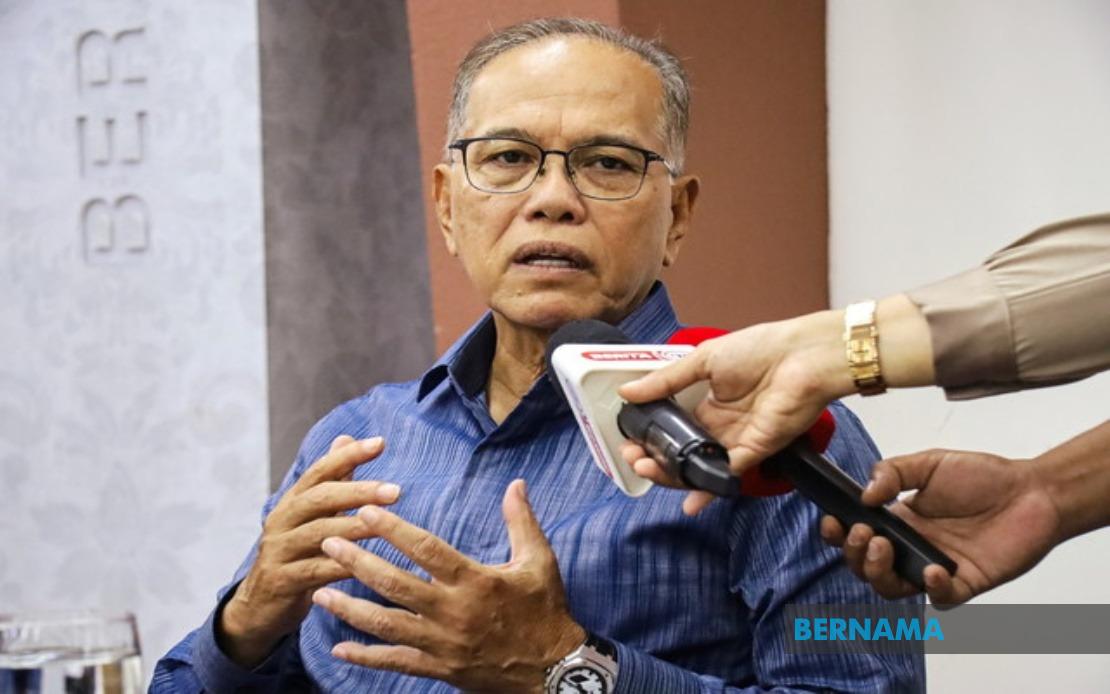
Datuk Seri Wan Rosdy Wan Ismail, chairman of Pahang Barisan Nasional and the state's Menteri Besar, has declared his party's unwavering commitment to sustaining the existing power-sharing arrangement with Pakatan Harapan until Malaysia's next general election. Speaking in Kuantan after launching an overseas study assistance initiative, Wan Rosdy emphasised that both coalitions remain focused on delivering governance and public services rather than becoming preoccupied with electoral calculations or coalition mechanics.
The stability Wan Rosdy is promoting represents an important continuity in Pahang's political landscape. Since late 2022, when the state's Regent consented to a government formed jointly by Barisan Nasional and Pakatan Harapan, the arrangement has weathered the transition from the Ismail Sabri administration to Anwar Ibrahim's federal leadership. Unlike several other states where coalition arrangements have proven fragile, Pahang's partnership has demonstrated resilience despite the inherent tensions between partners who compete against each other in many electoral contests.
Understanding the numerical foundation of this coalition provides context for Wan Rosdy's optimism. Following the 15th General Election, the Pahang state assembly saw Barisan Nasional and Perikatan Nasional each secure 17 seats from a total of 42, while Pakatan Harapan obtained eight seats. This distribution meant that neither Barisan Nasional nor Perikatan Nasional could govern independently, creating the necessity for Barisan Nasional to partner with Pakatan Harapan to achieve a simple majority of 21 seats. The mathematics of the situation have essentially locked both parties into cooperation, though Wan Rosdy's public statements suggest the partnership extends beyond mere arithmetic into genuine political commitment.
Wan Rosdy's remarks also indicate flexibility regarding future alignments as the next general election approaches. His statement that Pahang Barisan Nasional remains open to cooperation with other parties suggests the leadership is not entirely foreclosing options, even as it publicly backs the current Unity Government framework. This measured positioning reflects the complex calculations state-level politicians must undertake when national coalitions remain in flux and when federal arrangements do not always align perfectly with state-level interests. For Pahang, maintaining both the existing partnership whilst keeping diplomatic channels open represents pragmatic politics.
The broader significance of Pahang's stability extends beyond the state itself. As one of Malaysia's largest states by geography and a significant economic contributor through its resource sectors, Pahang's political steadiness influences broader regional dynamics. The state has historically been important to Barisan Nasional's electoral fortunes, and its current governance arrangement sends signals about the durability of the national Unity Government coalition. Political observers in other states watch such declarations carefully for clues about whether federal-level partnerships can withstand the pressures of local politics and electoral competition.
Wan Rosdy's emphasis during the public event on the state government's social investment programmes underscores another dimension of this political strategy. By highlighting the Makmur Pahang Initiative and its expansion to support 118 students pursuing tertiary education in Egypt and New Zealand, alongside scholarship disbursements to students in Jordan and Morocco, the Menteri Besar positions the government as development-focused and forward-thinking. These educational initiatives, funded with RM118,000 from state coffers and supplemented by foundation contributions, appeal to families seeking opportunities for their children and demonstrate tangible governance outcomes that extend beyond electoral cycles.
The selection of study destinations reflects considered policy planning rather than arbitrary choices. The inclusion of countries with Islamic educational traditions, particularly in the Middle East, aligns with demographic and cultural considerations relevant to Pahang's largely Malay-Muslim population. Simultaneously, partnerships with New Zealand indicate openness to non-Islamic educational frameworks and recognition that quality tertiary education exists across diverse cultural contexts. This balanced approach suggests state-level policymaking that attempts to address multiple constituencies and values within the electorate.
Wan Rosdy's counsel to students—that they study diligently, uphold Pahang's reputation, and return with excellent achievements—carries implicit messaging about state pride and the government's investment in developing human capital. This framing transforms scholarship programmes from mere financial transfers into narratives about state identity and collective progress. For voters considering their electoral preferences, such messaging attempts to demonstrate that the government invests not merely in immediate consumption or short-term relief but in long-term human development and economic competitiveness.
The sustainability of the Unity Government in Pahang will ultimately depend on factors beyond Wan Rosdy's stated commitment. National political dynamics, shifting factional alignments within Barisan Nasional and Pakatan Harapan, and electoral calculations as 2025 approaches could all influence the state-level partnership. Additionally, any significant policy divergences or disputes over resource allocation between the coalition partners could strain the arrangement. However, Wan Rosdy's explicit public reaffirmation on record provides both partners with political cover and acknowledges the mutual interest in maintaining stable governance through to the next general election.
For Malaysian and Southeast Asian observers tracking coalition politics in the region's largest democracy, Pahang's trajectory offers instructive lessons about the possibilities and limitations of power-sharing arrangements. Unlike some authoritarian or semi-democratic contexts where coalitions are imposed from above, Malaysia's arrangements emerge from electoral mathematics and competitive politics. The fact that ideologically distinct parties can maintain functional cooperation whilst preparing for electoral competition suggests certain institutional maturity, even as it raises questions about the long-term viability of such marriages of convenience.
Looking forward, the period until GE16 will test whether Pahang's Unity Government maintains its current equilibrium or experiences the strains that have fractured coalitions elsewhere. The state's development trajectory, including whether promised initiatives like the Makmur Pahang programme continue expanding, will influence voter perceptions of the partnership's success. Additionally, how the state government navigates any disputes with the federal government—particularly regarding resource allocation, development priorities, or political appointments—could either reinforce or undermine Wan Rosdy's projections about coalition stability.

