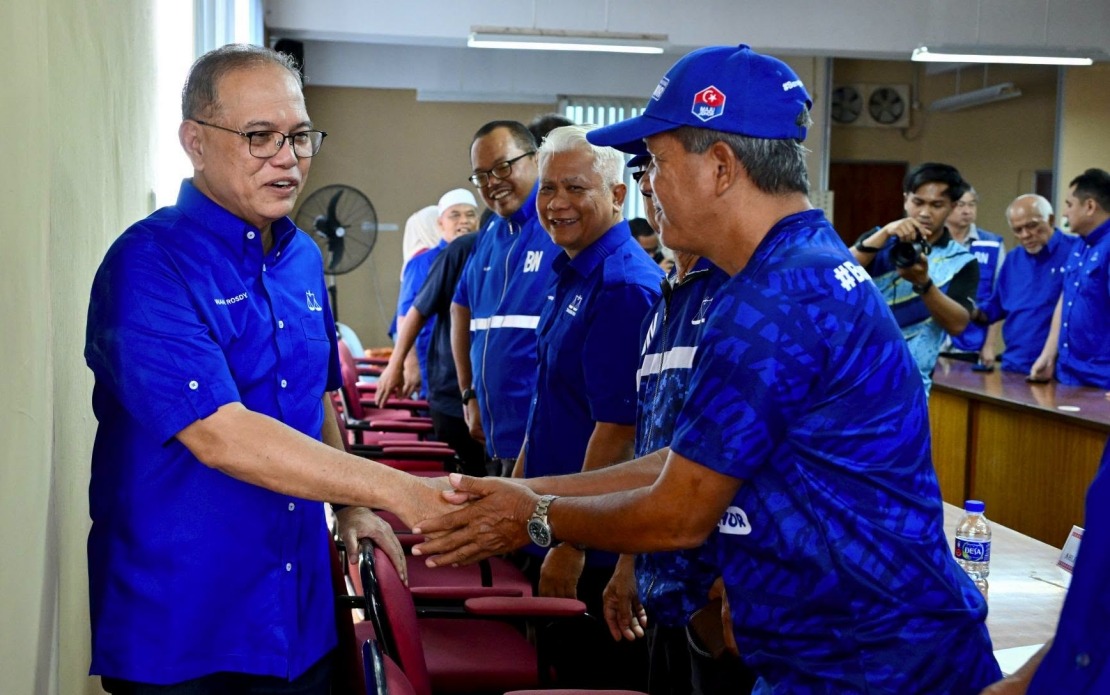
Pahang's Barisan Nasional machinery is throwing its weight behind efforts to secure crucial seats in the Johor state election, with regional party leadership coordinating support across four targeted constituencies in the coming weeks. The cross-state campaign collaboration underscores the coalition's determination to retain control in Johor, traditionally a political stronghold where BN's performance carries significant national implications for Prime Minister Anwar Ibrahim's government.
According to Pahang Menteri Besar Datuk Seri Wan Rosdy Wan Ismail, the deployment is strategically focused on Pekan Nanas, Pulai Sebatang, Benut, and Kukup state seats, all falling within the Tanjung Piai parliamentary constituency. This concentration reflects internal party calculations about which seats represent the most competitive battlegrounds or offer the greatest potential for BN gains. By channelling personnel from a neighbouring state with strong BN organisation, the coalition aims to leverage experienced campaign operatives and fresh party volunteers to energise grassroots mobilisation.
Wan Rosdy, speaking at the Pahang 1st 2026 Teachers Appreciation Ceremony and the 2025 SPM excellence awards ceremony held at Dewan Jubli Perak Sultan Haji Ahmad Shah in Kuantan, signalled his personal commitment by announcing plans to visit the FELDA area in Segamat on the Thursday following his public statement. This direct engagement from state leadership demonstrates the elevation of the Johor campaign within BN's broader political calendar, with senior figures dedicating time to ground-level party building activities rather than remaining confined to administrative duties.
The Menteri Besar's characterisation of party morale painted an optimistic picture of BN's positioning ahead of the July 11 polling day. Having spent three consecutive days in Johor from the nomination period, Wan Rosdy reported observing energised party machinery and highly motivated candidates committed to public service. Such observations, whether reflective of genuine grassroots enthusiasm or standard campaign rhetoric, serve to boost party member confidence and signal to potential voters that BN approaches the contest with organisational strength and candidate quality.
The Johor state election itself represents a substantial political contest, with 172 candidates competing across 56 state assembly seats. Early voting is scheduled for July 7, providing three days of advance polling opportunity before the main election day. For voters in Johor and observers across Malaysia, the election outcome will serve as a bellwether for broader political sentiment, particularly regarding public confidence in BN's stewardship of a crucial state economy and the federal government's overall performance.
From a Malaysian perspective, Johor's political complexion matters beyond state boundaries. The state contains significant FELDA settlements and rural constituencies where voter sentiment often reflects broader economic anxieties and perceptions of government responsiveness. Cross-state campaign coordination by BN indicates the coalition recognises that maintaining strong representation in Johor requires aggressive ground-level operations and deployment of proven party organisers from well-functioning state structures like Pahang.
The allocation of Pahang resources to Johor also reflects traditional inter-state party dynamics within BN, where stronger-performing state chapters provide logistical and personnel support to contested battlegrounds. This mutual aid system has historically strengthened BN's ability to concentrate firepower where electoral contests appear tightest, though the effectiveness of such strategies ultimately depends on local political conditions and voter preferences rather than organisational capacity alone.
Wan Rosdy's confidence in BN's electoral prospects rests partly on the positive reception candidates reportedly received from voters during early campaign activities. In Malaysian electoral politics, such assessments from senior party figures often incorporate both substantive feedback from campaign teams and aspirational thinking designed to maintain internal morale. The distinction between measured analysis and wishful thinking becomes apparent only after voting results are announced.
The regional dimension of this campaign coordination also underscores how Malaysian electoral politics operates through integrated state and national party structures, where state governments utilise their administrative positions and political networks to support federal coalition objectives. Pahang's decision to deploy members to Johor reflects both its capacity as a well-governed BN state and its strategic interest in maintaining coalition strength across the peninsula.
With July 11 marking the election day and early voting occurring just days before, the campaign period represents the final intensive phase of voter persuasion and turnout mobilisation. The presence of Pahang party members and senior state leadership in Johor constituencies during this critical window aims to translate organisational advantages into actual votes, though external factors including economic conditions, candidate popularity, and local issues ultimately determine electoral outcomes.

