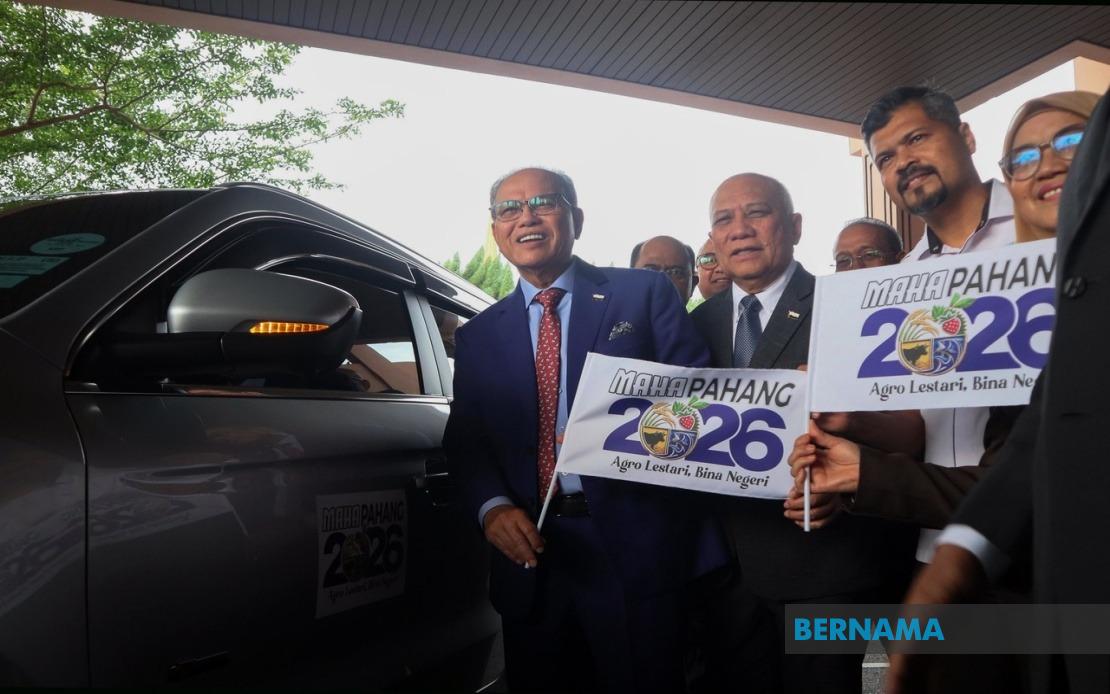
Pahang's major agricultural festival, MAHA 2026, is on track to become a substantial draw for rural communities and farming enterprises, with state leadership projecting over 100,000 attendees and approximately RM1.3 million in commercial sales throughout the event. Menteri Besar Datuk Seri Wan Rosdy Wan Ismail unveiled these ambitious targets while formally launching the initiative through a ceremonial convoy flagged off from the Bera District and Land Office, signalling the state government's commitment to strengthening agricultural promotion across the region.
The four-day programme, scheduled for July 30 to August 2 at Dataran Raub, represents a consolidated effort to showcase Pahang's farming sector and rural entrepreneurship. The event structure will accommodate approximately 100 business operators and agricultural vendors, providing a curated platform for producers to connect with consumers and explore market opportunities. This scale of participation suggests a meaningful cross-section of Pahang's agricultural community, ranging from smallholder farmers to established agribusinesses seeking visibility and customer engagement.
To maximise attendance and generate public interest, the Pahang state government has structured an extensive lucky draw scheme featuring prizes deliberately designed to appeal across different demographic segments. A Wagyu cow—valuable both as breeding stock and as a symbol of agricultural investment—serves as one marquee prize, while a Perodua Bezza vehicle addresses the transportation needs of rural families and entrepreneurs. These flagship offerings are supplemented by an array of smaller giveaways intended to maintain visitor engagement and incentivise sustained attendance throughout the festival period.
The sales projection of RM1.3 million, while specific to MAHA 2026, reflects broader economic aspirations for rural Pahang. This figure, distributed across 100 participating entrepreneurs over four days, translates to an average daily turnover of approximately RM325,000, suggesting organisers anticipate substantial per-vendor transaction volumes. For many smallholder and micro-enterprise participants, the concentrated foot traffic typical of agricultural fairs can represent meaningful monthly revenue opportunities, making participation financially significant for individual vendors.
Menteri Besar Wan Rosdy publicly acknowledged the role of Agriculture and Food Security Minister Datuk Seri Mohamad Sabu and the event committee chairman, situating MAHA 2026 within Malaysia's broader agricultural development strategy. This inter-departmental coordination indicates that the festival functions not merely as a state-level initiative but as an extension of national food security and agricultural modernisation objectives. The involvement of federal agricultural leadership suggests the government views such grassroots platforms as critical mechanisms for implementing policy across rural constituencies.
A distinctive feature of MAHA 2026 is its educational dimension alongside commercial opportunity. Visitors will encounter exhibition spaces and information sessions focused on agricultural innovation, including presentations on newly developed crop varieties suited to Pahang's growing conditions. This knowledge-transfer component reflects recognition that sustained agricultural productivity improvement requires farmers to have regular access to technical information and exposure to innovations emerging from research institutions and breeding programmes. Rural attendees effectively gain an extended educational consultation opportunity within a celebratory festival environment.
The logistics of bringing 20 government vehicles from multiple departments to the inaugural ceremonial launch underscores institutional investment in the festival's success. This coordinated mobilisation signals that MAHA 2026 is not a peripheral community event but rather commands resources and administrative attention across the state apparatus. The physical convoy itself serves as a visual statement of governmental backing, likely to influence commercial vendors' confidence in committing inventory and vendor fees to participate.
For Malaysian agricultural stakeholders, MAHA 2026 exemplifies a deliberate strategy to revitalise connection between rural producers and urban consumers through concentrated, high-profile marketplace events. In an era of supply-chain consolidation and corporate agricultural consolidation, such farmer-centric platforms provide vulnerable smallholders with direct market access and pricing power unavailable through conventional distribution channels. The festival framework also generates data and insights about consumer preferences that individual vendors can leverage for inventory and marketing decisions.
The timing of MAHA 2026 in late July and early August positions the event during a seasonally significant period in Pahang's agricultural calendar, when certain crops reach maturity and farmers prepare for harvest activities. This scheduling likely maximises the relevance of fresh produce displays and field-crop exhibitions, creating natural synchronisation between the festival programme and agricultural reality on the ground. For visitors from urban centres considering agricultural investments or lifestyle changes, the timing provides authentic snapshots of actual production conditions and harvest scenarios.
From a regional development perspective, MAHA 2026 reflects Pahang's recognition of agriculture's enduring importance to state identity and rural livelihoods, particularly in districts like Raub where farming remains economically significant despite decades of urbanisation and industrialisation. By investing in event infrastructure and promotional resources, the state government signals commitment to preserving agricultural viability as a development pathway, rather than ceding the sector to inevitable decline. This positioning carries implications for younger Pahang residents considering career trajectories, potentially making agriculture appear as a viable, government-supported economic avenue.
The projection of 100,000 visitors, if realised, would position MAHA 2026 as a major event in Pahang's annual economic calendar. This scale of foot traffic generates secondary economic benefits beyond direct vendor transactions, including hospitality spending, transportation costs, and incidental retail purchases. Rural communities hosting the festival typically experience measurable short-term economic stimulus as visitors lodge overnight, consume meals, and purchase fuel and supplies. For Raub district specifically, the festival potentially establishes a recurring platform that could attract growing vendor participation and attendance in future years if inaugural results meet or exceed projections.

