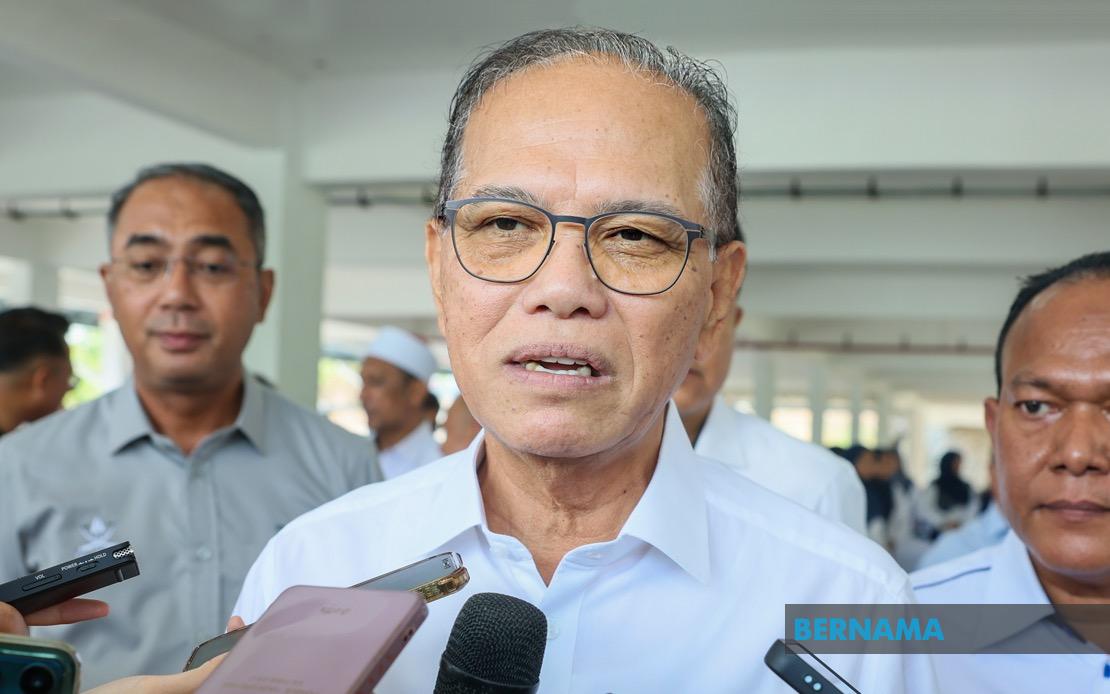
Addressing concerns about educational attainment within Pahang's indigenous communities, Menteri Besar Datuk Seri Wan Rosdy Wan Ismail has made a pointed appeal to Orang Asli youths to consider Technical and Vocational Education and Training (TVET) pathways as a viable route toward economic advancement. Speaking at a convocation ceremony in Kuantan on August 4, Wan Rosdy underscored the urgency of tackling school dropout rates among the Orang Asli population, emphasizing that skills-based qualifications now represent a mainstream and credible alternative to traditional university degrees rather than a fallback option.
The Menteri Besar's remarks come against the backdrop of Pahang's substantial Orang Asli demographic—the state is home to approximately 90,000 members of the indigenous communities. This demographic weight makes educational outcomes for this cohort a matter of state-level significance. The challenge of retaining Orang Asli students in formal education systems has persisted across Malaysia for decades, rooted in factors including geographic isolation, economic hardship, cultural barriers, and limited awareness of career pathways. By elevating this issue at an official state function, Wan Rosdy has signaled that addressing educational equity among indigenous peoples is now a priority area for Pahang's development agenda.
The convocation ceremony, held at the Sultan Haji Ahmad Shah Silver Jubilee Hall, celebrated 388 graduates who had completed programmes at YP Advanced Skills, an institution focused on imparting market-relevant technical competencies. Wan Rosdy specifically commended the institution for producing graduates who combine technical proficiency with strong personal character and demonstrated employability—qualities he framed as essential differentiators in a competitive labour market. This framing reflects a broader shift in Malaysian skills development discourse, where soft skills and ethical grounding are increasingly recognized as complementary to technical expertise.
In his address, the Menteri Besar emphasized that skills qualification holders enjoy multiple pathways to economic self-sufficiency. Graduates of TVET programmes, he noted, can pursue formal employment or establish their own enterprises, both avenues offering genuine income-generating potential. This dual-pathway narrative is particularly relevant for Orang Asli communities, where entrepreneurship and self-employment have historically provided alternatives when formal employment opportunities have been limited or geographically inaccessible. By highlighting both routes, Wan Rosdy sought to broaden the appeal of vocational training beyond the traditional perception that TVET is merely a stepping stone to industrial employment.
Crucially, Wan Rosdy expressed hope that YP Advanced Skills graduates from Orang Asli backgrounds would assume roles as community ambassadors upon returning to their villages. This aspiration reflects a deliberate strategy to leverage peer influence and local role modelling in addressing educational disparities. When young people from historically marginalized communities achieve formal qualifications and return to their home communities with improved economic prospects, they can inspire younger cohorts to persist in education rather than dropping out. This multiplier effect has proven effective in other Southeast Asian contexts where community-level role models have shifted educational aspirations and cultural perceptions around skills training.
The Menteri Besar's encouragement for continuous upward mobility—his advice that graduates pursue higher-level studies whenever feasible—indicates recognition that TVET, while valuable, should not be positioned as an educational terminus. Rather, vocational qualifications can serve as foundations for progression toward diploma and degree-level studies, either through work-integrated pathways or through transition into degree programmes. This message is particularly important for Orang Asli learners who may lack family experience with tertiary education and thus benefit from explicit encouragement to aspire beyond initial qualification levels.
The timing of this intervention reflects broader Malaysian policy concerns. The nation's Vision 2050 and 12th Malaysia Plan both emphasize skills development as central to inclusive economic growth and poverty reduction. Indigenous communities, including the Orang Asli, have historically experienced lower labour force participation and higher unemployment relative to the national average. Educational attainment gaps feed directly into employment disparities and income inequality. By publicly championing TVET uptake among Orang Asli youths, Wan Rosdy aligns state-level action with national development imperatives while acknowledging that generic national policies often fail to address the specific barriers and needs of indigenous cohorts.
The context of Pahang's geography is also pertinent. As a large, resource-rich state with significant Orang Asli populations distributed across both developed urban areas and remote interior regions, Pahang faces particular challenges in delivering quality vocational training equitably. TVET institutions like YP Advanced Skills can serve as anchor points for skills development, but their impact depends on accessible pathways—whether through scholarships, subsidized transport, or residential training options—that allow geographically dispersed Orang Asli youths to access them. The Menteri Besar's statement does not address these logistical barriers explicitly, but successful implementation of his vision would require attention to such practical enablers.
Moreover, the dropout challenge within Orang Asli communities intersects with broader structural issues. Economic pressures often force families to withdraw children from school to engage in income-generating activities or household labour. Cultural factors, including traditional livelihood practices and limited historical integration into formal education systems, can shape aspirations. Inadequate teacher training in culturally responsive pedagogy may also contribute to disengagement. Any sustained effort to improve educational outcomes must therefore address not merely the availability of TVET opportunities but also the upstream barriers that lead to dropout in the first place, including poverty alleviation, community consultation, and curriculum adaptation.
Wan Rosdy's remarks also implicitly acknowledge a resource and opportunity gap between Orang Asli youths and their more privileged peers. While TVET pathways are increasingly popular across Malaysian society as manufacturing and service sectors demand skilled technicians, the competition for quality TVET placements can be fierce. Without active recruitment, mentorship, and financial support programmes specifically targeting Orang Asli applicants, they risk remaining underrepresented even within the vocational education sector. The Menteri Besar's call is thus a necessary first step, but its impact will depend on follow-through from educational institutions, employers, and state agencies in creating tangible pathways.
Looking forward, the success of Wan Rosdy's initiative will be measurable through several indicators: enrolment numbers of Orang Asli youths in TVET programmes, completion rates, employment outcomes for graduates, and whether returnees do indeed catalyze broader educational engagement within their communities. Data collection and monitoring will be essential. Additionally, engagement with Orang Asli communities themselves—understanding their aspirations, concerns, and preferred learning modalities—will be crucial for tailoring TVET offerings and support services. A top-down exhortation to pursue skills training, while necessary, must be complemented by bottom-up community engagement and responsive programme design.
The convocation ceremony thus represents more than a ceremonial milestone for 388 graduates. It signals Pahang state government's commitment to addressing a persistent equity gap and positions TVET as a legitimate and potentially transformative pathway for historically disadvantaged youth. Whether this message translates into sustained policy action and tangible improvement in Orang Asli educational and economic outcomes remains to be seen, but the public commitment from a senior state leader provides a foundation upon which further advocacy, resource allocation, and programme development can build.

