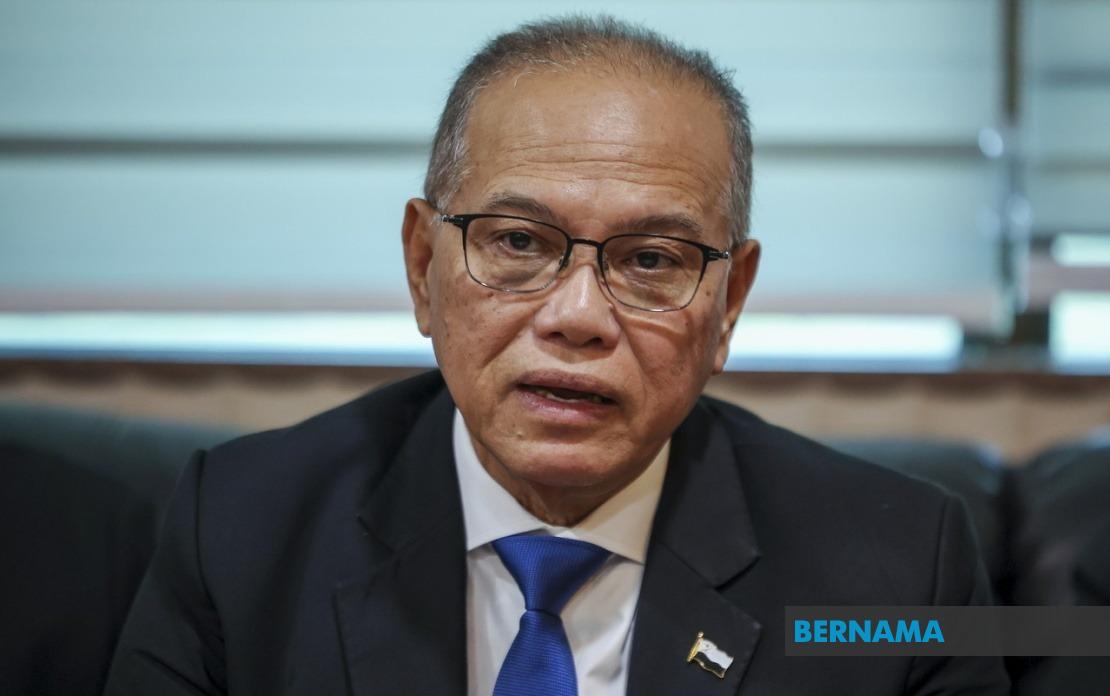
Pahang's fiscal performance remains robust, with the state government securing RM921.72 million in revenue collection by August 26, putting it well on course to surpass its annual target. Menteri Besar Datuk Seri Wan Rosdy Wan Ismail revealed the milestone during the Pahang State Legislative Assembly sitting, underscoring that the collection represents 72 per cent of the targeted RM1.279 billion for the year. This progress signals a financially healthy state administration navigating an increasingly complex economic environment while maintaining capacity to fund public programmes.
The revenue achievement reflects broader economic momentum in Pahang, a state traditionally dependent on agriculture, mining, and manufacturing. Wan Rosdy emphasised that the state's gross domestic product expanded to RM71 billion in 2025 from RM68.8 billion the previous year, demonstrating diversification and resilience in revenue streams. For a state with significant rural populations and competing development priorities, this growth rate positions Pahang favourably within the regional development hierarchy, though it remains outpaced by industrialised states like Selangor and Johor.
Investment inflows have contributed meaningfully to this trajectory. As of August 2026, Pahang recorded RM11.47 billion in committed investments, with RM1.044 billion already realised. These figures suggest that the state's infrastructure improvements and business environment initiatives are attracting both domestic and foreign capital, a critical indicator for sustained economic expansion. The gap between committed and realised investments indicates a pipeline of future projects that could further bolster employment and state revenues in coming quarters.
Wan Rosdy's statement addresses economic performance within a broader policy framework focused on direct benefit distribution. The state government has channelled RM173.93 million through the Makmur Pahang Initiative across 2024 to 2026, with allocations rising from RM38.8 million in 2024 to RM84.59 million in 2026. This trajectory reveals a deliberate shift toward increasing social spending as fiscal capacity improves, reflecting political commitment to translating economic growth into household-level welfare improvements. The initiative's escalating budget signals that policymakers view the revenue position as sufficiently stable to justify expanding public benefit programmes.
The timing of this revenue disclosure is politically significant. Presented during a state legislative assembly sitting in response to a question from Datuk Mohd Sharim Md Zain of Chini constituency, the announcement serves dual purposes: it demonstrates tangible administrative competence to the assembly and provides the incumbent Menteri Besar with quantifiable evidence of sound governance. In Malaysian state politics, where electoral cycles and coalition dynamics create periodic uncertainty, such fiscal evidence helps shore up political credibility ahead of potential budget deliberations.
Pahang's revenue collection trajectory carries implications beyond state borders. As the third-largest state by area and home to significant resource extraction and manufacturing hubs, Pahang's economic performance influences broader regional growth patterns. Strong state revenue enables infrastructure investment that reduces logistical costs for businesses operating across the East Coast Economic Region, potentially benefiting smaller states and creating spillover effects throughout Southeast Malaysia.
The RM1.279 billion revenue target itself warrants examination. This figure represents the state's self-generated income excluding federal transfers, a critical distinction in Malaysian federalism. Since states depend substantially on federal allocations, achieving high collection rates from local sources signals reduced reliance on Kuala Lumpur and greater fiscal autonomy. For Pahang, where federal support has traditionally anchored the budget, this trending improvement suggests shifting towards self-sufficiency in financing recurrent expenditures.
The Makmur Pahang Initiative exemplifies how revenue performance translates into voter-facing programmes. Rural constituencies and urban poor residents benefit directly from this fund through targeted assistance, livelihood support, and community development projects. As the allocation grows to RM84.59 million in 2026, the initiative's expanding reach could influence electoral calculations, particularly in competitive constituencies where marginal improvements in household welfare swing votes.
Looking ahead, Wan Rosdy's commitment to increasing future allocations for the Makmur Pahang Initiative through the upcoming state budget suggests confidence in sustained revenue growth. However, this optimism must be tempered by recognition of external risks: commodity price volatility affects mining revenues, while manufacturing sector cyclicality influences investment flows. Climate-related disruptions, increasingly frequent in Malaysia's tropical environment, could impact both agricultural output and infrastructure-dependent sectors.
The state government's financial trajectory also reflects improved tax administration and compliance mechanisms. Collection efficiency improvements directly translate to higher revenue realisation without necessarily requiring tax rate increases, a politically palatable approach. Pahang's success in reaching 72 per cent of its target by late August suggests well-functioning revenue departments and possibly enhanced enforcement against non-compliance.
For Malaysian policymakers and investors monitoring state-level performance, Pahang's figures demonstrate that growth is achievable outside peninsular manufacturing heartlands. The state's diversified revenue base—spanning agriculture, mining, tourism, and manufacturing—provides stability unavailable to single-commodity dependent regions. This diversification model offers lessons for other East Coast states navigating economic transition.
The revenue performance also contextualises broader discussions about state autonomy within Malaysia's federal system. States achieving higher self-generated revenues possess greater negotiating power with federal authorities and reduced vulnerability to centrally imposed policy changes. Pahang's improving fiscal position incrementally strengthens its position in intergovernmental fiscal relations, though it remains structurally dependent on federal transfers for capital expenditure.
Ultimately, Pahang's RM921.72 million revenue collection represents more than an accounting figure. It encapsulates a state government's fiscal management competence, economic development trajectory, and capacity to deliver public benefits. As the state advances toward its annual target, administrators signal readiness to sustain and expand social programmes, positioning Pahang as a contributor to national economic growth while maintaining investor confidence in its governance structure.

