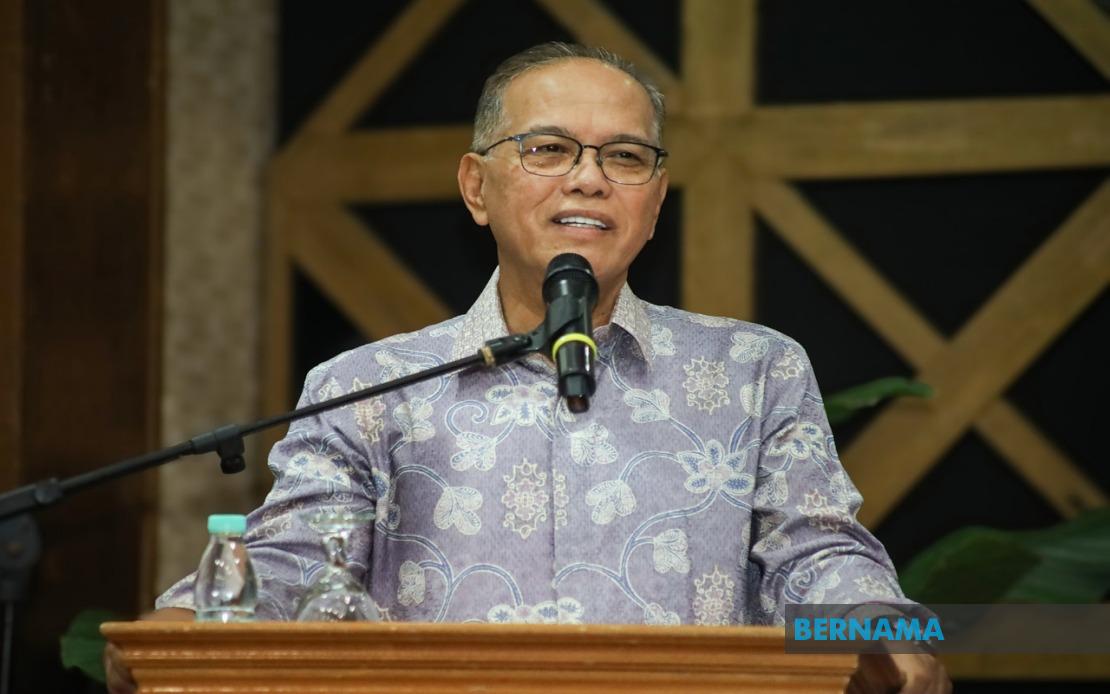
Menteri Besar Datuk Seri Wan Rosdy Wan Ismail has unveiled a substantial commitment to vocational and technical education in Pahang, announcing an allocation exceeding RM5 million for 2024 aimed at fortifying the state's TVET ecosystem. The funding represents a strategic push to address workforce readiness in the state as it positions itself for economic growth and industrial expansion. Delivered during remarks at the 50th anniversary celebration of Politeknik Sultan Haji Ahmad Shah (POLISAS) in Kuantan, the announcement underscores the state government's determination to invest in human capital development as a precursor to attracting and retaining investment.
The RM5 million allocation has been distributed across several key initiatives designed to enhance both the physical and human dimensions of vocational training in Pahang. These investments encompass infrastructure development, modernisation of training facilities, capacity building through Pahang Skills programmes, talent development initiatives under TVET Pahang, and construction of the Pahang Rail Academy. This diversified approach reflects recognition that vocational education requires simultaneous investment in facilities, curriculum, instructor expertise, and industry-aligned training programmes to produce graduates capable of meeting employer expectations.
Wan Rosdy articulated a philosophical approach to workforce development that prioritises preparation over reaction. Rather than waiting passively for industrial projects to materialise before training workers, the state government is proactively cultivating talent pools that can be mobilised when investment opportunities arise. This preventative strategy aims to eliminate a common bottleneck in economic development: the mismatch between job creation and available skilled workers. By developing human capital in advance, Pahang positions itself as an attractive investment destination where companies can quickly access trained personnel without delays associated with skills shortages.
The Politeknik Sultan Haji Ahmad Shah, celebrating five decades of operation, stands as a cornerstone institution within this strategy. Established in 1976, the institution has graduated 60,000 individuals who have entered the workforce across various sectors. Its longevity and scale make it an essential partner in the state government's broader vision for TVET expansion. Wan Rosdy expressed hope that POLISAS would continue serving as a strategic collaborator, implying that the state views polytechnic education not merely as institutional provision but as part of coordinated state-level workforce development architecture.
A critical dimension of Wan Rosdy's remarks addresses the persistent challenge of translating classroom learning into workplace competence. He emphasised that strengthening industry partnerships remains essential to ensure that curriculum and instructional methods remain aligned with evolving sector needs. This integration between educational institutions and employers represents a gap that many developing economies struggle to bridge. When educational systems operate in isolation from industry feedback, graduates often possess theoretical knowledge without practical problem-solving capabilities. Pahang's articulated commitment to tighter linkages suggests awareness that TVET effectiveness depends on collaborative relationships where employers contribute to programme design and students gain experience through internships or work-integrated learning.
Beyond state-level initiatives, Wan Rosdy used the platform to appeal to federal authorities for enhanced consideration of Pahang in the forthcoming Budget 2027. He highlighted the state's geographical expanse as a factor necessitating proportionally greater development allocations than smaller states. This argument touches on a broader debate within Malaysian federalism regarding how resources are distributed across states with vastly different land areas, population densities, and infrastructure needs. Pahang, as Malaysia's largest peninsular state, faces distinct challenges in infrastructure connectivity and service delivery that compact urban states do not encounter.
The Menteri Besar's budget advocacy extends beyond infrastructure to encompassing education, economic development, social welfare, and Islamic promotion. This comprehensive framing suggests that Pahang seeks federal partnership across multiple policy domains rather than concentrated support in any single area. The diversified appeal may reflect political pragmatism, recognising that federal budget allocations involve multiple competing claims from states and constituencies. By articulating needs across broad categories, Wan Rosdy attempts to position Pahang as worthy of sustained federal investment.
The emphasis on improved federal budget support carries particular significance for TVET development, as vocational education increasingly competes with academic pathways for government funding and student enrolment. In Malaysia, historical prioritisation of university education means that technical and vocational institutions sometimes receive relatively less policy attention and resource allocation despite their critical role in producing skilled workers for manufacturing, construction, hospitality, and emerging sectors. Federal budget decisions directly impact equipment purchases, instructor training, facility maintenance, and programme expansion at state-level TVET institutions.
Wan Rosdy's commitment to present an enhanced state budget to the Pahang State Legislative Assembly in November signals continuity of state-level investment in this sector. His statement that "whatever we receive will be channelled back to the people" frames state spending as public-oriented rather than administratively wasteful, a rhetorical positioning common among state leaders seeking to justify tax collection and spending priorities. The November tabling date aligns with Malaysia's fiscal calendar and provides opportunity for public scrutiny of budget allocation choices.
For Malaysian observers, Pahang's TVET investment strategy offers a case study in how states are attempting to respond to labour market shifts and skills demands without waiting for comprehensive federal policy coordination. As industries evolve and automation reshapes employment landscapes, state governments increasingly recognise that workforce development cannot be deferred. The RM5 million allocation, while modest in absolute terms, signals strategic prioritisation when considered against other claims on state resources. Whether this investment produces measurable improvements in graduate employment rates and employer satisfaction remains a question for future evaluation, but the commitment itself reflects growing recognition that vocational education merits sustained public investment.

