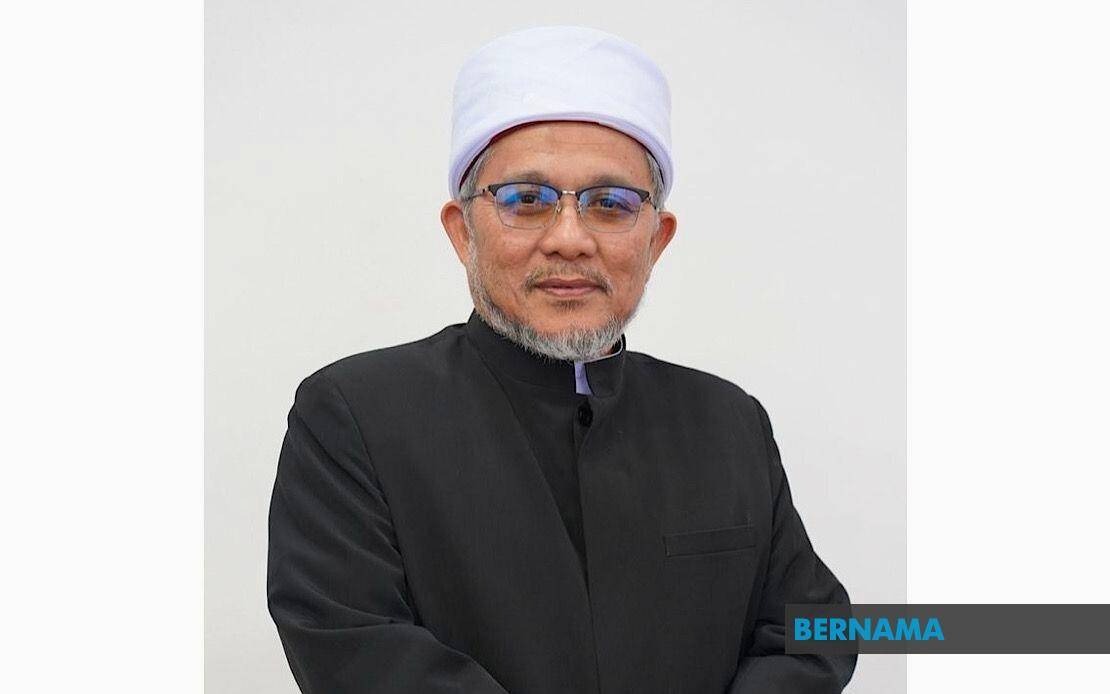
In a significant assertion of religious authority, Pahang has reaffirmed the Sultan of Pahang's directive to continue strengthening mosques and suraus as the primary venues for congregational worship, signalling the state's resistance to emerging proposals for Friday prayer facilities in commercial spaces. The position was formally restated by the Pahang State Mufti Department and the Pahang Islamic Religious and Malay Customs Council (MUIP), underscoring a constitutional and theological framework that places mosque administration firmly within state jurisdiction rather than under federal or private commercial initiatives.
Pahang Mufti Prof Datuk Dr Asmadi Mohamed Naim explained that the Sultan of Pahang, Al-Sultan Abdullah Ri'ayatuddin Al-Mustafa Billah Shah, has reviewed proposals circulating nationally to introduce Friday prayer facilities within shopping malls. Rather than embracing this innovation, the Sultan has determined that existing mosques and authorised Friday prayer suraus remain the appropriate venues for this fundamental Islamic obligation within Pahang's boundaries. This stance reflects a conservative interpretation of religious administration that prioritises institutional control and theological purity over pragmatic accommodation of urban retail environments.
The constitutional basis for this position rests on the Ninth Schedule of the Federal Constitution, which designates mosque and surau administration as a state matter rather than a federal responsibility. MUIP functions as the authoritative body representing the Sultan in his role as custodian of these religious institutions, a function deeply embedded in Malaysian federalism and the traditional relationship between Malay rulers and Islamic affairs. This distinction carries particular weight in a country where the intersection of constitutional law, religious authority, and state sovereignty remains contentious and carefully delineated.
Critically, the Pahang administration has emphasised that existing mosque infrastructure already adequately serves community needs. The state points to several flagship facilities including the Sultan Ahmad 1 State Mosque in Kuantan, the Tepian Putra Mosque, the anticipated opening of the Bandaraya Mosque, and Al-Shafie Mosque in Kota SAS, suggesting that spatial distribution and capacity planning have already addressed congregational requirements. This argument implies that further proliferation of prayer venues reflects organisational ambition rather than genuine religious necessity.
The theological requirements for valid Friday prayers, articulated through the Syafi'i school of Islamic jurisprudence, establish significant practical constraints that underpin Pahang's reasoning. Friday prayers must occur during the Zohor prayer period, require a quorum of at least forty congregants, necessitate two formal sermons, and demand a designated venue where separate congregations do not overlap geographically. These conditions, when properly understood, create natural limits on viable prayer locations and suggest that shopping malls may lack the formal religious infrastructure and acoustic separation required for compliance with Islamic principles.
The timing of Pahang's reaffirmation carries implications within a broader national debate about modernising Islamic practice in urbanising Malaysia. Just days earlier, the Minister in the Prime Minister's Department (Religious Affairs), Datuk Dr Zulkifli Hasan, had expressed openness toward shopping mall Friday prayer initiatives, citing positive responses from pilot programmes in the Federal Territories. This divergence between federal enthusiasm and Pahang's reservations illustrates the federated nature of Islamic administration in Malaysia, where states retain substantial autonomy in religious matters and may pursue distinct policy trajectories.
For Malaysian Muslims, particularly those in urban Pahang facing the practical challenges of accessing distant mosques during lunch hours, the state's stance presents a constraint on convenience. Shopping malls, offering centralised locations, ample parking, and climate-controlled environments, theoretically provide accessibility advantages over dispersed traditional venues. However, Pahang's position privileges institutional oversight, theological rigour, and the preservation of mosque-centred religious life over pragmatic accommodation to consumer-driven modernity.
The broader Southeast Asian context adds further dimension to this debate. Rapid urbanisation across the region has prompted similar conversations in neighbouring jurisdictions about whether established religious institutions can adequately serve transient urban populations and migrant workers. Malaysia's federal structure permits states like Pahang to resist homogenising pressures and maintain distinctive approaches to religious administration, though this flexibility also creates potential inconsistency across state boundaries.
For businesses and mall operators nationally, Pahang's position suggests that commercial expansion into religious services faces headwinds in certain states regardless of federal receptivity. This creates a checkerboard landscape where investors must navigate varying state-level policies rather than operating under uniform national standards. The consequent fragmentation may prove administratively inconvenient but reflects Malaysia's intentional constitutional design allocating religious jurisdiction to states as custodians of local Islamic tradition and practice.
The practical consequence of Pahang's stance is that Muslim workers and shoppers in the state must continue arranging their schedules around established mosque locations during Friday congregational hours, rather than benefiting from workplace or retail-adjacent prayer options. This preserves what state authorities evidently view as proper religious discipline and institutional coherence, even while imposing logistical inconvenience on practitioners navigating competing obligations between employment and religious observance.
Moving forward, Pahang's reaffirmation may establish a template for other states seeking to resist federal initiatives in religious matters, particularly those with strong traditional governance structures and sultanates protective of constitutional prerogatives. The interplay between religious modernisation and institutional preservation, between federal coordination and state autonomy, will likely continue generating friction as Malaysian society becomes increasingly urban and time-constrained, yet simultaneously more committed to Islamic observance and religious identity.

